
Physics - Part 8
282 reports
Rice University Targets Real-Time Quantum Error Correction Decoding
Rice University has joined the Quantum Science Center to develop and test quantum error-correction decoding algorithms for high-performance computing systems, addressing latency and ability to grow challenges in fault-tolerant quantum computing.
IBM Offers Quantum Compute Access for DOE Genesis Mission Research
IBM has pledged $50 million in quantum processor access over five years to support the U.S. Department of Energy's Genesis Mission, enabling national lab and academic researchers to run experiments on utility-scale superconducting quantum hardware.
ROQUO Hybrid Supercomputer Links Trapped-Ion Qubits and NVIDIA Blackwell GPUs
Japan's RIKEN Center for Computational Science has launched ROQUO, a hybrid quantum-classical supercomputer integrating Quantinuum's trapped-ion Reimei system with NVIDIA Blackwell GPUs. The system aims to benchmark quantum circuit synthesis and quantum chemistry workloads.
Digital Twin Simulates France's First Neutral-Atom Quantum Platform
QPerfect and the University of Strasbourg are collaborating to create a hardware-accurate digital twin of a neutral-atom quantum processor, supporting research and development on France's first public neutral-atom quantum computing platform.
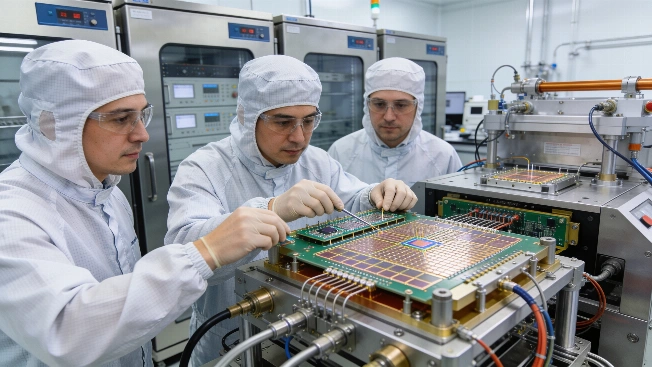
PsiQuantum's Photonic Quantum Hardware Faces Expanded DARPA Scrutiny
PsiQuantum has secured a $125 million agreement with DARPA for independent verification of its photonic quantum computing hardware and manufacturing, including its cryogenic infrastructure, under the Quantum Benchmarking Initiative.
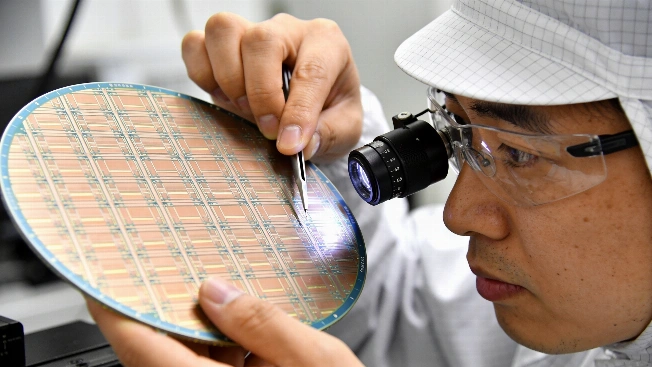
Japan Backs Hitachi and Intel to Develop Silicon Spin Qubit Processors
A new government-funded project led by Hitachi aims to move silicon spin-qubit quantum processors from laboratory prototypes toward manufacturable hardware, using Intel's advanced foundry and AIST's research infrastructure.
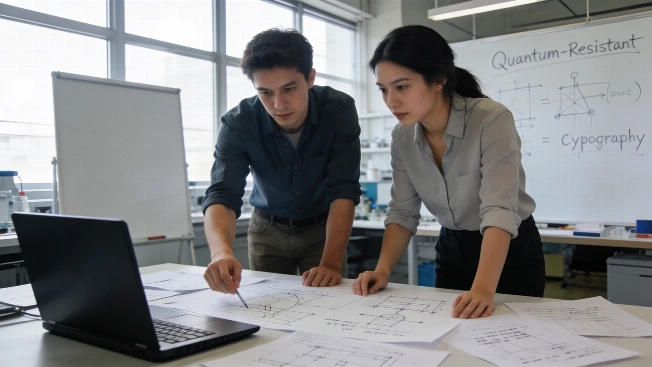
Galaxy Digital Funds $5M Initiative for Bitcoin Quantum Security
Galaxy Digital has launched a $5 million program to address future quantum computing threats to Bitcoin's cryptography, funding research and developer grants with expert oversight as it prepares for post-quantum security standards.
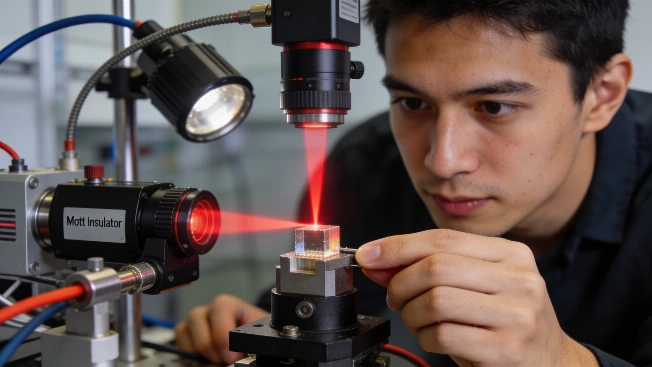
Laser-Driven Nonlinear Dynamics Observed in Mott Insulators
Researchers have identified four distinct regimes of photoexcitation in Mott insulators, revealing how laser-driven feedback can dynamically alter conductivity and carrier production in strongly correlated materials.
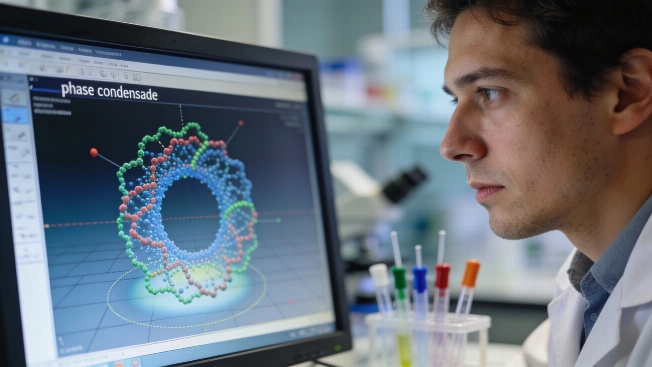
Simulations Map Phase Separation in Disordered Protein Condensates
Researchers used computer simulations to analyze how intrinsically disordered proteins with prion-like domains cluster and undergo phase separation, identifying distinct regimes and challenges in measuring critical parameters.
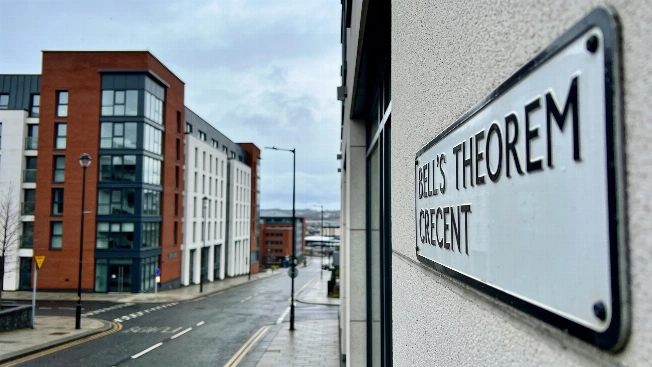
How Bell's Theorem Emerged from an Unusual Physics Journal
John Bell's 1964 theorem on quantum nonlocality was first published in a short-lived journal with an unconventional editorial model. The story of this publication highlights the challenges of peer review, editorial selection, and scientific recognition in quantum physics
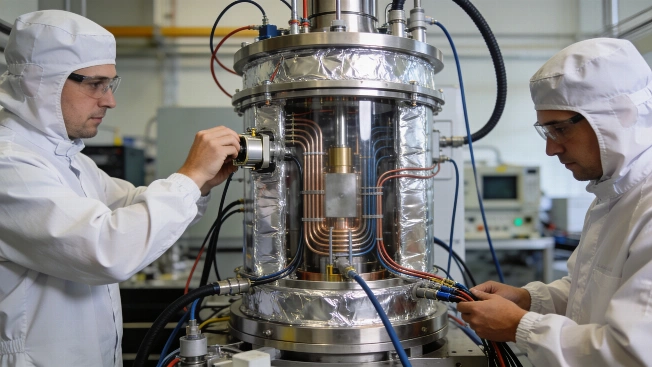
Maybell Quantum Installs Dilution Refrigerators at New Mexico Lab
Maybell Quantum is deploying four dilution refrigerators at the Roadrunner Quantum Lab in Albuquerque, providing shared cryogenic infrastructure for quantum hardware startups and researchers as part of New Mexico's quantum technology initiative.
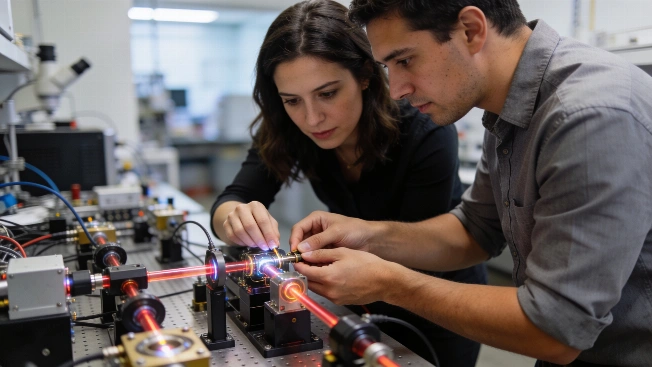
New Mexico Invests $1.2M in Quantum Hardware and Photonics Startups
Six early-stage quantum technology companies have each received $200,000 grants to expand or establish operations in New Mexico. The funding supports hardware, photonics, and software development for applications in quantum sensing, communication, and computing.
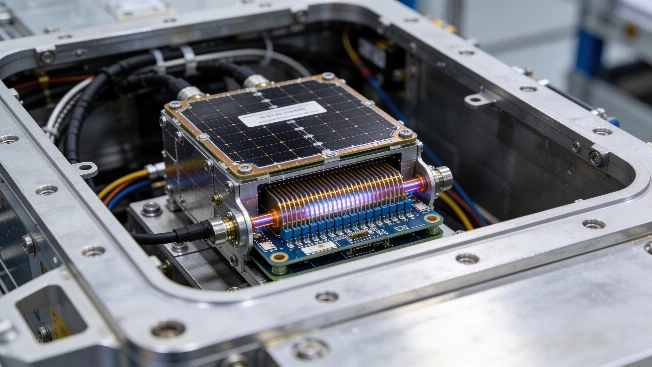
Optical Frequency Comb Operates in Orbit for First Time
A space-qualified optical frequency comb developed by QuantX Labs has been activated and verified in low Earth orbit, demonstrating basic engineering benchmarks for future optical atomic clock payloads in space.
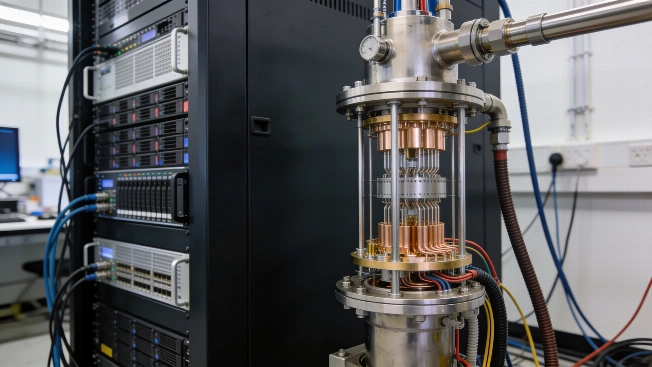
New Model Sets Limits for Quantum and HPC Integration Performance
A joint study by AWS, NVIDIA, LBNL, and NASA presents a quantitative model for deciding when quantum processors need physical integration with supercomputers and when remote cloud access can support hybrid quantum-classical algorithms
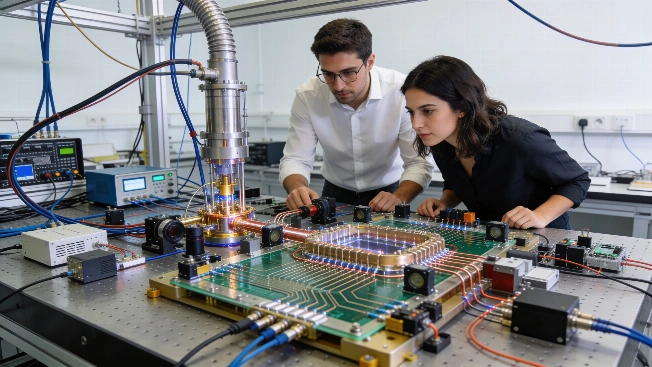
Israel Funds National Quantum Computing Testbed With Multi-Platform Access
The Israel New idea Authority has announced a NIS 100 million initiative to build centralized quantum computing R&D infrastructure, requiring integration of at least three distinct quantum hardware platforms for industry and academia.

How Physics Tools Are Shaping Food System Modeling and Policy
Sarah Bridle, a physicist with a background in cosmology, is using quantitative modeling and open-data practices from astrophysics to study food systems, including land use and climate impacts, and reveal new challenges for sustainable agriculture.
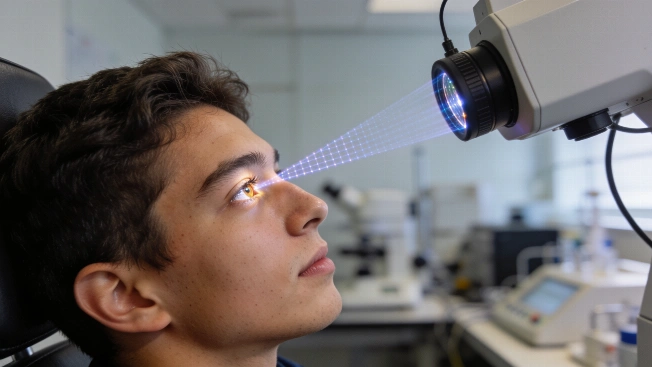
Structured light reveals new patterns for retinal health assessment
Researchers used spin-orbit coupled light to improve the visibility of Boehm's brushes, subtle optical patterns in peripheral vision, demonstrating a method that could allow non-invasive tests of retinal integrity using quantum optics techniques.
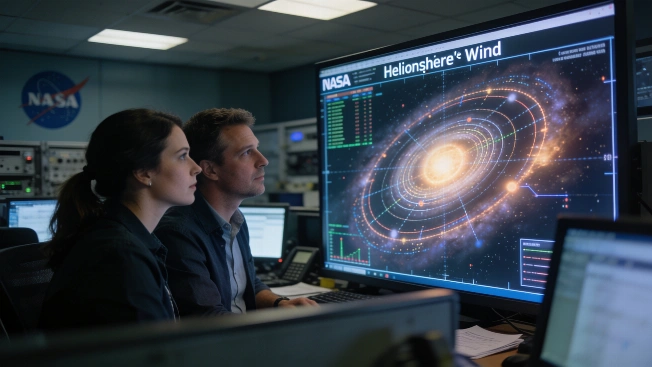
How the Heliosphere Shields the Solar System from Interstellar Space
Researchers are mapping the heliosphere, the vast bubble created by the solar wind that surrounds the Sun and planets, to understand how it protects the solar system from cosmic radiation and shapes planetary environments.
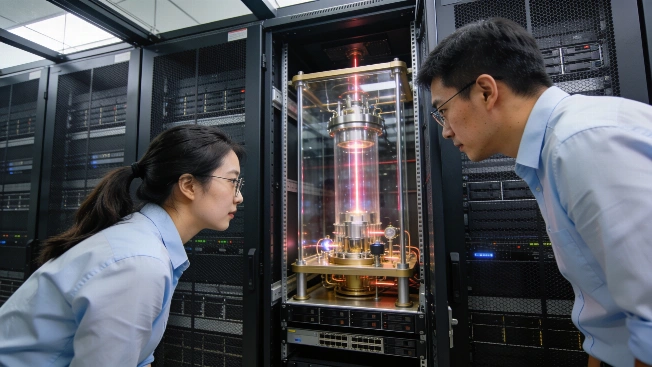
Neutral-Atom Quantum Computer Fits Standard Server Rack in Shanghai Debut
A Chinese startup has introduced Qinghe No. 1, a neutral-atom quantum computer designed for direct installation in data-center server racks. The system aims to avoid the need for large cryogenic systems and accelerate the integration of quantum hardware into enterprise environments.
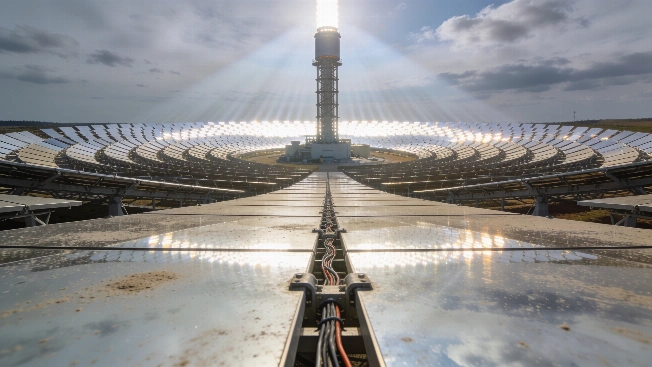
Open CSP Tower Data Set Aims to Advance Solar Thermal Research
A new open-access database from German researchers provides detailed operational data from a solar power tower facility, aiming to accelerate research on concentrated solar power and improve the technology's efficiency and deployment
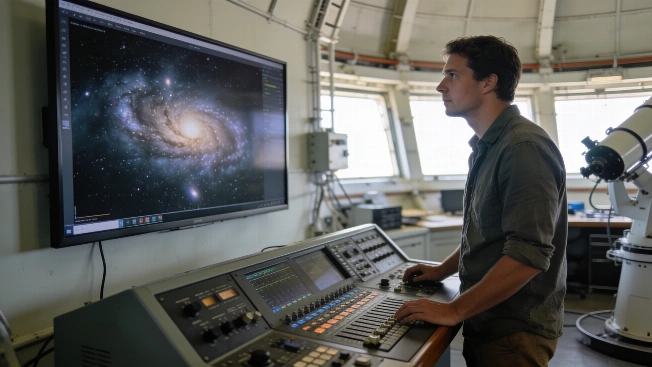
Webb Telescope Uses Gravitational Lensing to Reveal Ancient Galaxies
The James Webb Space Telescope has captured a detailed image of the galaxy cluster MACS J0553.4-3342, using gravitational lensing to magnify galaxies from the universe's first billion years
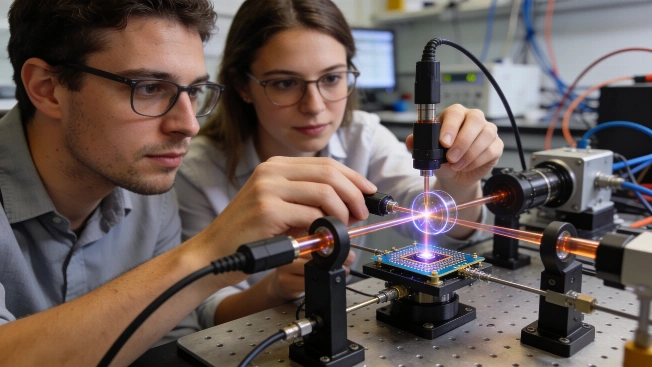
Hybrid Photon-Atom Quantum Blueprint Targets Error Correction Limits
Quantum Source Alpha Labs has published a detailed hardware proposal for a hybrid photon-atom quantum computing architecture aimed at addressing the scaling and error-correction challenges that limit current quantum processors.
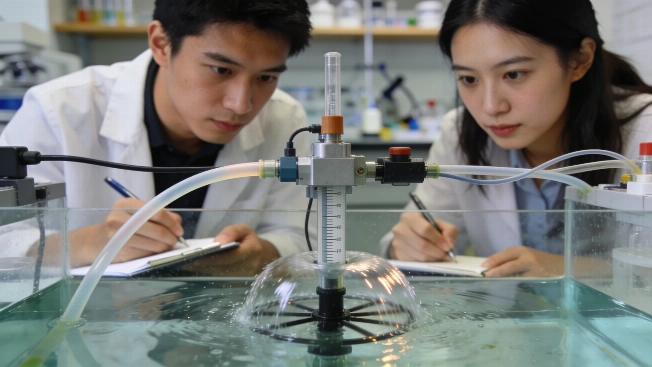
Reverse Sprinkler Experiments Reveal Angular Momentum Mechanism
Researchers at New York University have built custom rotary sprinklers to investigate the reverse sprinkler problem, measuring how angular momentum and device geometry affect rotation when water is drawn in rather than expelled
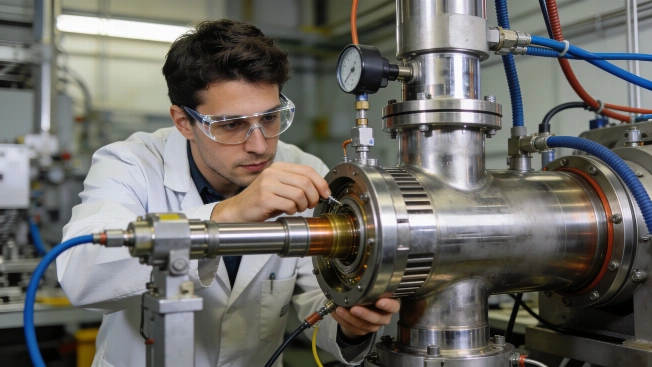
Quantum entanglement measured in heavy-fermion strange metal
Researchers used inelastic neutron scattering and quantum Fisher information to directly probe multipartite entanglement in a heavy-fermion metal, offering new evidence for the quantum origins of strange metal behavior
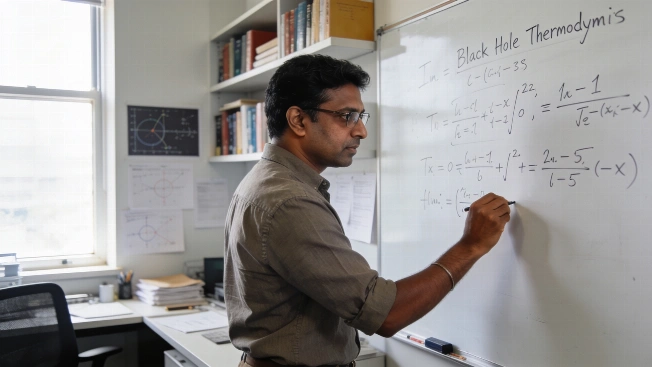
Black Hole Thermodynamics Updated Beyond Hawking's Original Theory
Physicists have proposed a new structure for describing black hole energy loss, extending thermodynamic laws to dynamic black holes and addressing a basic limitation in Stephen Hawking's classic model.
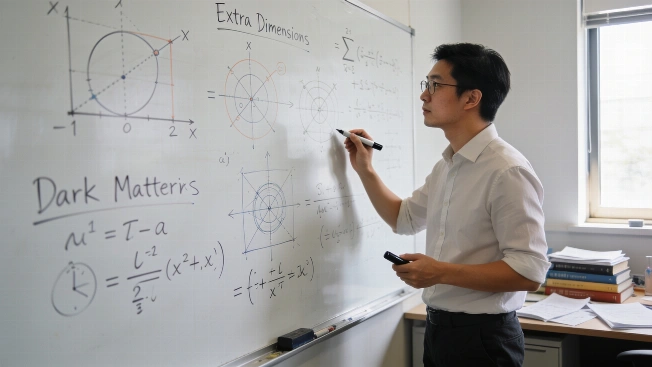
Dark Matter Theory Links Hidden Dimensions to Cosmic Structure
A new theoretical study examines whether dark matter's elusive nature could stem from an interaction with a hidden fifth dimension, suggesting a possible link between two of physics' most persistent mysteries
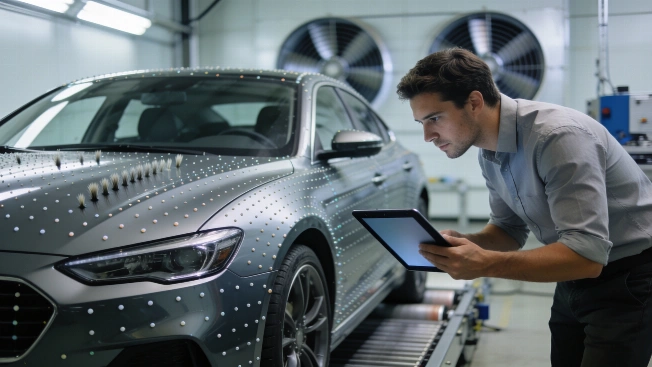
AI-Driven Physics Models Enhance Aerodynamic Testing for Cars
Researchers are integrating artificial intelligence with computational fluid dynamics and wind-tunnel data to refine the aerodynamic performance of passenger vehicles, aiming to bridge the gap between simulation and real-world results
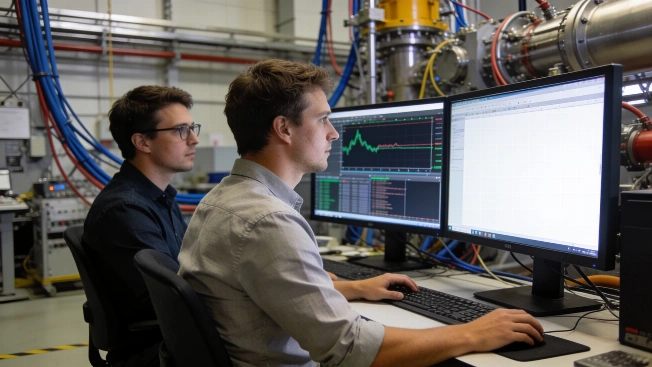
Gravitational Wave Data Reveals Black Hole Event Horizon Properties
Researchers have extracted direct physical parameters from a black hole’s event horizon using an unusually strong gravitational wave signal, providing experimental access to a region previously studied only through theory.
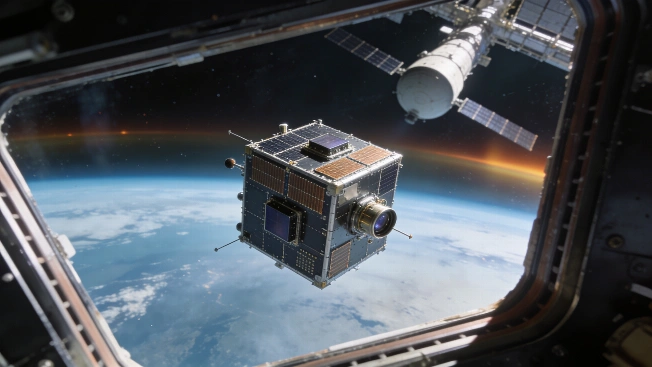
Satellite Neutron Detection Proposed for Nuclear Treaty Verification
A new analysis suggests that satellites equipped with neutron detectors could remotely identify nuclear materials in orbit, offering a potential method to verify compliance with the Outer Space Treaty and address emerging security concerns
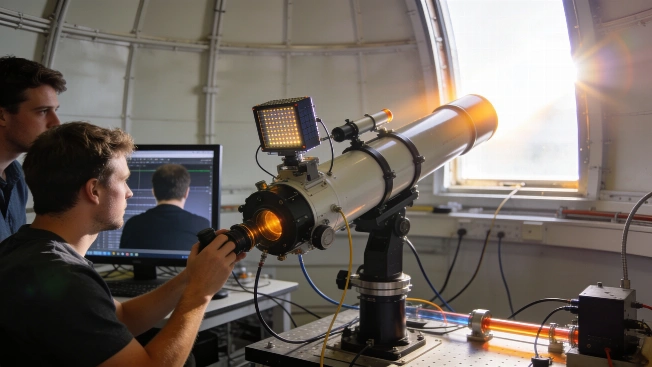
Metasurface Grating Demonstrates Compact Solar Magnetic Field Mapping
A polarization-sensitive metasurface grating has matched conventional instruments in mapping solar magnetic fields, offering a route to smaller, simpler, and potentially more robust hardware for future space-based solar telescopes
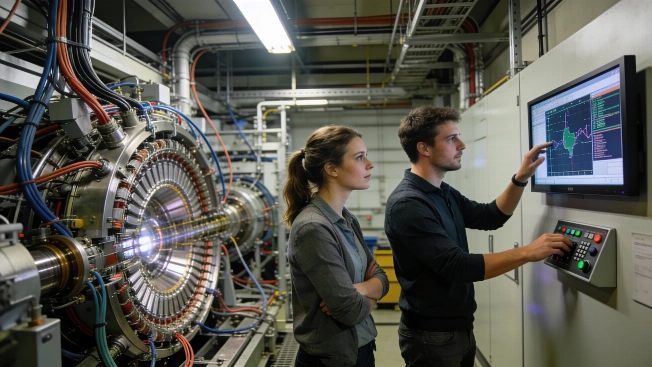
AI in Particle Physics: Discovery Without Full Understanding
Artificial intelligence is now central to particle physics, accelerating data analysis and experiment design. But as AI systems identify patterns beyond human intuition, researchers face new challenges in transparency, reproducibility, and scientific interpretation
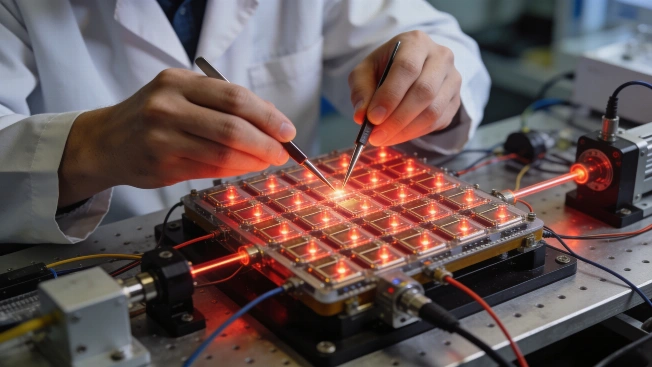
Coupled Laser Array Reveals Nonlinear Effects in Percolation Transition
A team has experimentally realized percolation using a 100-laser array, uncovering how nonlinear interactions shift the critical threshold and alter cluster formation compared to idealized models
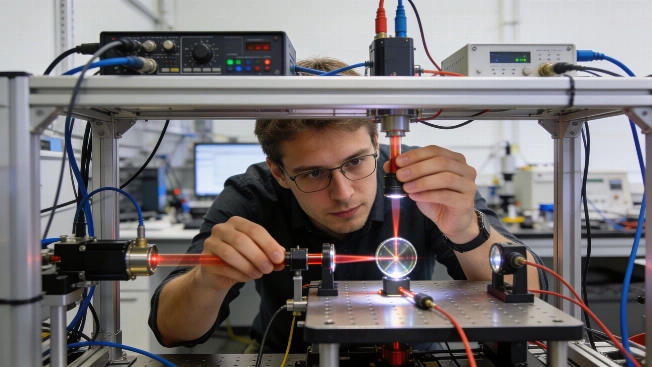
Continuous Models Challenge Sudden Quantum Wavefunction Collapse
A new theoretical framework models quantum measurement as a continuous, stochastic process, offering an alternative to the traditional view of abrupt wavefunction collapse and providing new tools for quantum control and algorithm design
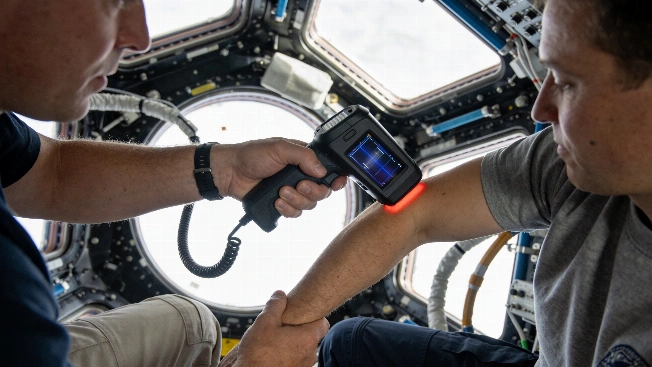
Portable X-ray Imaging System Demonstrates Diagnostic Quality in Space
A commercial portable X-ray device was operated aboard an orbital spacecraft, producing diagnostic-quality radiographs comparable to those acquired on Earth and highlighting the potential for in-flight medical imaging beyond ultrasound
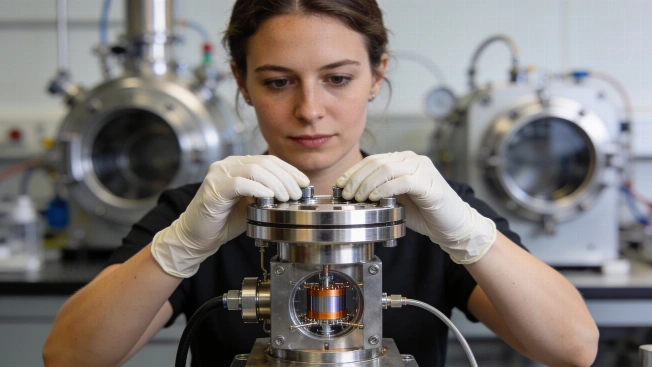
Quantum Sensors and Compact Accelerators Highlight 2026 Instrumentation Briefing
The 2026 Physics World Instrumentation & Vacuum Briefing surveys advances in quantum sensors, ultrahigh vacuum engineering, compact particle acceleration, and real-time radiotherapy monitoring, with a focus on experimental progress and engineering challenges
Part 8 of 9