The Israel Innovation Authority has announced a NIS 100 million initiative to build a centralized quantum computing R&D infrastructure, requiring integration of at least three distinct quantum hardware platforms for industry and academia
The Israel Innovation Authority (IIA) has launched a NIS 100 million (approximately $33 million USD) call for proposals to establish a national quantum computing research and development infrastructure. The program aims to create a centralized facility in Israel that will provide domestic industry and academic researchers with access to a range of quantum computing hardware and software platforms, supporting the evaluation, integration, and adoption of advanced quantum technologies.
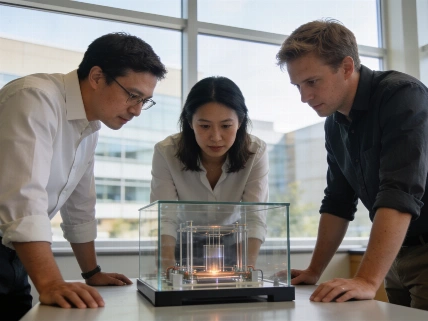
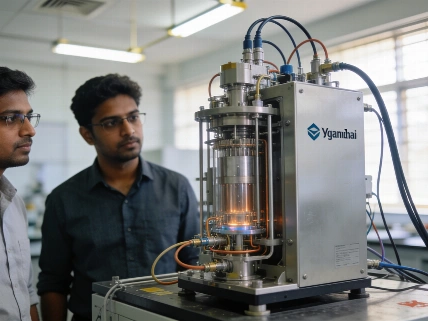
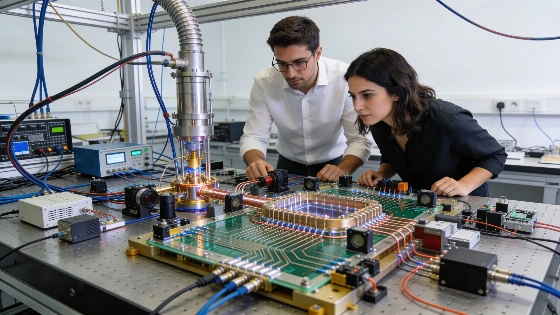
Unlike single-architecture testbeds, the IIA mandate requires the selected operator to integrate at least three distinct quantum processing technologies-such as superconducting circuits, trapped ions, neutral atoms, or photonic systems-within a unified framework. This multi-platform approach is intended to allow Israeli developers to benchmark algorithms, compare device performance, and test software across different physical qubit implementations. The facility is expected to offer end-to-end R&D capabilities, including direct access to quantum processors, classical control and measurement hardware, low-latency feedback systems, and cloud-based user interfaces for algorithm development and testing.
Technical Requirements and Timelines
To maintain relevance as quantum hardware evolves, the IIA contract stipulates that the infrastructure operator must continuously upgrade its hardware backends to match international advancements. The proposal sets two key operational milestones: the facility must begin delivering functional R&D services-including remote quantum processor access and hardware benchmarking-within 12 months of project approval, and the full physical and software infrastructure must be operational in Israel within 18 months. These requirements are designed to ensure that the national testbed remains competitive with global quantum research centers and provides timely access to emerging technologies.
The initiative also emphasizes workforce development, with plans for multidisciplinary workshops, technical training, and technology transfer programs aimed at building local expertise in quantum engineering, software, and device integration. By supporting both established companies and startups, the infrastructure is intended to accelerate the development and commercialization of quantum applications in sectors such as defense, finance, and advanced technology.
Benchmarking and Industry Access
One of the central technical challenges addressed by the program is the lack of consensus on a dominant physical qubit platform. By requiring support for multiple architectures, the IIA aims to provide a fair environment for benchmarking quantum algorithms and hardware, enabling researchers to identify which technologies are best suited to specific industrial or scientific tasks. The facility will offer independent evaluation of quantum processors, allowing users to compare error rates, coherence times, gate fidelities, and algorithmic performance across different systems under controlled conditions.
According to the IIA announcement, the infrastructure will be accessible to both academic and industrial users, with a focus on shortening product development cycles and supporting the growth of a specialized quantum workforce. The program is positioned as a national resource, intended to strengthen Israel's position in the global quantum technology landscape by providing a platform for experimentation, training, and technology transfer.
Limitations and Open Questions
While the initiative represents a significant public investment in quantum infrastructure, several engineering and scientific challenges remain. Integrating multiple quantum hardware platforms into a single testbed requires careful coordination of control electronics, calibration protocols, and software interfaces. Differences in operating temperature, error mechanisms, and device connectivity across architectures may complicate direct comparison and benchmarking. The program's success will depend on the operator's ability to maintain up-to-date hardware, ensure reliable access, and provide transparent performance metrics for all supported platforms.
At present, the IIA has not specified which quantum hardware technologies will be prioritized, nor has it detailed the expected number of physical qubits, gate fidelities, or coherence times for the initial deployment. The selection process for the operating consortium or industrial entity is ongoing, and independent verification of the facility's performance will be essential once operational. The initiative's impact on Israel's quantum workforce and industrial ecosystem will depend on sustained investment, technical execution, and the ability to adapt as the field evolves.
Quantum computing hardware remains in a state of rapid development, with no single physical qubit technology yet demonstrating clear superiority in scalability, error correction, or practical utility. Superconducting circuits, trapped ions, neutral atoms, and photonic systems each offer distinct advantages and limitations in terms of coherence, gate fidelity, connectivity, and engineering complexity. By supporting a multi-platform testbed, the IIA program aims to provide Israeli researchers and companies with the flexibility to explore, benchmark, and adopt the most promising quantum technologies as they mature.
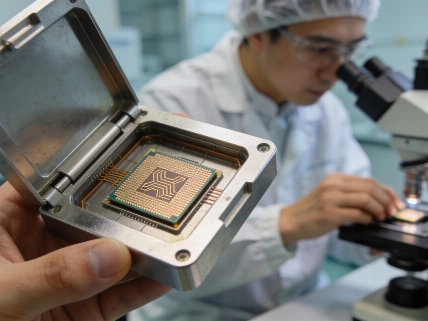
To understand the significance of this initiative, it is important to distinguish between physical and logical qubits. A physical qubit is a controllable quantum system-such as a superconducting circuit or trapped ion-that can be manipulated and measured. However, physical qubits are subject to errors from noise, decoherence, and imperfect control. Logical qubits encode information across multiple physical qubits using error-correcting codes, enabling detection and correction of certain errors. Achieving practical quantum computation will require not only high-quality physical qubits but also scalable error correction and reliable logical operations. Benchmarking across multiple hardware platforms helps clarify which technologies are closest to meeting these demanding requirements.