Quantum Source Alpha Labs has released a detailed hardware proposal for a hybrid photon-atom quantum computing architecture, aiming to address scaling and error correction challenges that limit current quantum processors
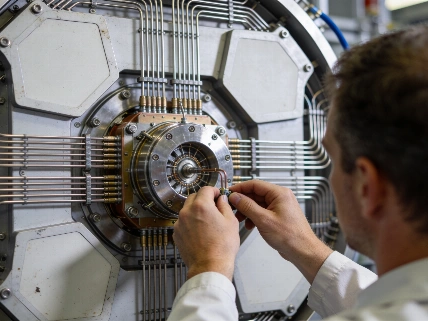
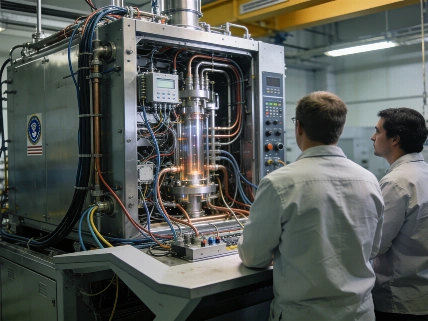
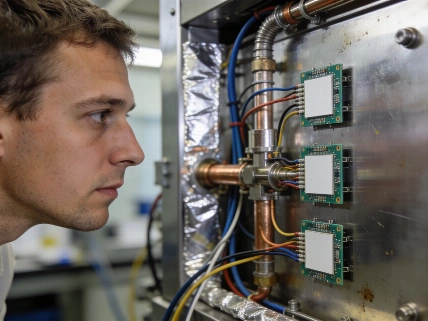
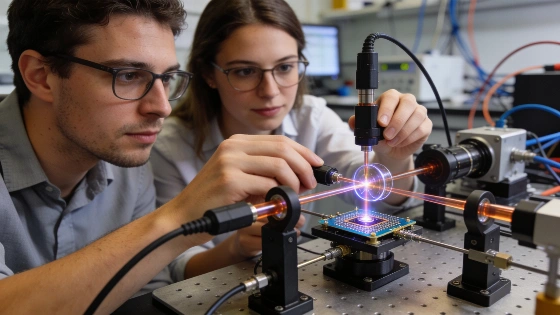
Quantum Source Alpha Labs (QS Labs) has published a preprint on arXiv outlining a hardware architecture that combines photonic and atomic qubits in a single quantum computing platform. The proposal, developed by a 14-member team, aims to overcome the scaling and error correction barriers that have constrained both photonic and matter-based quantum processors. The blueprint leverages cavity quantum electrodynamics (cavity QED) to integrate the strengths of each qubit type, assigning roles based on their physical properties to optimize both connectivity and local control.
In current quantum hardware, matter-based qubits-such as superconducting circuits, trapped ions, and neutral atoms-offer high-fidelity local gates but are limited by geometric constraints and slow qubit transport. Purely photonic systems, by contrast, provide near-unlimited connectivity through linear optics but require probabilistic entangling gates, resulting in substantial hardware overhead. The QS Labs design seeks to resolve this trade-off by using atomic qubits for stable local operations and photonic qubits for long-range entanglement and communication, coordinated through cavity QED interfaces.
Loss Modeling and Error Thresholds
The research introduces a noise model tailored to the hybrid architecture, focusing on asymmetric loss processes that differ from the standard depolarizing noise often assumed in quantum error correction studies. A key challenge addressed is bond-loss propagation, where the loss of a photon can silently corrupt neighboring stabilizer checks in the error-correcting code without producing a detectable error signal. By incorporating these asymmetric loss mechanisms into a loss-aware decoder, the team demonstrates that the logical error rate can be stabilized as the code distance increases.
Numerical simulations in the preprint establish a photon-loss threshold of approximately 2.6% per physical gate operation. This translates to a maximum tolerable loss of 15% for a photon traversing the entire optical routing network. These figures are significant for the design of large-scale quantum processors, as they set concrete targets for optical integration, cavity fabrication, and switching speed. The architecture is designed to implement the full logical Clifford gate set-Hadamard, Phase, and CNOT gates-either transversally or fold-transversally, with error thresholds comparable to the identity operation. For universal quantum computation, the proposal details two native methods for generating non-Clifford T-gates: code teleportation and magic state cultivation within a foliated cluster state.
Engineering Roadmap and Integration Challenges
While the blueprint presents a unified approach to hardware and error correction, the path to practical implementation remains complex. Achieving the required photon-loss rates and integration density will demand advances in optical chip fabrication, high-finesse cavity construction, and fast classical control systems. The proposal does not yet demonstrate a working device, and the results are based on theoretical modeling and simulation rather than experimental hardware. As with other quantum computing architectures, the transition from blueprint to laboratory prototype will require overcoming substantial engineering and fabrication hurdles.
The hybrid approach outlined by QS Labs is part of a broader trend in quantum hardware research, where combining different physical systems is seen as a route to overcoming the limitations of single-platform designs. For example, recent advances in portable X-ray imaging systems for space missions, as discussed in this report on diagnostic-quality imaging in orbit, highlight the importance of integrating diverse technologies to achieve practical performance in challenging environments. Similarly, the hybrid photon-atom blueprint reflects the need for cross-disciplinary engineering to realize scalable, fault-tolerant quantum computers.
At present, the QS Labs proposal remains a theoretical framework. The next steps will require experimental validation of the loss thresholds, demonstration of robust cavity QED interfaces, and integration of photonic and atomic components at scale. The preprint provides a detailed roadmap for these milestones, but independent replication and hardware demonstration will be essential to assess the practical viability of the architecture.
Quantum error correction is central to the development of large-scale quantum computers. In practice, physical qubits-whether atomic, photonic, or solid-state-are prone to errors from environmental noise, imperfect control, and loss. Error correction codes encode logical qubits across many physical qubits, allowing errors to be detected and corrected if the physical error rate is below a certain threshold. The threshold depends on the code and the noise model; exceeding it allows logical errors to be suppressed exponentially with code size. Hybrid architectures, such as the one proposed by QS Labs, must carefully balance the error characteristics of each component to ensure that the combined system remains below threshold for all relevant error types. Achieving this in hardware remains one of the most significant challenges in quantum computing.