The 2026 Physics World Instrumentation & Vacuum Briefing surveys advances in quantum sensors, ultrahigh vacuum engineering, compact particle acceleration, and real-time radiotherapy monitoring, with a focus on experimental progress and engineering challenges
The 2026 edition of the Physics World Instrumentation & Vacuum Briefing, now available to read, brings together recent developments in quantum sensing, vacuum technology, compact particle acceleration, and measurement standards. The briefing compiles research updates and interviews with engineers and entrepreneurs working to translate laboratory advances into practical instrumentation, while also examining the technical and metrological challenges that remain.
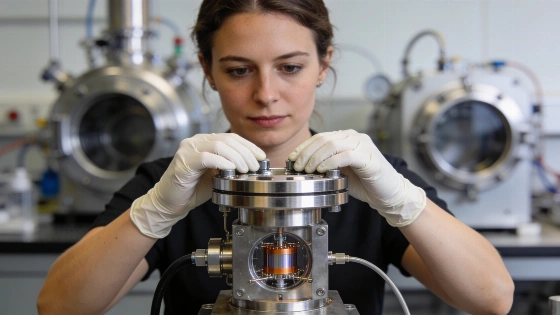
Quantum sensors, which exploit quantum coherence and entanglement to achieve sensitivity beyond classical limits, are a central focus. Many quantum sensor prototypes rely on cold atoms or trapped ions, requiring ultrahigh vacuum (UHV) environments to minimize decoherence and background collisions. However, the size, power consumption, and complexity of UHV systems have limited the deployment of quantum sensors outside specialized laboratories. According to Physics World, engineers at companies such as Aquark are working to miniaturize UHV hardware, aiming to reduce both footprint and energy requirements. Achieving robust vacuum at the scale and reliability needed for field-deployable quantum sensors remains a significant engineering challenge, with trade-offs between vacuum quality, device integration, and operational stability.
Another area covered in the briefing is the manipulation of individual living cells for biomedical research and therapy. Traditional cell separation methods often use chemical agents that can damage cell membranes or alter biological properties. Impulsonics, a UK-based startup, has developed an ultrasound-based system designed to gently separate living cells without chemical intervention. While this approach offers the potential for higher cell viability and less perturbation, the system's throughput, selectivity, and compatibility with diverse cell types are still under evaluation. The underlying physics leverages acoustic radiation forces, but the practical performance depends on precise control of acoustic fields and device calibration.
Compact Particle Acceleration
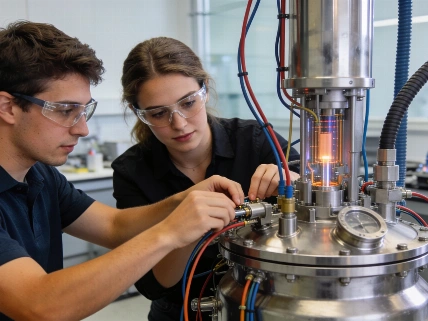
The briefing also highlights advances in laser-driven particle acceleration. Researchers in the United States have demonstrated a compact free-electron laser (FEL) powered by a laser plasma accelerator (LPA), a technology that uses intense laser pulses to generate high-gradient acceleration in plasma. This approach has enabled the creation of a muon beam in a laboratory-scale setup, offering a potential route to more accessible sources for particle physics and materials research. However, the stability, energy spread, and reproducibility of LPA-driven FELs remain active areas of research, and current systems do not yet match the performance or reliability of conventional large-scale accelerators.
In terms of measurable performance, recent LPA-based FEL experiments have achieved electron energies in the multi-GeV range over centimeter-scale acceleration distances, with reported energy spreads on the order of a few percent. Muon production rates and beam quality are still limited by laser power, plasma density control, and synchronization. While these results demonstrate proof-of-principle operation, scaling to higher repetition rates and tighter energy control will be necessary for practical applications.
Real-Time Radiotherapy Monitoring
Medical instrumentation is another theme, with a focus on real-time monitoring of radiotherapy beams. DoseOptics, a US-based company, has developed a system that detects Cherenkov light-faint optical emission produced when high-energy particles traverse tissue at speeds exceeding the local speed of light. By imaging this light as it emerges from a patient's skin during radiotherapy, clinicians can monitor beam position and dose delivery in real time. This technique offers the potential for improved targeting and reduced exposure to healthy tissue, but its sensitivity to ambient light, tissue optical properties, and detector calibration must be carefully managed. The system's clinical utility will depend on its ability to provide reliable feedback across diverse treatment scenarios and patient anatomies.
Elsewhere, the briefing explores the International System of Units (SI) and its historical quirks. Ben Stein from the US National Institute of Standards and Technology discusses the origins of units such as the candela, originally defined by the brightness of a whale-fat candle, and ongoing debates about the use of dimensionless units like the radian. While SI units underpin all precision measurement in physics and engineering, their definitions and practical realizations continue to evolve as experimental techniques advance.
Quantum sensors, compact accelerators, and advanced measurement standards represent the intersection of fundamental physics and engineering. Each technology faces distinct challenges in scaling from laboratory demonstration to robust, field-ready instrumentation. The 2026 Physics World Instrumentation & Vacuum Briefing provides a snapshot of this progress, while making clear that reproducibility, calibration, and integration remain central to the transition from prototype to practical device.
Quantum sensors operate by exploiting quantum coherence-maintaining well-defined phase relationships between quantum states-to achieve measurement sensitivity beyond classical limits. In practice, this requires isolating the quantum system from environmental noise, which is why ultrahigh vacuum and precise control are essential. Decoherence, the loss of quantum information due to interactions with the environment, sets a fundamental limit on sensor performance. Engineering advances in vacuum systems, materials, and control electronics are therefore critical to realizing the potential of quantum-enhanced measurement in real-world applications.