A new analysis suggests that satellites equipped with neutron detectors could remotely identify nuclear materials in orbit, offering a potential method to verify compliance with the Outer Space Treaty and address emerging security concerns
Since the Outer Space Treaty (OST) was signed in 1967, prohibiting the deployment of nuclear weapons in orbit or on celestial bodies, the absence of a practical verification mechanism has left a critical gap in international security. While the treaty has been ratified by 117 countries, including the United States, Russia, and China, technological advances and shifting geopolitical priorities have introduced new risks that the original agreement did not anticipate. Recent satellite launches, such as Russia's Kosmos 2553, have raised concerns about the possible development of nuclear anti-satellite capabilities, which could threaten global communications and navigation infrastructure without direct terrestrial impact.
Despite the strategic importance of treaty verification, no robust technical solution has been implemented to monitor satellites for nuclear payloads. The high background radiation in space and the risk of close-proximity inspection-potentially interpreted as hostile-have limited the feasibility of direct detection. Previous proposals, such as measuring ambient radioactivity near suspect satellites, have been constrained by these challenges and by the technical difficulty of distinguishing artificial nuclear signatures from the naturally radioactive environment of Earth's orbit.
Neutron Emission as a Signature
In a recent theoretical study, Areg Danagoulian at the Massachusetts Institute of Technology has proposed a method that leverages the interaction between naturally occurring high-energy protons in the Van Allen radiation belts and nuclear materials potentially present in satellites. When these protons collide with uranium or similar materials, they can induce spallation reactions, resulting in the emission of neutrons. These neutrons, if detected, could serve as a relatively specific indicator of the presence of nuclear weapon components, such as those found in thermonuclear devices.
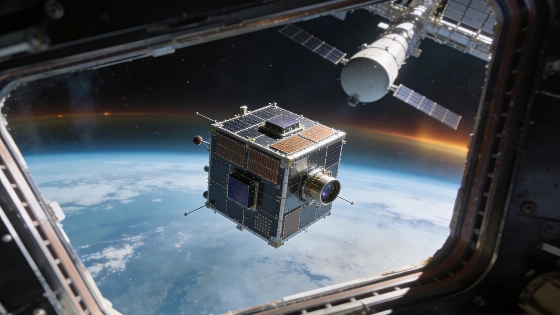
The proposed detection system would not require close approach to the target satellite. Calculations suggest that a CubeSat-class platform equipped with neutron detectors could identify the neutron flux from a nuclear payload at a distance of up to 4 kilometers. According to the analysis, a week of continuous measurement could be sufficient to determine the composition of a suspect satellite's payload, assuming standard detector sensitivity and background conditions. This approach aims to minimize the risk of misinterpretation or escalation by avoiding maneuvers that could be perceived as aggressive.
Technical and Policy Challenges
While the underlying physics and detection technology are established, significant engineering and operational questions remain. The effectiveness of the method depends on the ability to build a reliable, space-qualified neutron detector array with sufficient sensitivity and discrimination against background events. Environmental factors, such as cosmic-ray flux, solar activity, and the variable intensity of the Van Allen belts, introduce additional uncertainty. The approach has not yet been demonstrated in hardware or validated through field experiments, and the practical limits of detection-such as minimum detectable mass and shielding effects-require further study.
From a policy perspective, the development of a satellite-based verification system could provide a new layer of transparency and accountability for the OST. However, the deployment of inspector satellites would raise questions about sovereignty, operational protocols, and the potential for dual-use technology. The proposal, reported in Nature, represents a step toward bridging the gap between treaty commitments and technical verification, but its real-world implementation will depend on international cooperation and further engineering advances.
For context, neutron detection in space relies on distinguishing the relatively rare neutrons produced by spallation in nuclear materials from the much higher background of charged particles and gamma rays. Neutron detectors typically use materials such as boron or helium-3 to capture neutrons and produce measurable signals. The sensitivity of such detectors is limited by their size, shielding, and the need to reject false positives from cosmic-ray interactions. In terrestrial applications, neutron detection is a standard tool for nuclear safeguards, but adapting these techniques to the space environment introduces unique challenges in calibration, background suppression, and long-term reliability.