QPerfect and the University of Strasbourg are collaborating to create a hardware-accurate digital twin of a neutral-atom quantum processor, aiming to support research and development on France's first public neutral-atom quantum computing platform
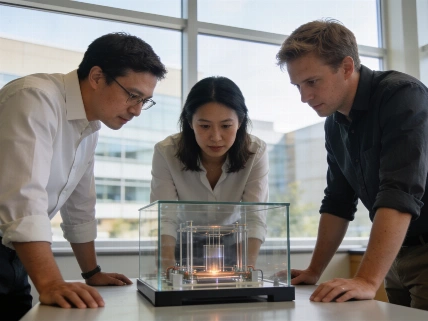
QPerfect, a quantum software developer based in Strasbourg and a subsidiary of BTQ Technologies, has announced a partnership with the University of Strasbourg to support the development of aQCess, described as France's first publicly accessible neutral-atom quantum computing platform. The collaboration centers on building a digital twin-a detailed software simulation-of the aQCess neutral-atom processor, intended to provide researchers with a realistic environment for algorithm development, benchmarking, and validation alongside the physical hardware.
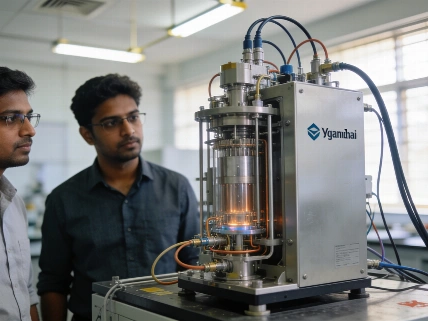
The aQCess platform is being developed at the Centre Européen de Sciences Quantiques (CESQ), a joint laboratory of the University of Strasbourg and the French National Centre for Scientific Research (CNRS). The system targets an array of more than 400 individually controllable ytterbium (Yb) atomic qubits, a scale that, if achieved with high fidelity, would represent a significant step for neutral-atom quantum computing in Europe. The digital twin, constructed using QPerfect's MIMIQ(TM) simulation platform, is designed to replicate the processor's native gate set, instruction set architecture, atom transport dynamics, and experimentally characterized noise profiles.
Digital Twin Integration
According to the developers, the digital twin will be deployed both on-premises at CESQ and as a cloud-accessible service. This dual deployment is intended to allow multidisciplinary research teams to test and benchmark quantum algorithms against a model that closely mirrors the real hardware, including its noise and error characteristics. The simulation environment is expected to support both local and remote users, potentially lowering barriers for researchers and startups who may not have direct access to the physical device.
QPerfect's team is also working to integrate its compilation and error-correction software, including the Quantum Logic Unit (QLU(TM)), directly into the hardware control loop as the physical system scales. This approach aims to address the increasing complexity of controlling and correcting errors in large neutral-atom arrays, but the effectiveness of such integration will depend on the actual performance of both the hardware and the software stack as the system grows.
Consortium and Funding
The aQCess initiative is part of a broader French national strategy for quantum technologies, bringing together a consortium of 18 partners, including seven research institutes and two regional quantum hubs. Funding comes from the French National Research Agency (ANR) Equipex+ grant and the PEPR-Quantique priority research program. The project's stated goal is to pair European-developed neutral-atom hardware with advanced simulation and design automation tools, aiming to make quantum computing research more accessible to commercial enterprises, graduate researchers, and startups in fields such as quantum chemistry and materials science.
While the digital twin approach offers a promising route for algorithm development and hardware-software co-design, the practical impact will depend on how closely the simulation matches the real device, especially as the number of qubits increases and noise sources become more complex. The project's success will also rely on the ability to maintain high-fidelity control and measurement across hundreds of atomic qubits, a challenge that remains at the forefront of neutral-atom quantum computing research.
Technical Context
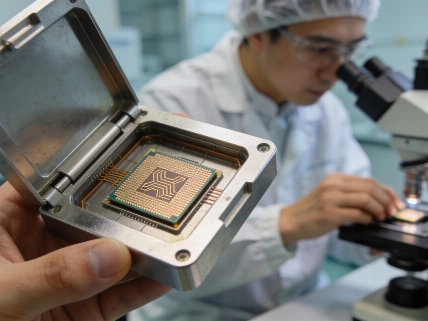
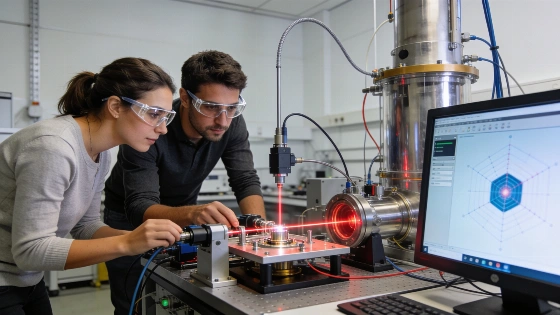
In neutral-atom quantum computing, individual atoms-often trapped and manipulated using laser fields-serve as physical qubits. Ytterbium atoms are favored for their optical transitions and long coherence times, but scaling to hundreds of controllable qubits introduces significant engineering challenges. A digital twin is a software model that aims to reproduce the behavior of the physical system, including its gate operations, noise, and error mechanisms. Such models are valuable for testing algorithms and control strategies before deploying them on real hardware, but their accuracy depends on the quality of experimental characterization and the fidelity of the underlying physical model. As quantum processors grow in size and complexity, the gap between simulated and real-world performance can widen, making ongoing calibration and validation essential for meaningful results.