
John Bell's 1964 theorem on quantum nonlocality was first published in a short-lived journal with an unconventional editorial model. The story of this publication highlights the challenges of peer review, editorial selection, and scientific recognition in quantum physics
John Bell's 1964 theorem, which set the foundation for experimental tests of quantum nonlocality, was first published in a journal that remains little known even among physicists. The journal, Physics Physique Физика, operated from 1964 to 1968 and was established as an alternative to conventional peer-reviewed publications. Its editorial approach, led by Bernd Matthias and Philip Anderson, relied on in-house review and direct editorial selection, aiming to highlight only the most significant work in physics. This model was intended to address frustrations with slow review times and inconsistent referee quality in mainstream journals.
Bell's theorem addressed a central question raised by the 1935 Einstein-Podolsky-Rosen (EPR) paradox: whether quantum mechanics could be explained by local hidden variables, or whether its predictions required abandoning local realism. Bell demonstrated that no local hidden-variable theory could reproduce all the predictions of quantum mechanics, providing a testable inequality that would later become the basis for experimental investigations of entanglement and nonlocality. The original paper, titled "On the Einstein Podolsky Rosen paradox," appeared in the first volume of Physics Physique Физика in 1964.
Editorial Experiment
The journal's founders, both based at Bell Laboratories, sought to create an "experimental journal" that would select only papers of broad interest to the physics community. Rather than relying on external referees, Anderson and Matthias personally reviewed each submission and made publication decisions themselves. Authors whose work was accepted received a payment per word, an unusual incentive in scientific publishing. The editorial team acknowledged the risk of subjective judgment and the possibility of overlooking valuable research, but argued that their criteria would be "different" rather than "better."
This approach led to the publication of several notable papers, but Bell's theorem stands out as the most influential result to appear in the journal. At the time, Bell was not widely known, and his work on hidden variables was far from mainstream. The editorial decision to publish his paper proved prescient, as Bell's inequality would later become a cornerstone of quantum foundations and experimental quantum information science.
Impact and Legacy
Although Physics Physique Физика published work from other prominent physicists, including Murray Gell-Mann, Leonard Susskind, and Leo Kadanoff, its lifespan was brief. The journal ceased publication in 1968 after only three volumes. According to accounts from Anderson, the discontinuation was not due to a lack of submissions, but rather to delays in publication and commercial pressures from the publisher, Pergamon Press. The promise of rapid publication could not be maintained as issue intervals lengthened, and the journal's experimental model was ultimately unsustainable in the publishing environment of the time.
Despite its short run, the journal's legacy is significant. Bell's theorem, first published in its pages, provided the theoretical framework for experimental tests of quantum entanglement. In 1972, John Clauser and Stuart Freedman performed the first experimental test of Bell's inequality, launching a series of experiments that would confirm quantum predictions and rule out local hidden-variable theories. These results underpin much of modern quantum information science, including quantum cryptography and quantum communication protocols.
Archival Access and Historical Context
Today, Physics Physique Физика is archived by the American Physical Society and its contents are freely accessible online. The journal's inclusive, multilingual title and its editorial model anticipated later developments in scientific publishing, such as the rise of high-selectivity journals and alternative peer review models. The story of Bell's theorem and its publication context illustrates how editorial decisions, publication models, and scientific culture can shape the recognition and impact of foundational results in quantum physics.
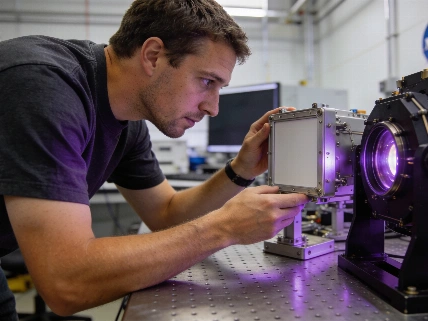
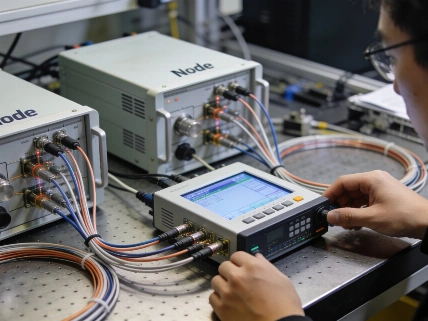
Bell's original paper remains a reference point for both theoretical and experimental research in quantum foundations. The inequality he derived is now routinely tested in laboratories using entangled photons, ions, or solid-state qubits, with experiments closing successive loopholes and refining measurement precision. The publication history of Bell's theorem is a reminder that scientific advances often depend as much on editorial judgment and publication infrastructure as on the underlying physics.
Bell's theorem formalizes the distinction between local realism and the predictions of quantum mechanics. In essence, it shows that if quantum mechanics is correct, then measurements on entangled particles can produce correlations that cannot be explained by any local hidden-variable theory. The resulting Bell inequalities provide a quantitative benchmark: if experimental results violate the inequality, local realism is ruled out. Modern experiments routinely observe such violations, confirming the nonlocal character of quantum entanglement. However, each experiment must address potential loopholes, such as detection efficiency and locality, to ensure that the observed violations are genuinely quantum in origin. Bell's theorem thus remains central to both the philosophy and practice of quantum physics.