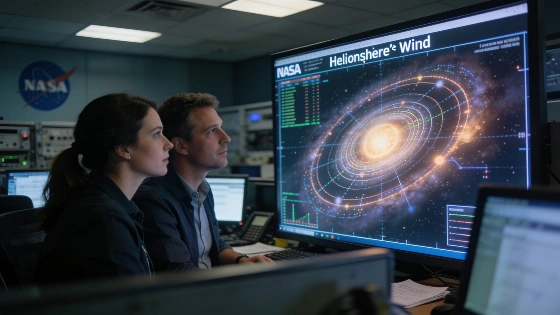
Researchers are mapping the heliosphere, the vast bubble created by the solar wind that surrounds the Sun and planets, to understand how it protects the solar system from cosmic radiation and shapes planetary environments
The heliosphere is a vast region of space dominated by the solar wind-a continuous stream of charged particles emitted by the Sun. This bubble-like structure extends well beyond the orbit of Pluto, forming a dynamic boundary between the solar system and the interstellar medium. Scientists are working to refine models of the heliosphere's shape and influence, as its properties affect both planetary atmospheres and the flux of cosmic radiation reaching Earth and other worlds.
Solar Wind and the Heliosphere
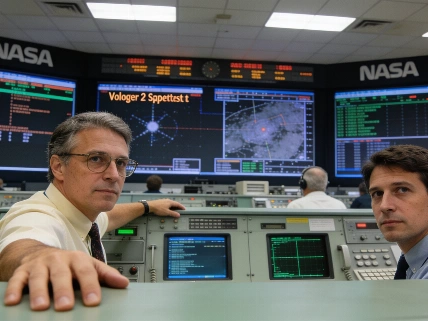
The solar wind, composed mainly of electrons and protons, flows outward from the Sun at speeds of 300 to 800 kilometers per second. As this plasma expands, it carves out a cavity in the surrounding interstellar medium, creating the heliosphere. The boundary where the solar wind slows and interacts with interstellar particles is known as the heliopause. Measurements from spacecraft such as Voyager 1 and Voyager 2, which crossed the heliopause in 2012 and 2018 respectively, have provided direct evidence of this transition zone.
The heliosphere's size is not fixed. It fluctuates with solar activity, expanding during periods of high solar wind pressure and contracting when the Sun is less active. Current estimates suggest the heliosphere extends roughly three times farther than Pluto's average distance from the Sun, or about 120 astronomical units (AU). This region acts as a shield, reducing the intensity of galactic cosmic rays that penetrate the inner solar system.
Protective Effects and Planetary Atmospheres
One of the heliosphere's most important roles is to moderate the influx of high-energy particles from interstellar space. Without this protective bubble, planets would be exposed to much higher levels of cosmic radiation, which can erode atmospheres and pose risks to potential life. However, the solar wind itself can strip away atmospheric particles from planets lacking strong magnetic fields. Earth's magnetosphere, for example, provides an additional layer of defense, deflecting much of the solar wind and preserving the planet's atmosphere.
Comparative studies of planetary atmospheres, such as those of Mars and Venus, highlight the consequences of losing magnetic protection. Mars, with its weak magnetic field, has experienced significant atmospheric loss over billions of years, a process influenced by both the solar wind and the broader heliospheric environment. Recent research on exoplanets, including the detection of helium escaping from LHS 1140 b's atmosphere, as described in a related Science Report article, underscores the importance of stellar winds and magnetic fields in shaping planetary habitability.
Revising the Shape of the Heliosphere
For decades, models depicted the heliosphere as a comet-like structure, with a rounded nose facing the direction of the Sun's motion through the galaxy and a long trailing tail. However, recent data from NASA's Interstellar Boundary Explorer (IBEX) and other missions suggest a more complex shape. Some models now favor a "croissant-like" or deflated structure, shaped by the interplay of solar wind, interstellar magnetic fields, and neutral atoms. These findings challenge earlier assumptions and highlight the need for continued observation and modeling to resolve the true geometry of the heliosphere.
Understanding the heliosphere's structure is not only a matter of scientific curiosity. Its shape and dynamics influence how cosmic rays and interstellar material enter the solar system, affecting both planetary environments and the safety of future crewed missions beyond Earth's protective magnetic field.
Open Questions and Future Missions
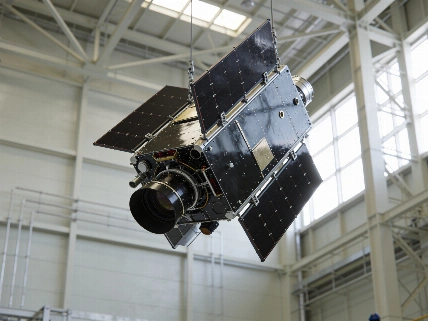
Despite decades of study, many aspects of the heliosphere remain uncertain. The precise mechanisms that determine its boundary, the variability of its shielding effect, and the long-term evolution of its shape are all active areas of research. Missions such as IBEX, the upcoming Interstellar Mapping and Acceleration Probe (IMAP), and continued data from the Voyager spacecraft are expected to refine our understanding in the coming years.
As researchers gather more data, they aim to clarify how the heliosphere interacts with the local interstellar environment and what this means for the solar system's long-term stability. These insights will be crucial for interpreting the conditions faced by planets, moons, and spacecraft at the edge of the Sun's influence.
The heliosphere is a fundamental concept in heliophysics, describing the region where the solar wind dominates over interstellar forces. Its boundary, the heliopause, marks the transition to interstellar space. Understanding the heliosphere requires integrating data from spacecraft, remote sensing, and theoretical models. The structure and variability of the heliosphere affect cosmic ray penetration, planetary atmospheres, and the broader context of planetary habitability. As new missions probe this frontier, scientists continue to refine their models and test predictions about the Sun's interaction with the galaxy.