Sarah Bridle, a physicist with a background in cosmology, is applying quantitative modeling and open-data practices from astrophysics to analyze food systems, land use, and climate impacts, revealing new challenges for sustainable agriculture
Physicists have long contributed to fields beyond their traditional domains, but the application of quantitative modeling and open-data practices from astrophysics to food systems is a relatively recent development. Sarah Bridle, who previously specialized in cosmology and dark matter mapping, now leads research at the University of York focused on the intersection of food, climate, and society. Her work demonstrates how physics-based approaches can clarify the complex interactions between agricultural practices, land use, greenhouse gas emissions, and social behavior.
Food production and processing are responsible for a significant share of global greenhouse gas emissions-up to one third by some estimates. In the United Kingdom, approximately 70% of land is devoted to agriculture, making land-use decisions central to both food security and climate mitigation. Bridle's research highlights that inefficiencies in land use for food production can limit the potential for other climate solutions, such as afforestation, bioenergy, or solar installations. Quantitative models developed by her team allow for the comparison of interventions ranging from on-farm practices to dietary shifts, providing a common framework for evaluating trade-offs and progress toward net-zero targets.
Quantitative Modeling and Social Complexity
Bridle's transition from astrophysics to food systems revealed that technical solutions alone are insufficient. While data-driven models can identify optimal interventions, real-world outcomes are shaped by social and cultural factors. For example, introducing more efficient agricultural technology may not reduce overall resource use if social incentives lead to increased consumption-a phenomenon known as the Jevons paradox. Effective modeling must therefore integrate both quantitative data and qualitative insights into human behavior, incentives, and feedback loops.
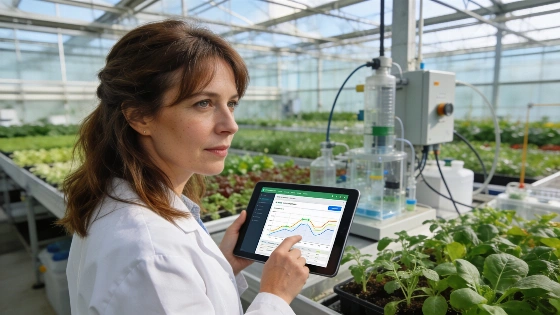
One of the tools developed by Bridle's group is a web-based "future food calculator," which enables users to adjust variables such as fertilizer use, irrigation, crop management, and dietary preferences. The dashboard provides real-time feedback on projected greenhouse gas emissions, land use, and self-sufficiency, helping policymakers and the public understand the consequences of different choices. However, the models must account for demographic differences in motivation-older adults may prioritize health, while younger people may be more concerned about climate-requiring tailored messaging and assumptions.
Limits of Direct Transfer from Astrophysics
Attempts to directly apply astrophysical imaging techniques to agricultural problems have encountered practical limitations. For instance, Bridle's early efforts to use multispectral satellite imaging to detect blackgrass in wheat fields were confounded by variables such as soil moisture and field heterogeneity, which complicated signal interpretation. This experience underscored the need for broader system modeling and the integration of contextual data, rather than relying solely on remote sensing or imaging approaches.
Bridle's work also addresses the challenge of quantifying trade-offs in agricultural practices. For example, no-till farming can reduce emissions by minimizing soil disturbance, but may increase reliance on herbicides if weed pressure rises. Transparent system-level modeling is required to compare such pathways and avoid assuming that any single intervention is universally beneficial.
Open Data and Reproducibility Challenges
Compared to astrophysics, where large collaborations and open data are standard, food system modeling remains fragmented. Bridle notes that many models are still built in spreadsheets rather than transparent, version-controlled code, and that open-source contributions are rare due to skill gaps. Policy reports often lack accessible code or clear documentation of assumptions, making independent verification and improvement difficult. The field would benefit from shared datasets, open code, and coordinated efforts to improve reproducibility and transparency.
Bridle advocates for physicists and mathematicians to bring open-science practices to food-system research, including publishing code and assumptions, building shared datasets, and developing accessible tools for policymakers. She emphasizes the importance of mentorship and collaboration across disciplines to accelerate progress.
Systemic Change and Policy Impact
Information alone rarely changes individual behavior, but it can increase public receptiveness to policy interventions. For example, public understanding of the health impacts of sugary drinks was a prerequisite for the adoption of taxes and reformulation policies. Similarly, systemic changes-such as reformulating products to reduce environmental impact or redesigning choice architecture in food service-can make sustainable options the default without requiring active consumer engagement.
Bridle's team is developing a "digital twin" of the UK food system, integrating data on production, consumption, feed use, and losses to simulate the effects of interventions on emissions and self-sufficiency. This approach allows policymakers to test scenarios such as soil carbon management or dietary shifts and assess whether a bundle of changes can achieve net-zero targets while maintaining resilience. The models also help quantify unintended consequences, such as increased herbicide use resulting from no-till practices.
In pilot studies, environmental labeling has been shown to influence upstream production decisions more than individual consumer choices. When climate labels were introduced, food service operators and manufacturers adjusted offerings and formulations to avoid negative ratings, demonstrating that policy signals can drive systemic change even when direct consumer impact is limited.
Bridle's motivation is rooted in addressing the urgent challenges of climate change and food security. She envisions a future where UK food production and consumption are aligned with net-zero goals, land is used efficiently to enable other climate solutions, and open, quantitative modeling is embedded in policymaking. Achieving this vision will require continued integration of physics-based modeling, open science, and interdisciplinary collaboration.
Understanding the role of quantitative modeling in food systems requires familiarity with the concept of system-level trade-offs. Unlike isolated technical solutions, system modeling evaluates the combined effects of multiple interventions, accounting for feedback loops, social behavior, and unintended consequences. This approach is essential for designing policies that are robust, transparent, and capable of delivering measurable progress toward sustainability targets.