
NASA Missions - Part 6
202 reports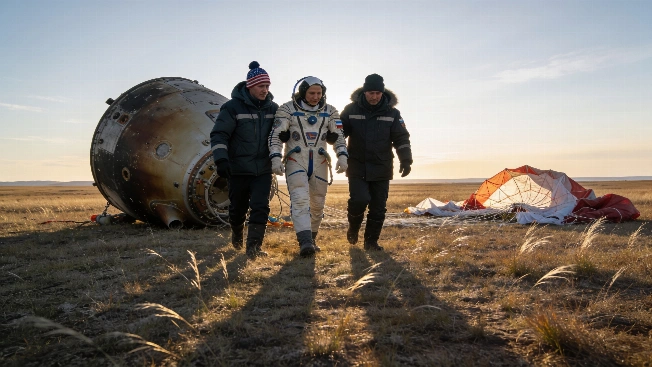
Soyuz MS-28 to Return NASA and Roscosmos Crew from ISS July 26
NASA astronaut Chris Williams and Roscosmos cosmonauts Sergey Kud-Sverchkov and Sergei Mikaev returned from the International Space Station aboard Soyuz MS-28, which landed in Kazakhstan on July 26.
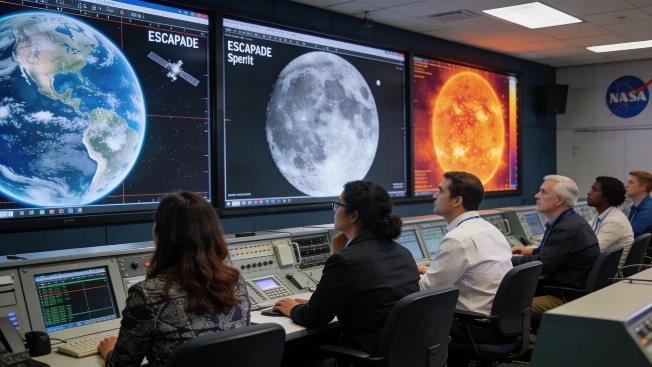
NASA's ESCAPADE Spacecraft Captures Earth and Moon in Dual Light
NASA's ESCAPADE mission has imaged Earth and the Moon in visible and thermal infrared light, offering a rare chance to calibrate its cameras as the spacecraft prepare for their journey to Mars.
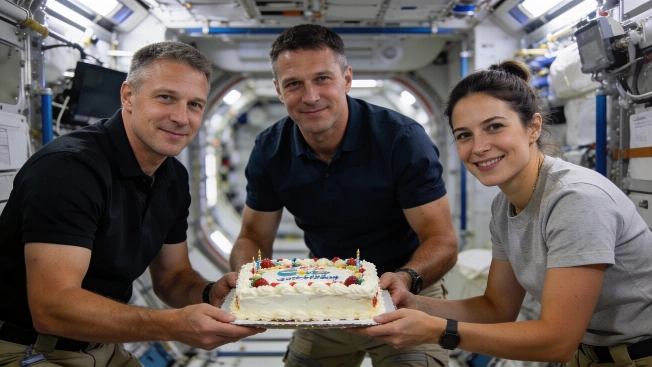
Expedition 74 Crew Begins Science Operations on International Space Station
Expedition 74 astronauts Anna Kikina, Pyotr Dubrov, and Anil Menon have joined the International Space Station, beginning an eight-and-a-half-month mission focused on microgravity research and operational adaptation.
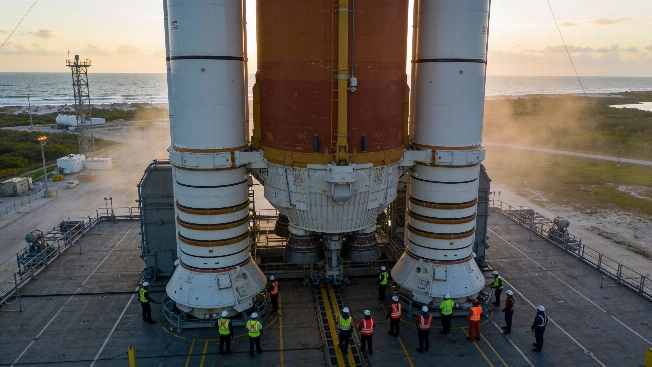
NASA Assigns SunRISE Mission to SpaceX Falcon Heavy After Vulcan Issues
NASA's SunRISE mission, designed to study solar radio bursts, will now launch aboard a SpaceX Falcon Heavy after technical concerns paused United Launch Alliance Vulcan Centaur flights
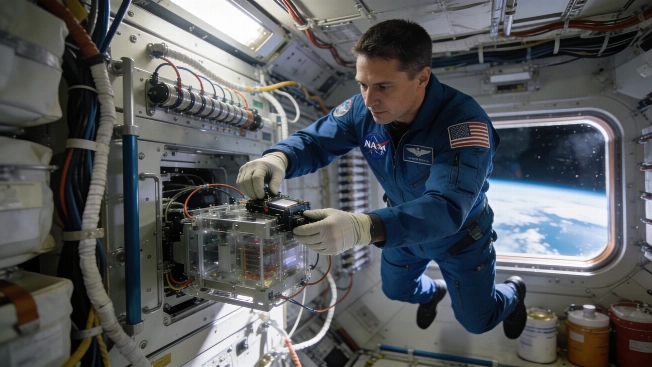
NASA Astronaut Chris Williams Ends ISS Mission After Eight Months
Chris Williams is set to return from his first mission aboard the International Space Station, where he supported research on cancer therapies and semiconductor materials, alongside tests of robotic systems during an eight-month stay.
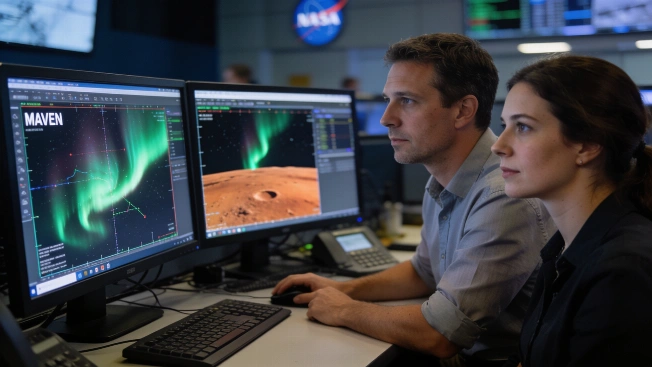
MAVEN Data Reveals Earth-Like Aurora Mechanism on Mars
NASA's MAVEN orbiter has found evidence that localized auroras on Mars are powered by a process similar to Earth's Dungey cycle, offering new understanding into Martian atmospheric loss and magnetic-field interactions.
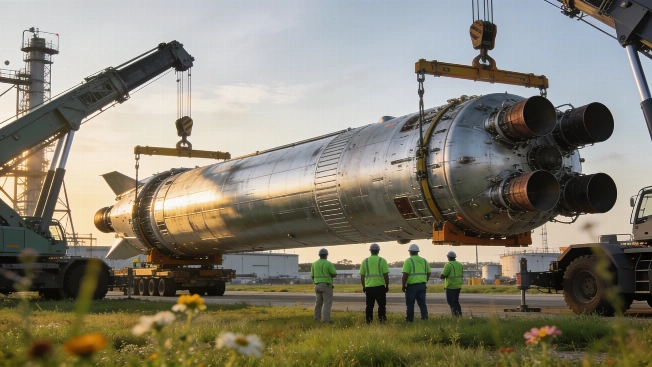
NASA Moves Artemis IV Hydrogen Tank for Core Stage Testing
A 130-foot liquid hydrogen tank for Artemis IV was transported at NASA's Michoud Assembly Facility, marking a basic step toward core stage testing for the Space Launch System rocket.
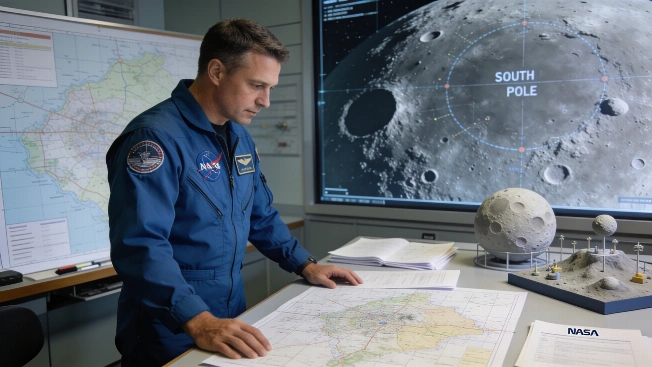
Artemis IV Landing Debate: South Pole or Lunar Equator for Crew Safety
NASA's Artemis IV mission faces a critical decision: whether to target the Moon's challenging south pole or opt for a safer equatorial landing, as astronaut Victor Glover urges a reassessment of mission priorities and safety constraints.
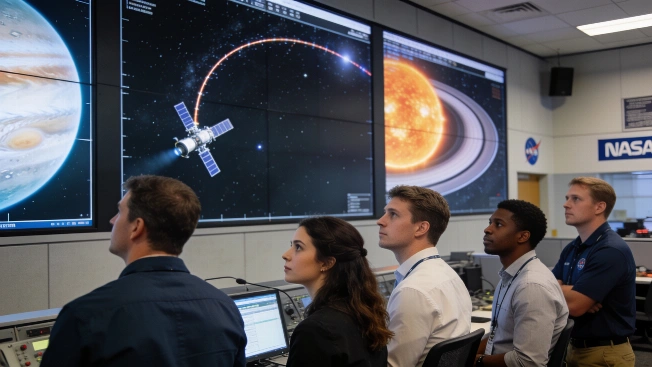
New Horizons Resumes Science at Solar System's Edge After Hibernation
NASA's New Opportunities spacecraft has emerged from a 321-day hibernation and is transmitting data from the outer solar system as it prepares to study the boundary between the Sun's influence and interstellar space with its advanced instruments.
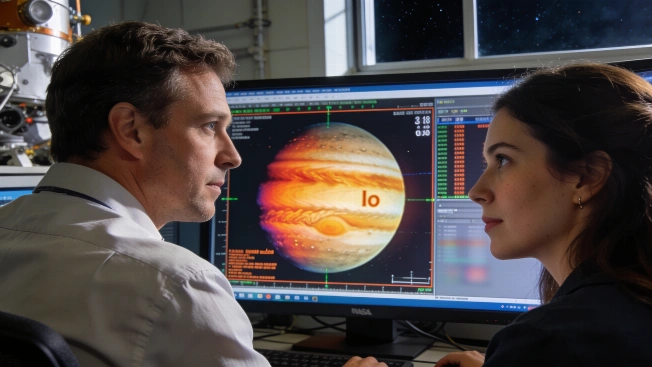
Juno Mission Probes Subsurface Heat on Jupiter's Volcanic Moon Io
NASA's Juno spacecraft has measured temperatures beneath Io's surface, revealing intense internal heating and unexpectedly smooth, low-density terrain. The findings, published in a peer-reviewed journal, offer new understanding into tidal heating on active moons
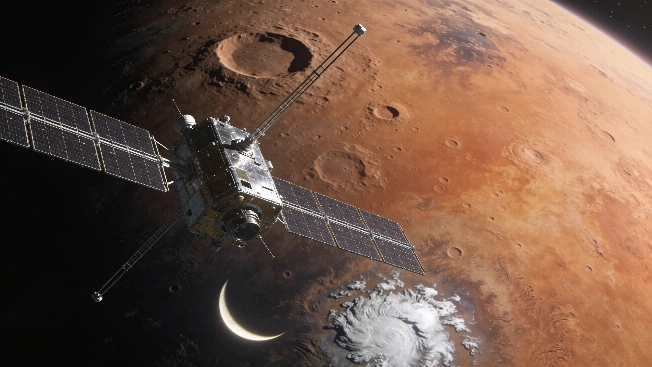
NASA's Psyche Spacecraft Uses Mars Flyby to Refine Asteroid Trajectory
NASA's Psyche probe has completed a close flyby of Mars, capturing a time-lapse sequence and using the planet's gravity to adjust its course toward the metal-rich asteroid Psyche, its target for arrival in 2029.
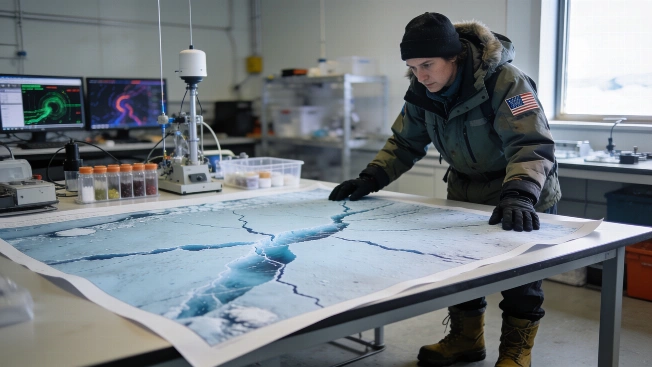
NISAR Satellite Data Reveals Antarctic Ice Fractures in Unprecedented Detail
NASA and ISRO have begun releasing data from the NISAR satellite’s dual radar systems, giving researchers fresh understanding into Antarctic ice movement and structure, as well as other dynamic Earth surfaces.
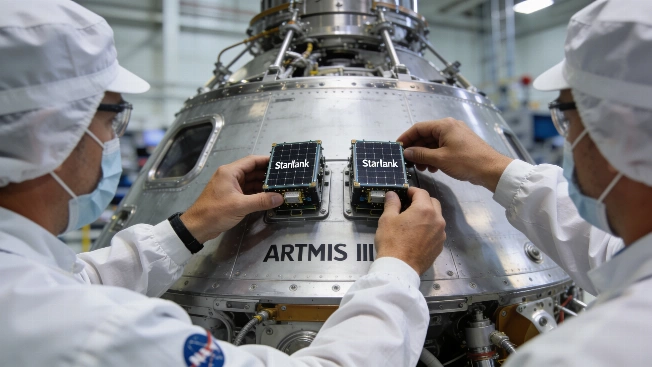
NASA to Equip Artemis III Orion with Starlink Laser Terminals
NASA plans to test Orion’s communications systems during Artemis III, a low-Earth-orbit mission involving commercial landers and currently targeted for 2027, as the agency prepares for later lunar operations.
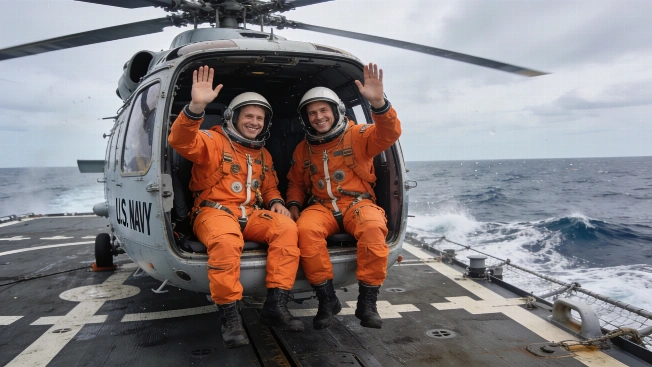
Artemis II Crew's Moon Orbit Mission Highlights Human Connection
NASA's Artemis II mission sent four astronauts around the moon, sharing daily updates and personal moments that resonated globally during a period of international tension and uncertainty.
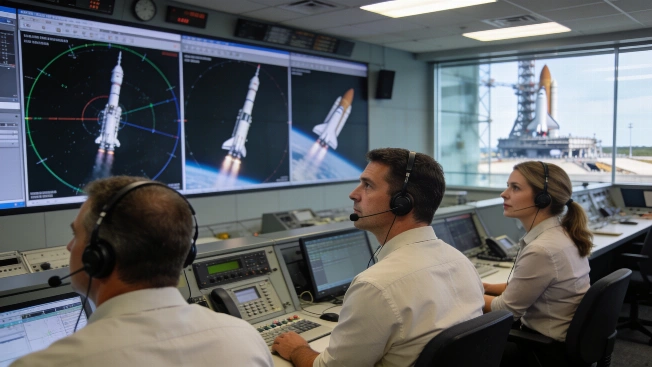
Artemis III to Test NASA's Most Complex Multi-Spacecraft Mission Yet
NASA's Artemis III mission will attempt a coordinated two-week operation involving four astronauts and three independently launched spacecraft, aiming to validate critical lunar landing technologies in low Earth orbit
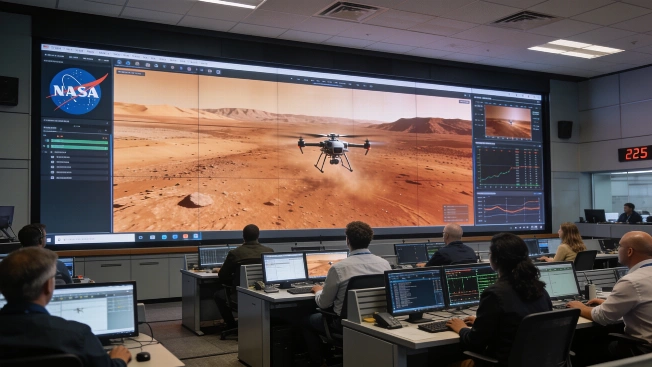
NASA Eyes Mars Skies 50 Years After Viking 1's Landmark Landing
NASA's Viking 1 lander touched down on Mars in 1976, opening a new era of planetary exploration. Now, five decades later, the agency is preparing to extend its reach above the Martian surface with aerial missions.
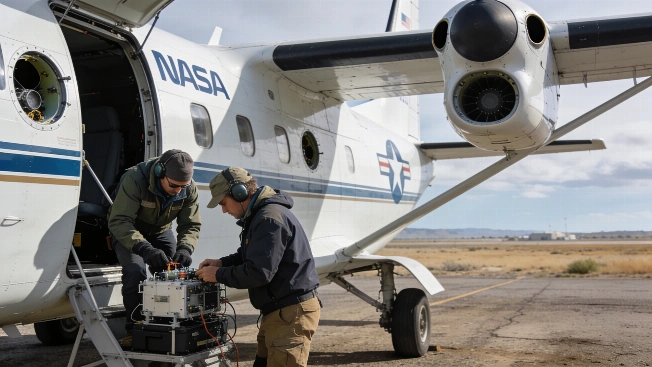
NASA Prepares Six New Airborne Missions to Study Earth's Extremes
NASA is launching a new series of suborbital missions with aircraft and drones, alongside remote sensors, to investigate wildfires and air quality as well as glacier retreat and landslides. The missions aim to improve scientific understanding of rapid environmental change.
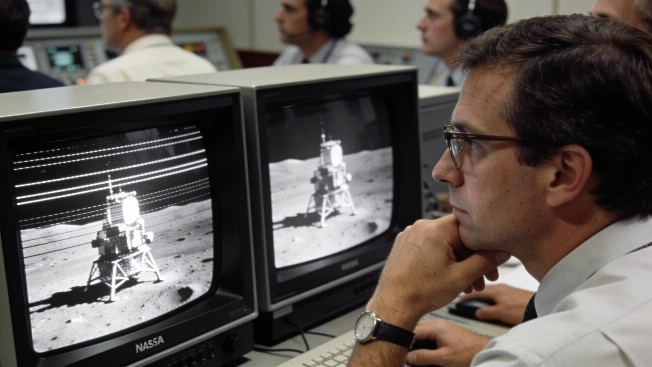
Viking 1's First Mars Surface Image Changed Planetary Exploration
NASA's Viking 1 lander transmitted the first direct image from the Martian surface in July 1976, revealing the planet's rocky terrain and marking a milestone in robotic planetary science
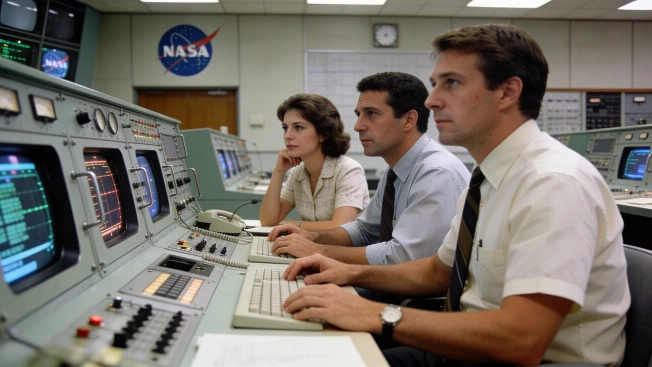
How NASA Langley Engineered the First Mars Landings
Fifty years after Viking 1 and 2 touched down on Mars, the engineering and mission design led by NASA's Langley Research Center remain central to how planetary landings are planned and executed across the solar system.
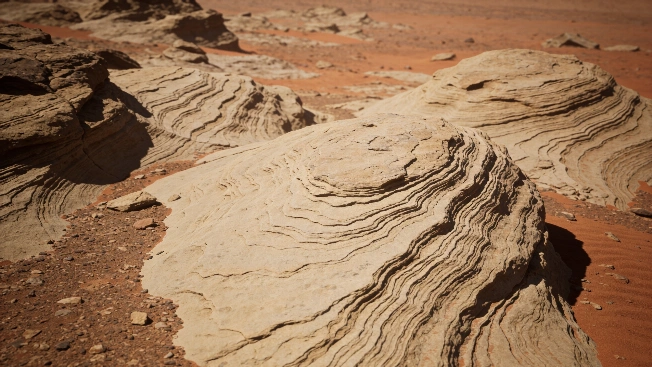
Curiosity Rover Reveals Ancient Sandstorm Evidence on Mars
NASA's Curiosity rover has imaged Martian rocks shaped by a powerful ancient sandstorm, offering new understanding into the Red Planet's dynamic past and the processes that once shaped its surface.
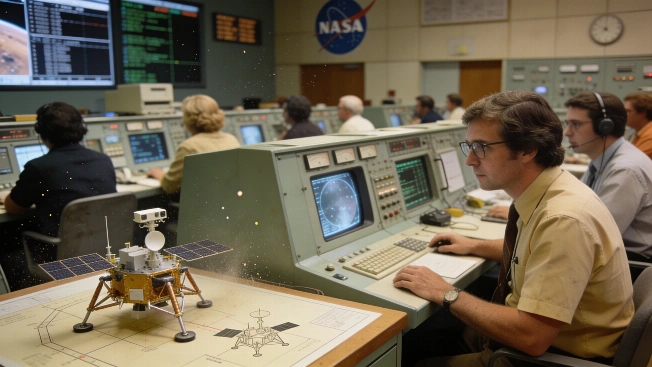
Viking 1's Mars Life Experiments: What the Evidence Still Can't Prove
Fifty years after NASA's Viking 1 lander touched down on Mars, scientists remain divided over whether its life-detection experiments found evidence of Martian biology or were confounded by non-biological chemistry and instrument limitations.
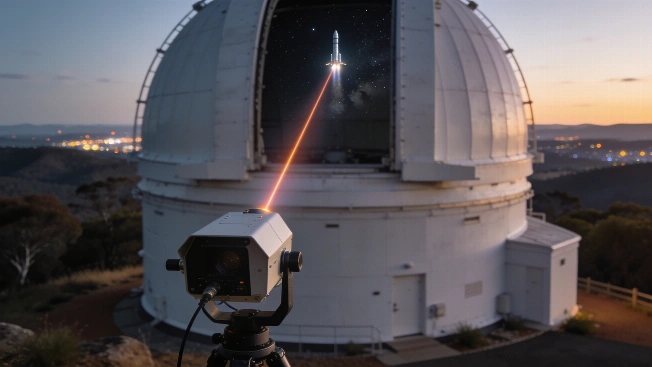
NASA Tests Laser Link for Live 4K Video Transmission From the Moon
NASA's Artemis II mission used an experimental laser communications system to transmit live high-definition video from lunar orbit to Earth, testing a lower-cost, higher-bandwidth alternative to traditional radio links under real mission conditions.
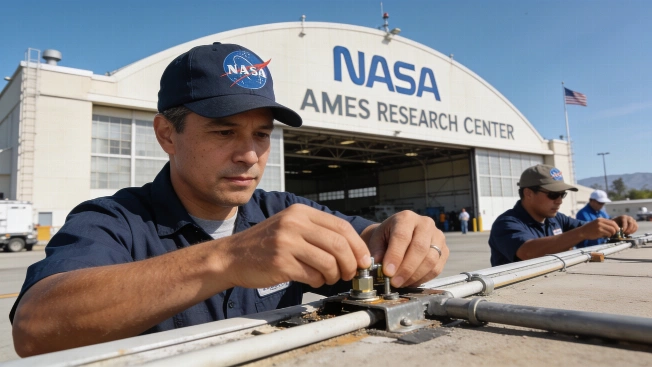
NASA Contracts Chugach for Ames Research Center Facility Operations
NASA has awarded Chugach Intelligence Solutions LLC a five-year contract to manage facility operations and maintenance, including repairs, at Ames Research Center in California, supporting its scientific missions and infrastructure needs
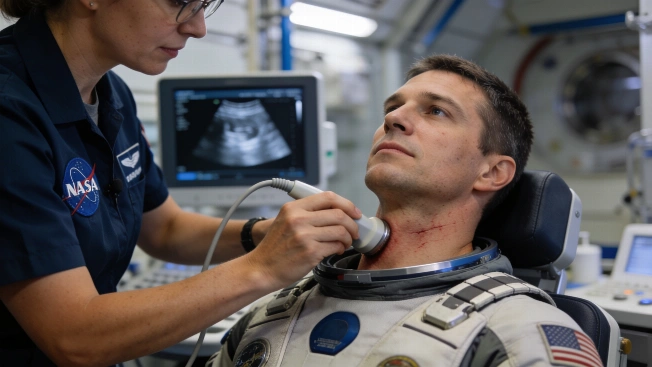
NASA Develops VTE Risk Algorithm for Astronauts on ISS Missions
NASA's medical office has established a new risk assessment algorithm for venous thromboembolism (VTE) in astronauts, following updated case reviews and in-flight blood-flow data from International Space Station missions.
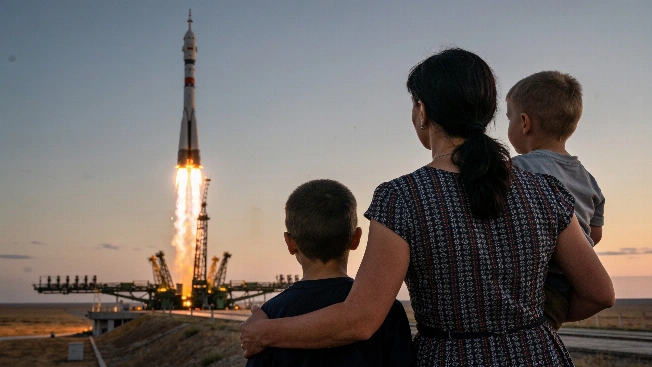
Soyuz MS-29 Launches NASA and Roscosmos Crew to Space Station
A Soyuz rocket has launched from Baikonur Cosmodrome, carrying NASA astronaut Anil Menon and Roscosmos cosmonauts Pyotr Dubrov and Anna Kikina to the International Space Station for a long-duration mission focused on scientific research
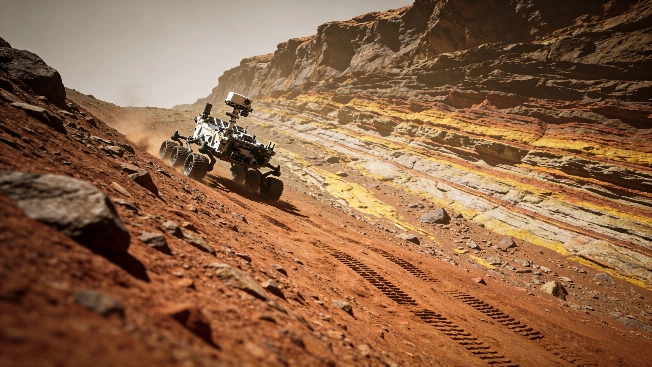
Perseverance Rover Images Ancient Martian Bedrock at Jezero Crater Rim
NASA's Perseverance rover has captured a detailed view of the Jezero Crater rim on Mars, revealing a thick sequence of ancient rocks. Recorded by the Mastcam-Z instrument, the scene offers new evidence about the planet's impact history and surface evolution.
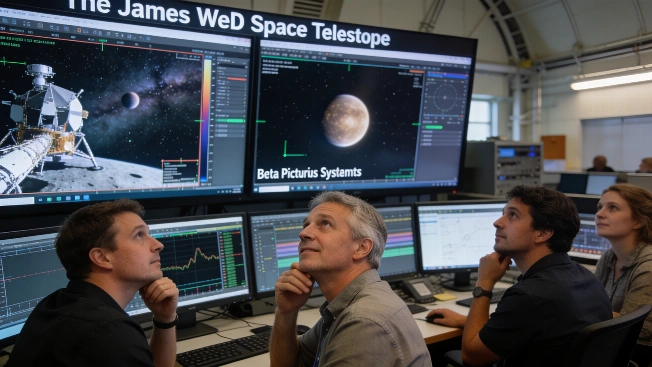
Webb Telescope Detects Hidden Giant Planet in Beta Pictoris System
The Beta Pictoris system contains three known giant exoplanets, while radio observations of β Pictoris b may offer clues to auroral activity and help investigate magnetic fields around distant planets.
Part 6 of 6