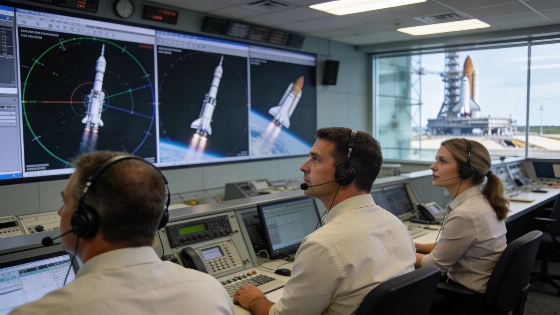
NASA's Artemis III mission will attempt a coordinated two-week operation involving four astronauts and three independently launched spacecraft, aiming to validate critical lunar landing technologies in low Earth orbit
NASA is preparing for Artemis III, a mission that will attempt to orchestrate the launch, rendezvous, and docking of three separate crew-capable spacecraft in low Earth orbit. Scheduled for next year, Artemis III is designed to test the operational readiness of both commercial lunar landers and NASA's Orion spacecraft, setting the stage for future crewed landings on the Moon. The mission's complexity and technical demands mark a significant escalation in the Artemis program's ambitions, with multiple launches, cross-agency coordination, and new in-orbit procedures required for success.
Coordinating Three Spacecraft
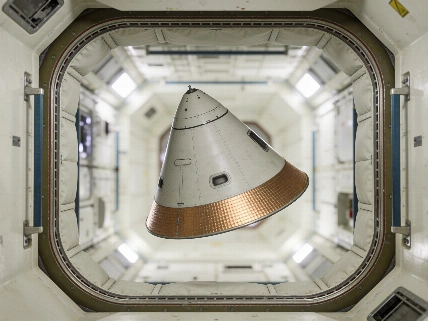
Artemis III will see four astronauts launch aboard the Orion spacecraft atop NASA's Space Launch System (SLS) from Kennedy Space Center. In parallel, two commercial lunar landers-Blue Origin's Blue Moon and SpaceX's Starship-will each launch separately on their own rockets from different pads on Florida's Space Coast. The mission plan calls for Orion to rendezvous and dock with each lander in low Earth orbit, allowing astronauts to test critical systems and interoperability between vehicles. This approach is unprecedented for NASA, which has not previously attempted to coordinate multiple crew-capable spacecraft launches and dockings within a single mission.
Blue Moon is scheduled to launch first, riding Blue Origin's New Glenn rocket from Space Launch Complex-36 at Cape Canaveral Space Force Station. The lander is designed to remain in orbit for up to 30 days, providing a window for NASA and Blue Origin to verify its condition before Orion's arrival. After Orion docks with Blue Moon, two astronauts will board the lander to evaluate its environmental controls, avionics, and crew systems. A test spacesuit will also be flown to gather data on suit performance inside the lander's cabin.
Technical Milestones and Risks
Following the Blue Moon demonstration, Orion will undock and prepare for a second rendezvous-this time with SpaceX's Starship, which will launch after the initial docking phase. Starship's version for Artemis III will not be the final lunar landing model but will include key hardware such as docking ports and systems for in-space propellant transfer. The mission will test communications and maneuvering between Orion and Starship, but astronauts will not transfer between the vehicles during this flight. Both landers must demonstrate uncrewed lunar landing capability before NASA certifies them for future crewed missions.
Each spacecraft's launch will require careful scheduling and resource management across multiple launch pads and agencies. The need for nitrogen gas, range availability, and infrastructure alignment adds further complexity. Blue Origin's New Glenn suffered an engine test explosion in May, delaying its demonstration schedule, but the company expects to resume launches by the end of 2026. SpaceX, meanwhile, continues to iterate on Starship's design, with the Version 3 model introduced in 2026 and ongoing test flights to validate its performance.
Mission Timeline and Scientific Context
The Artemis III mission is planned to last approximately two weeks in orbit. Orion will spend about two days docked with Blue Moon and roughly one day with Starship before preparing for reentry. The crew will return to Earth with a parachute-assisted splashdown in the Pacific Ocean, similar to the Artemis II recovery profile. The mission's success is critical for NASA's lunar ambitions: Artemis IV, currently scheduled for 2028, will rely on the lessons and technical validation from Artemis III to attempt the first crewed lunar landing since Apollo 17.
Coordinating multiple launches and dockings is rare in human spaceflight history. The only previous mission to achieve a similar feat was Soyuz T-15 in 1986, which saw a Soviet crew transfer between two space stations. NASA's Gemini and Shuttle programs performed complex rendezvous with uncrewed targets, but never with multiple crew-capable vehicles in a single mission. The Artemis III architecture represents a new operational paradigm for lunar exploration, requiring robust cross-agency and commercial collaboration.
Implications for Future Lunar Missions
Artemis III's primary objective is to validate the systems and procedures needed for sustainable lunar exploration. Both Blue Moon and Starship must demonstrate safe, reliable operations in orbit before being cleared for crewed lunar landings. NASA's approach allows for iterative development, with in-flight data from Artemis III informing final lander designs. The mission's outcome will directly influence the timeline and technical readiness for Artemis IV and subsequent lunar surface operations.
The complexity of Artemis III highlights the evolving landscape of space exploration, where commercial providers play a central role in mission architecture. As launch costs decrease and new vehicles come online, the challenges of coordination, safety, and technical integration become more prominent. Recent analyses of launch economics, such as those discussed in a Science Report feature on falling launch costs and emerging barriers, underscore the importance of infrastructure and policy in enabling ambitious missions like Artemis III.
Artemis III is not only a test of hardware but also of NASA's ability to manage complex, multi-partner operations in real time. Its success or failure will shape the next decade of lunar science and exploration.
Docking multiple spacecraft in orbit is a technically demanding process that requires precise navigation, reliable communications, and robust safety protocols. Each vehicle must approach and align with its target at low relative velocity, using radar, lidar, or optical sensors to guide the final approach. Docking adapters and hatches must be compatible, and environmental systems must maintain safe conditions for crew transfer. The process is further complicated when vehicles are launched on different rockets and schedules, increasing the need for accurate orbital predictions and contingency planning. Mastery of these procedures is essential for future missions involving lunar landers, space stations, or deep-space assembly.