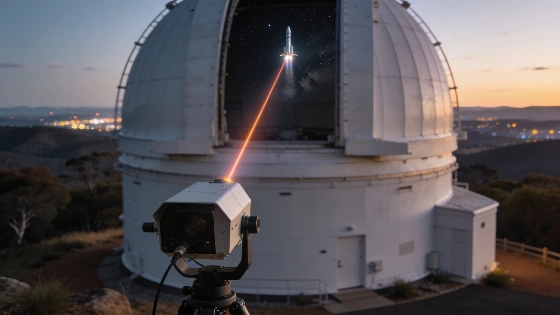
NASA's Artemis II mission used an experimental laser communications system to transmit live high-definition video from lunar orbit to Earth, testing a lower-cost, higher-bandwidth alternative to traditional radio links under real mission conditions
NASA has completed a field demonstration of a laser-based optical communications system during the Artemis II mission, transmitting live 4K video from lunar orbit to ground stations on Earth. The test, conducted over a 10-day period, evaluated whether laser links could reliably deliver high-bandwidth data from deep space at a fraction of the cost of conventional radio-frequency ground infrastructure.
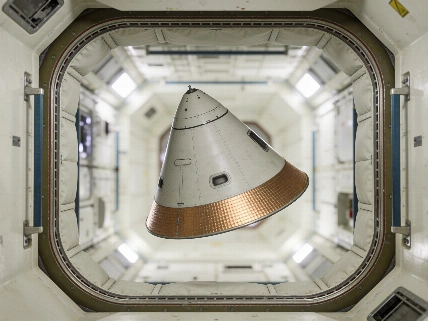
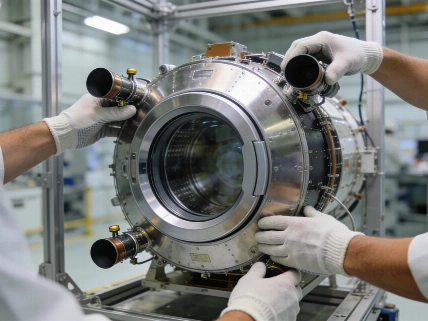
The Artemis II Optical Communications System (O2O) was mounted on the Orion spacecraft and transmitted data to three terrestrial receiving sites: two in the United States (Las Cruces, New Mexico, and Table Mountain, California) and one at Mount Stromlo Observatory near Canberra, Australia. The Australian site, equipped with a 0.7-meter telescope and a fast-steering mirror, was developed through a collaboration between Quantum Opus, Observable Space, and the Australian National University. This setup was designed to test a lower-cost ground terminal, with reported costs in the single-digit millions of dollars-significantly less than the tens of millions typically required for traditional ground stations.
Laser Communications in Deep Space
Laser communications offer a substantial increase in bandwidth compared to radio-frequency systems, with the potential to transmit up to a thousand times more data due to the higher frequency of infrared light. During the Artemis II demonstration, the O2O system achieved a sustained downlink rate of 260 megabits per second, enabling real-time 4K video streaming and multiple simultaneous conference calls. Over the course of the mission, the system transmitted approximately 450 gigabytes of data between the Orion spacecraft and Earth.
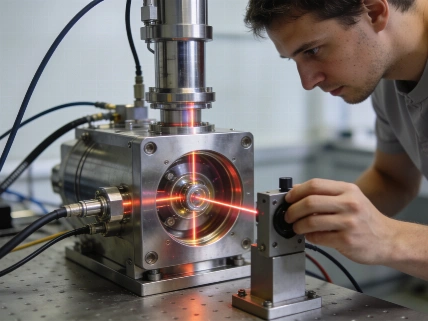
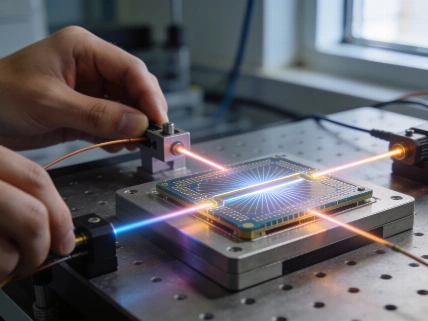
At the core of the Australian ground station was a superconducting nanowire single-photon detector developed by Quantum Opus. This cryogenically cooled sensor, described by the company as the world's most sensitive, is capable of detecting more than 90% of incoming photons. The detector's active area is less than 50 micrometers across, allowing it to register extremely faint signals arriving from lunar distances. During the test, the signal was so strong that researchers had to reduce the detector's sensitivity to avoid saturation.
Reliability, Limitations, and Human Oversight
While the demonstration confirmed that laser communications can deliver high-bandwidth data from the Moon, the system remains vulnerable to atmospheric interference. Infrared laser signals are easily scattered by clouds, causing data interruptions. In contrast, radio waves can penetrate cloud cover, providing more consistent connectivity. To mitigate this limitation, NASA and its partners used geographically distributed ground stations, allowing the system to switch to a site with clear weather when necessary. During the Artemis II mission, communication was lost for only about 40 minutes-when the Orion spacecraft passed behind the Moon-while the Australian ground station helped minimize other blackouts caused by clouds or Earth's rotation.
The O2O system was initially deployed as a demonstration, but after several days of successful operation, NASA transitioned it to routine mission use. The Australian ground station performed comparably to its American counterparts, helping to close coverage gaps and reduce the risk of data loss. According to Observable Space, a global network of 15 to 20 such ground stations could provide continuous connectivity for future lunar and Martian missions, though this remains a projection rather than a tested capability.
Technical and Operational Context
Laser communications technology is not unique to NASA. SpaceX, for example, uses laser links to transfer data between satellites in its Starlink constellation, and several commercial and academic groups are developing laser-based relay networks for space and terrestrial applications. However, the Artemis II demonstration is notable for its use of a cost-reduced, modular ground terminal and its integration into a crewed lunar mission. The system's performance-transmitting at rates roughly 5,000 times higher than those achieved during the Apollo missions-marks a significant technical advance, but it does not eliminate the need for radio-frequency backup links for critical telemetry and command data.
During Artemis II, the O2O system was used primarily for high-bandwidth scientific data and live video, while NASA's Near Space Network and Deep Space Network continued to handle essential spacecraft control. The laser link's reliability under variable weather conditions and its dependence on ground infrastructure diversity remain open engineering challenges. The demonstration did not address long-term operational resilience, regulatory certification, or the integration of quantum-secure communications, though Quantum Opus has suggested that its detectors could support future quantum cryptography applications.
Laser communications between Earth and Mars would face even greater challenges, as signal strength drops dramatically with distance. The Artemis II test serves as a proof of concept for lunar distances, but further advances in detector sensitivity, telescope design, and network redundancy would be required for reliable interplanetary broadband.
Optical communications systems such as O2O represent a shift toward higher-bandwidth, lower-cost data transfer in space missions, but their operational deployment will depend on addressing atmospheric vulnerability, ensuring global ground coverage, and maintaining robust radio-frequency fallback for mission-critical functions.
Optical communications in space rely on the transmission of data via modulated laser beams, which can carry far more information per second than traditional radio-frequency signals. However, the technology's effectiveness depends on clear atmospheric conditions at the receiving site, precise pointing and tracking between spacecraft and ground stations, and highly sensitive photon detectors capable of registering faint signals over vast distances. Unlike radio links, which are relatively robust to weather, laser systems require careful network design to ensure continuous coverage. As demonstrated in Artemis II, integrating multiple geographically distributed ground stations and maintaining radio backup links are essential for operational reliability. The development of more affordable, modular ground terminals could make global laser communication networks feasible, but their performance and resilience under real-world mission conditions remain active areas of engineering research.