
Quantum Physics - Part 4
476 reports
Dirac Labs Joins Wisconsin Quantum Navigation Consortium
A Wisconsin consortium affiliation links Dirac Labs' diamond-based magnetic sensing concept with Lake Michigan test infrastructure. The announcement provides no sensitivity figures or field-performance data
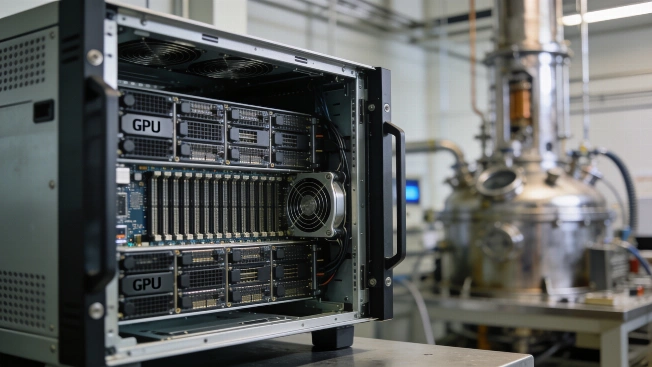
GPU Calibration Cuts Quantum Decoder Training to Seconds
Riverlane and NVIDIA report that an H100 GPU cuts surface-code decoder-training epochs from minutes to seconds, while recalibrated priors lower logical error rates by several percent to as much as twofold compared with uncalibrated starting weights.

New York City Backs a $284 Million Quantum Chip Facility
New York City is putting $29.2 million toward NYU's planned quantum fabrication center, with the university committing $255 million. Scheduled to open in 2030, the project pairs chipmaking facilities with workforce programs and reserves some proceeds for the public.
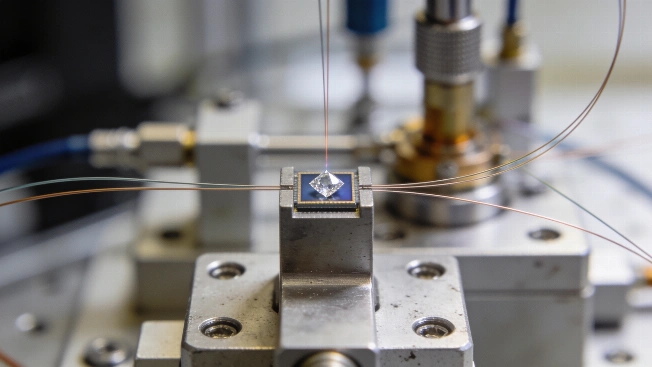
Diamond Spins Run Grover Search at Room Temperature
A diamond quantum computer in Dresden ran a three-qubit Grover search at 296.3 K, with a reported 77.3% success probability. The result approaches a roughly 78% result cited for a cryogenic superconducting processor.

Bloq Maya Targets Faster Quantum Algorithm Development
Bloq Quantum says its new enterprise assistant can convert high-level requirements into quantum code, parameterized circuits and QUBO models. The launch claims a faster process but reports no performance benchmarks
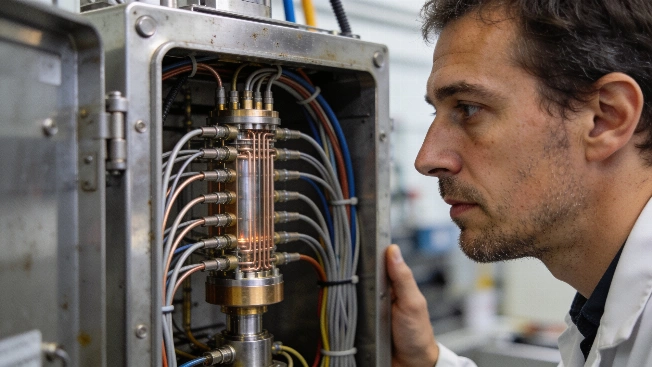
Qilimanjaro Raises €19.6 Million to Build Fluxonium Systems
The Spanish quantum company says its €19.6 million Series A first close will expand chip fabrication and deployment of fluxonium-based systems, but the announcement provides no benchmark or qubit-performance figures.
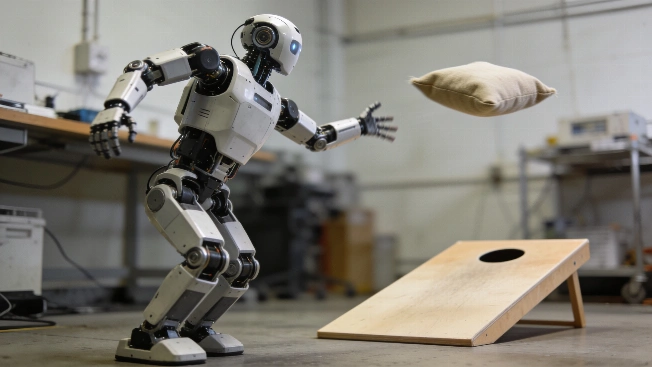
Gemini 4 Argon Reports 100-Fold Quantum Resource Cut
Google says Gemini 4 Argon cut the resource cost of a quantum-computing subroutine by more than 100 times and raised robot task success in real-world tests from 56% to 75%.
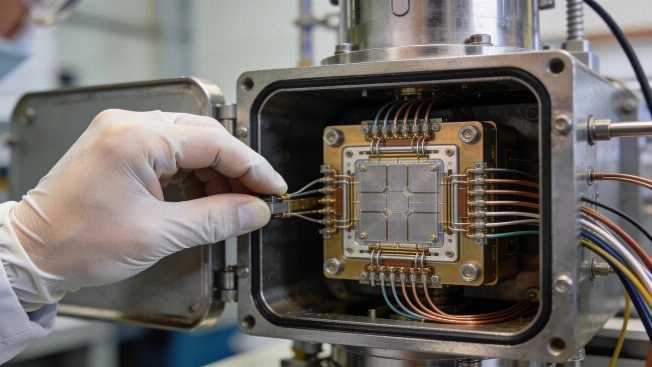
Software Reweighting Cuts Simulated Surface-Code Errors 1,600-Fold
Google Quantum AI reports that Virtual Error Cancellation reduced residual logical errors by more than 1,600-fold in distance-7 surface-code simulations. The offline method reuses recorded stabilizer measurements, but has not yet been demonstrated on a quantum processor.
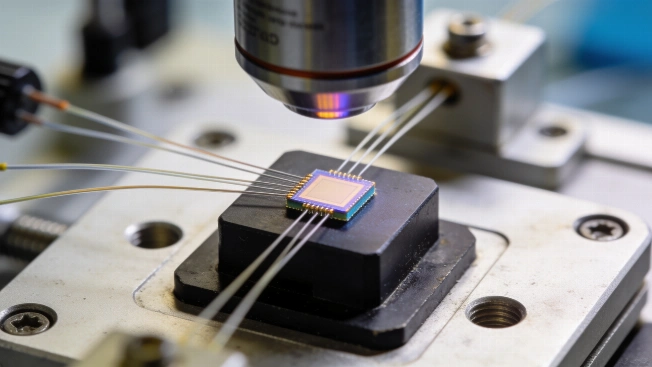
A Photonic Chip Transfers Skyrmion Topology Between Quantum States
An integrated silicon nitride photonic chip transferred a skyrmion pattern from a single-photon state into correlations between two photons. The reported topological number remained measurable under noise even after concurrence fell to zero: a result about state structure, not proof of a functioning quantum network.

Quantum One-Time Pads Face a Key-Delivery Test
Symmatrics says it can generate and distribute one-use encryption keys at scale. The company reports trial installations, but the interview provides no independent security evaluation or performance measurements, and a random-number generator alone does not establish secure basic delivery.

IonQ Reports Up to 74-Fold Faster Logical Gates Through qLDPC Scheduling
An arXiv preprint by Mark Webster and Nicolas Delfosse describes scheduled joint measurements paired with CliNR, reporting up to 74-fold speedup for logical Clifford operations and up to fivefold for Toffoli gates against sequential logical measurements. The analysis considers Q70 and Q102 codes in IonQ's Walking Cat trapped-ion architecture, but does not establish a full fault-tolerant computer or a useful algorithm run.

IBM Moves Quantum Error Control to the Client Side
IBM Quantum has shifted basic error-mitigation controls from a server-side black box to researchers' local workflows, while its new Executor primitive handles large circuit families near the hardware.
IBM Opens Qiskit to High Performance Quantum Workflows
IBM has added native C API bindings to Qiskit v2.0, allowing Fortran, C++ and Julia programs to build and manipulate quantum circuits through Qiskit's Rust core without requiring Python as an intermediary.

Xanadu Reports Nearly Fourfold QROM Cost Reduction in Algorithmic Estimate
Xanadu-linked circuit constructions are reported to reduce the estimated non-Clifford cost of quantum read-only memory by about 3.9-fold for 32-bit entries. The result remains an unverified algorithmic resource estimate, not demonstrated hardware acceleration.

Hyperbolic Surface Codes Push Quantum Error Correction Toward Modular Hardware
A University of Saskatchewan preprint describes geometry-optimized hyperbolic surface-code families and a routing algorithm for modular hardware, with circuit-level simulations testing noisy inter-chip links.
Quantum Industry Builds Leadership Around Security Research and Scale
PQShield, VTT, QuantWare, and Rensselaer Polytechnic Institute have named leaders for security strategy, quantum research, fabrication finance, and national-laboratory collaboration.
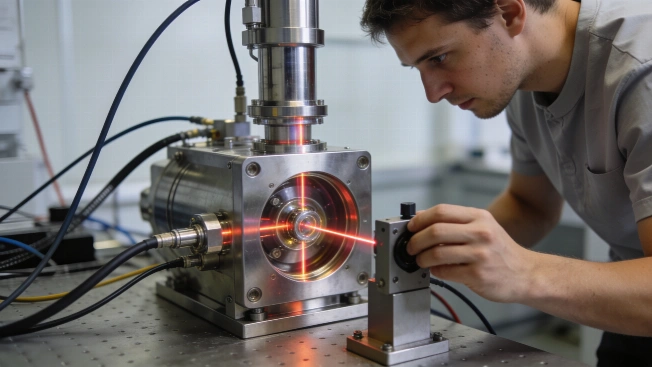
Quantum X Labs Targets Three Quantum Hardware Bottlenecks
Quantum X Labs has reported patent activity in neutral-atom control and quantum-circuit watermarking while developing a platform that combines Ramsey-CPT timing with Rydberg radio-frequency sensing; the available record shows active development, not a demonstrated quantum computer or field-ready instrument.

Moth Quantum puts real quantum hardware inside a browser game
Moth Quantum's browser maze uses qubits and their correlations to generate shifting walls on quantum hardware, without claiming a speed advantage over classical games

A Microcomb Chip Solves a Key Problem in Optical Metrology
A foundry-fabricated photonic chip has produced a self-aligned octave-spanning microcomb by driving one resonator with two lasers separated by an octave, demonstrating a potential route to compact precision metrology.
Arqit Wins NATO Contract as FY 2026 Revenue Nears $1 Million
Arqit expects unaudited FY 2026 revenue of $975,000 to $1 million after reporting seven commercial contracts, a NATO security-services contract and approximately $51 million in cash.
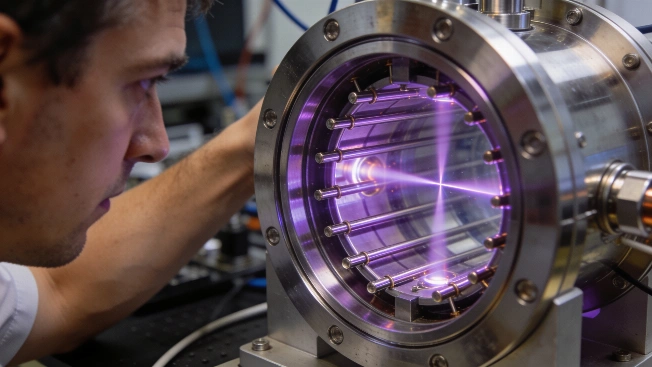
Trapped Ion Processor Resolves a Subtle NMR Double Peak
Quantinuum and HQS reproduced a difficult diphosphane NMR feature on trapped-ion hardware after compressing a 22-spin model into 21 effective spins, using 70 Trotter steps and circuits with more than 1,400 two-qubit gates.
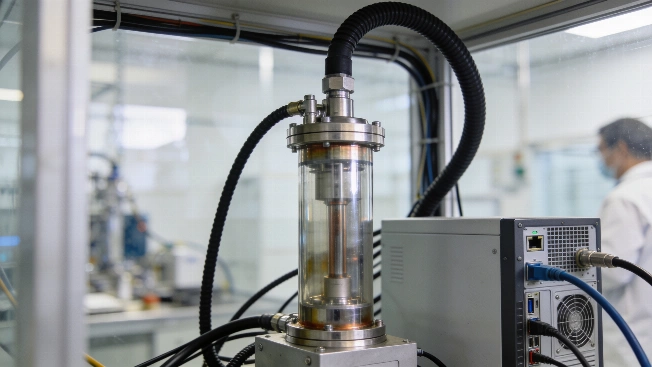
Europe Tests a CPU-QPU Path for Silicon-Spin Quantum Hardware
Quobly and SiPearl will study how an 80-core European ARM processor could interface with a silicon-spin QPU. The MoU targets hybrid HPC systems but does not yet demonstrate a working quantum integration or quantum advantage.
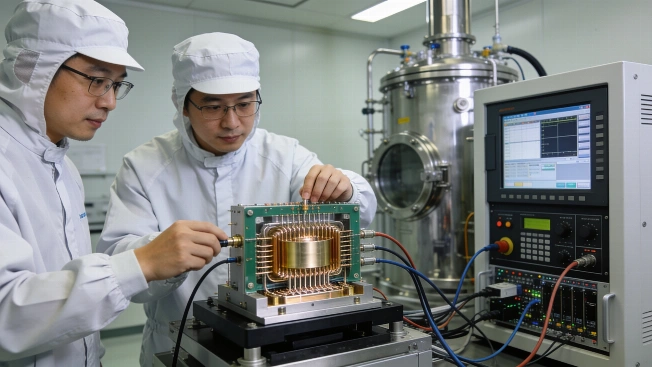
NTT DOCOMO BUSINESS and Classiq Plan Japan's Enterprise Quantum Software Push
On 8 October 2026, NTT DOCOMO BUSINESS and Classiq's Japanese subsidiary signed a memorandum of understanding to market Classiq's quantum software and jointly identify, develop and validate enterprise applications in Japan. The announcement describes a planned collaboration, not a completed deployment, performance result or demonstration of quantum advantage.
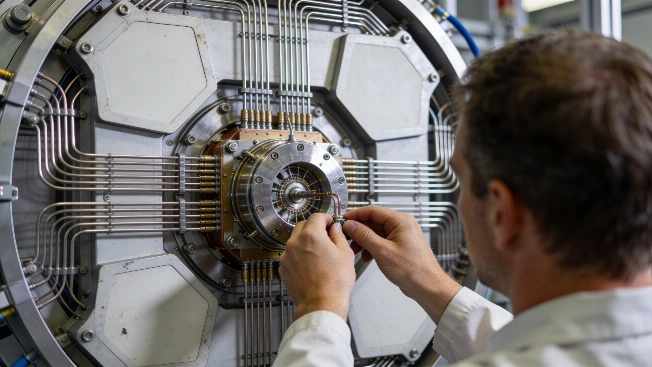
Shor's Algorithm Faces a Patent Eligibility Test
Shor's algorithm could threaten RSA by factoring large integers through quantum period finding. Yet a patent claim covering the method may struggle under current US eligibility rules.
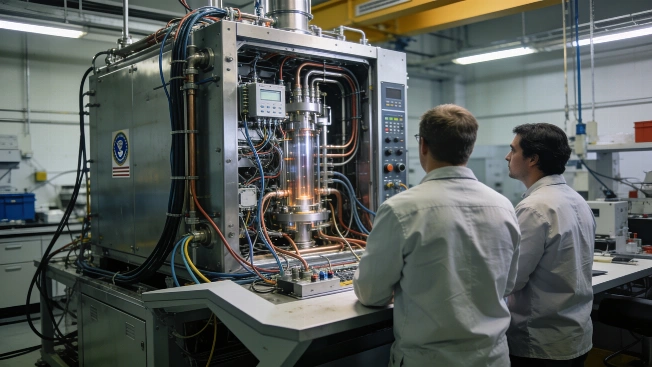
DOE Sets Eight Quantum Tests for Fault-Tolerant Scientific Utility
The U.S. Department of Energy has defined eight priority applications across chemistry, materials, subatomic physics and applied mathematics to test whether fault-tolerant quantum computers can deliver measurable scientific value beyond classical high-performance computing.
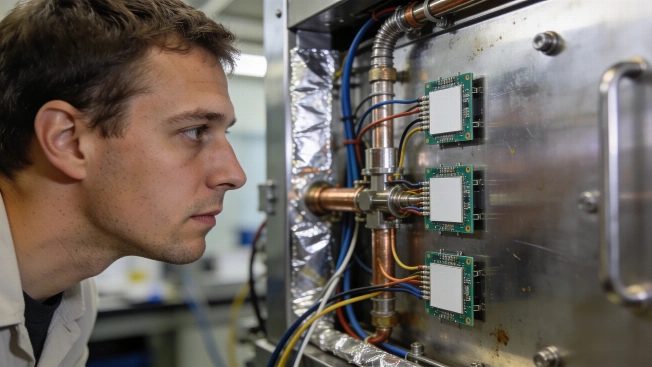
DOE Funds Quantum Error Correction and Materials Design
The U.S. Department of Energy has committed $159 million to 12 new Genesis Mission Phase II projects linking artificial intelligence and high-performance computing with quantum error correction, materials design, sensing and accelerator operations.
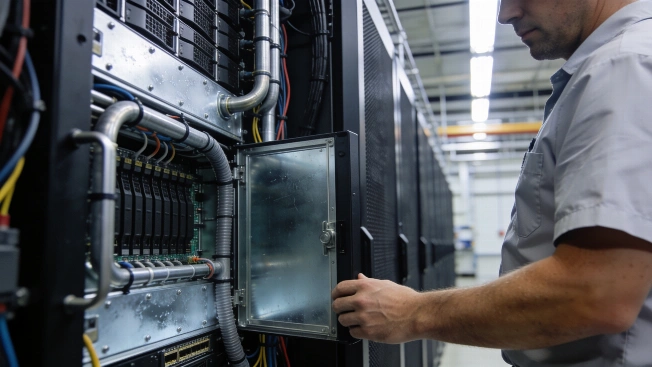
NVIDIA Puts $1 Billion Behind U.S. Quantum Infrastructure
NVIDIA says it will commit $1 billion over five years to U.S. scientific computing and quantum research, tying GPU supercomputing and CUDA-Q emulation to expanded Genesis Mission infrastructure.
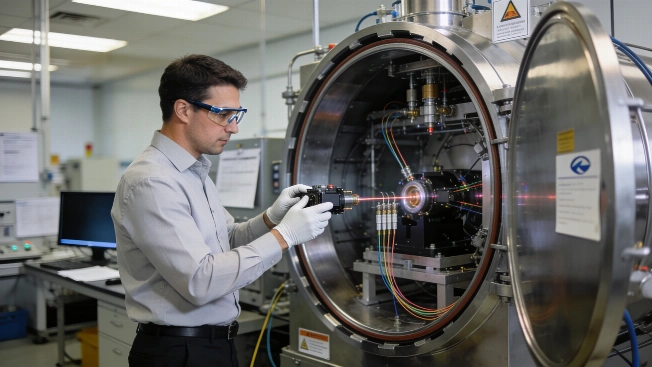
U.S. Backs Photonic Quantum Manufacturing With $150 Million Loan
The Department of War has outlined a $350 million quantum initiative, including up to $150 million in conditional financing for PsiQuantum's Milpitas manufacturing hub and approximately $200 million for independent hardware validation under DARPA's Stage C program.
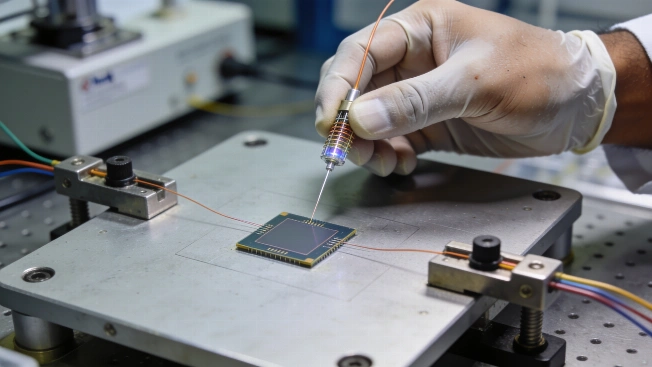
India Advances Silicon Photonics for Quantum Communications and AI
India's five-year silicon photonics programme has entered Phase II, targeting 200 mm wafer design libraries, 1.6 Tbps optical transceivers, microwave photonics above 50 GHz, AI-oriented photonic computing and chip-scale QRNG/QKD circuits.
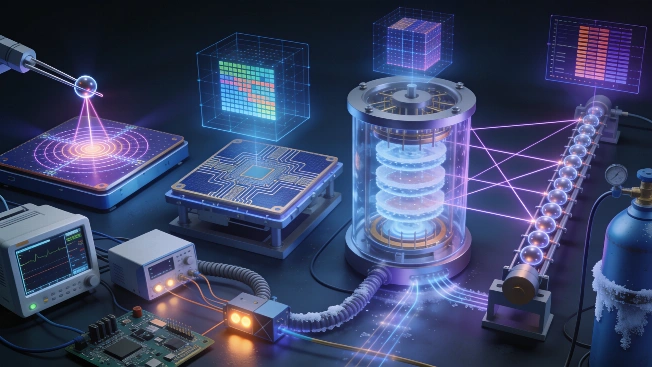
DARPA Puts Four Quantum Platforms Through Final Hardware Tests
DARPA has moved Atom Computing, Diraq, IBM and IonQ into the final stage of its quantum benchmarking program, where physical systems, control infrastructure, software and error-correction components will face direct testing instead of plan reviews.
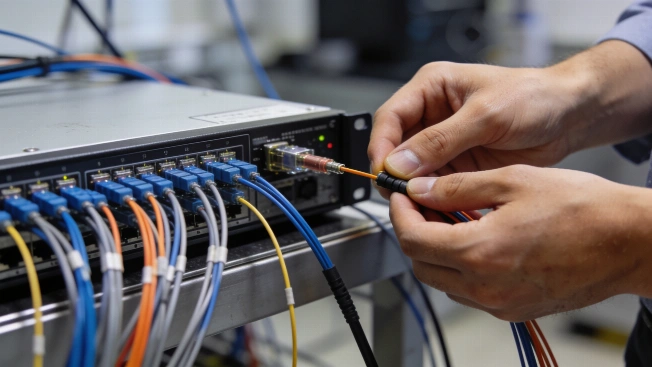
Cisco Targets Quantum Networks With Entanglement Control Software
Cisco has released research prototypes that let quantum software request entanglement across networked QPUs while a compiler accounts for optical loss, switching delays and distributed error-correction constraints.

QuantumCT Opens New Haven Hub to Anchor Connecticut's Quantum Corridor
QuantumCT opened its 4,500-square-foot hub at 101 College Street in New Haven on October 7, 2026, creating a shared base for researchers, students, entrepreneurs and industry partners as Connecticut expands its quantum and biomedical corridor.

Strongpoint Targets Crypto Agility in Post-Quantum Custody
Project Eleven has introduced Strongpoint with the Zcash Foundation as an initial development partner. The platform aims to separate institutional custody controls from the signature schemes used by changing blockchain networks.
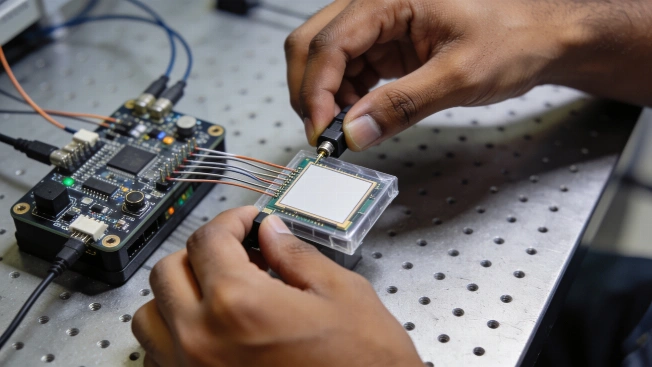
Quanfluence Bets on Photonic Chips for a Full-Stack Quantum System
Bengaluru startup Quanfluence has raised $10 million to bring photonic chips and custom control silicon together with optics and software in one architecture, with a four-qubit processor targeted for the near term and a larger prototype planned for 2029.

Post-Quantum Readiness Claim Lacks Public Verification
A reported GAO assessment says 24 CFO Act agencies had not completed basic post-quantum preparation tasks, but the audit and subsequent federal response could not be independently verified in the public record.
Part 4 of 14