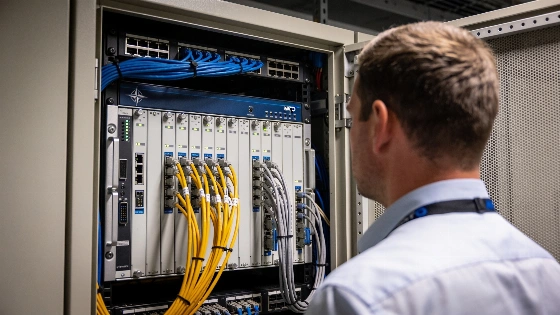
Arqit expects unaudited FY 2026 revenue of $975,000 to $1 million after reporting seven commercial contracts, a NATO security-services contract and approximately $51 million in cash.
Arqit Quantum Inc. enters its next fiscal year with a NATO contract and a larger cash reserve, but only preliminary evidence of a commercial business taking shape. The London-based post-quantum encryption company expects unaudited FY 2026 revenue to reach between $975,000 and $1 million, compared with $530,000 in FY 2025, while holding approximately $51 million in cash and cash equivalents as of September 30, 2026.
The most consequential development came immediately after the reporting period. On October 6, 2026, Arqit signed a contract as part of a winning bidding consortium to supply protected networking services to NATO. The agreement includes a one-year base period and two annual renewal options.
The announcement establishes defense procurement access and a defined contract term, but the available filing does not disclose the contract value, deployment scale, technical architecture or revenue contribution. It also does not confirm a subsequent NATO decision, an operational rollout or deployment across the alliance. The evidence therefore supports a description of contract award rather than proof that Arqit's platform has achieved broad operational use.
Arqit's expected full-year revenue of $975,000 to $1 million would represent an increase of approximately 84% to 89% from $530,000 in FY 2025. The preliminary, unaudited figure covers the fiscal year ended September 30, 2026, and the company attributes the expected increase to revenue recognized from contracts signed before the fiscal year began together with initial contributions from seven new commercial contracts executed during FY 2026.
The annual figure conceals a weaker second half. Preliminary H2 FY 2026 revenue is expected to land between $355,000 and $380,000, below the $463,000 recorded in H2 FY 2025. Arqit said recognition of revenue under a material Middle East customer contract stopped after geopolitical disruption affected the customer's operational obligations. That explanation matters because the full-year increase does not represent uninterrupted momentum across the reporting period.
Cash provides the company with more room to continue operating while new contracts mature. Cash and cash equivalents stood at approximately $51 million at the latest fiscal year-end, compared with approximately $28.9 million at the end of the first half of FY 2026. The available reporting does not establish how long that balance would support operations because spending, cash burn and other uses of capital were not provided in the preliminary results.
Arqit's newer commercial offering also produced early sales activity. During H2 FY 2026, the company signed three contracts for Encryption Intelligence, an automated tool designed to discover and inventory cryptographic systems. Arqit also renewed or expanded two existing agreements, while linking its expected annual growth to seven new commercial contracts overall. Revenue recognition began late in the second half for some agreements or is expected to begin in Q1 FY 2027.
That timing limits what the preliminary numbers can show about the product's scale. Contract signatures indicate initial commercial traction, but the available disclosures provide no customer count beyond the reported agreements, recurring-revenue measure, adoption rate or independent technical assessment of discovery accuracy. The evidence supports a cautious description: Encryption Intelligence has entered commercial use, while its financial significance remains early.
Arqit's business sits in the post-quantum security layer rather than in the manufacture of quantum processors. Post-quantum cryptography is intended to run on conventional computers and networks while protecting public-key operations against attacks that a sufficiently capable, fault-tolerant quantum computer might eventually perform. The preliminary release does not claim that Arqit has built a quantum computer or that current quantum machines can break deployed encryption.
This distinction separates cryptographic migration from experimental quantum-hardware research at institutions such as MIT and CERN. In the broader scientific literature, including work discussed by Nature, quantum algorithms and quantum processors are evaluated as distinct research subjects from the software, key-management and infrastructure changes required for post-quantum migration.
The practical challenge is therefore less about a single quantum demonstration than about inventorying cryptographic dependencies and replacing vulnerable systems without disrupting operations. Standards-based migration guidance, including the NIST post-quantum program, frames the problem around algorithm selection, implementation, interoperability and long replacement cycles rather than around installing a quantum computer at the customer's premises.
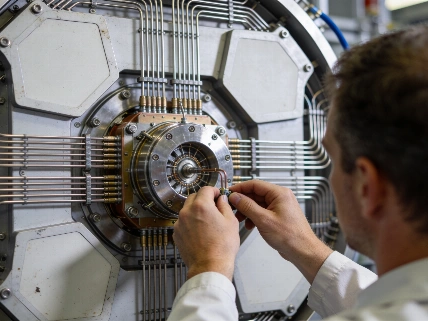
That systems-level problem is also why the distinction between conventional processors and quantum hardware matters, as an earlier hardware analysis illustrates. A provider can offer post-quantum software and migration services without manufacturing a quantum processor, but that fact alone does not establish the completeness, security or effectiveness of its implementation.
Arqit's partnerships with Tomorrow Street, Vodafone/Technoport, Intel and European cybersecurity integrators focus on PQC migration planning. These relationships may expand the route to customers, but they are not the same as independently measured security performance or a completed migration across a large infrastructure.
Arqit's preliminary FY 2026 results show a company with substantially more cash, a NATO contract, seven new commercial agreements and a product beginning to generate revenue. They do not yet establish a large or predictable revenue base, disclose the economics of the NATO work or provide independent evidence of technical performance. The strongest reading is that Arqit has moved from pure positioning toward identifiable procurement and product activity, but the commercial case still depends on converting contracts and partnerships into durable, measurable operating revenue.
Post-quantum security does not require a quantum computer at the customer's premises. It involves conventional software and infrastructure designed to withstand algorithms that a future fault-tolerant quantum computer might run against today's public-key systems. That makes cryptographic inventory a practical migration task, but it does not by itself prove that a provider's tools are complete, secure or widely deployed.