NVIDIA says it will commit $1 billion over five years to U.S. scientific computing and quantum research, linking GPU supercomputing, CUDA-Q emulation and national-laboratory infrastructure to the expanded Genesis Mission.
NVIDIA is committing resources valued at $1 billion over five years to expand U.S. scientific computing and quantum infrastructure through a program tied to the expanded Genesis Mission. The company describes the commitment as a combination of infrastructure and other resources, not necessarily a direct cash grant. Its stated scope includes quantum computing, health research and energy security, while the second phase of the initiative also covers fusion energy, accelerator design and microelectronics.
The expanded Genesis Mission has been opened to 14 additional federal agencies and is intended to use artificial intelligence and large-scale computing to accelerate scientific discovery and support U.S. technological leadership. The effort places NVIDIA's announcement in a broader public-private framework rather than treating it as a standalone quantum-computing deployment.
In a NVIDIA research announcement, the company said it will help build a scientific supercomputer at Argonne National Laboratory and support seven additional accelerated systems across Argonne and Los Alamos National Laboratories. The machines are intended to support scientific modeling, artificial-intelligence research and expanded computing capacity at federal laboratories, including large-scale quantum-circuit simulation, error-mitigation studies and real-time quantum-error-correction decoding.
Reporting on the planned architecture indicates that Argonne's Solstice system is expected to use approximately 100,000 NVIDIA Blackwell GPUs. Future Mission and Vision systems at Los Alamos are expected to use the same accelerator family together with NVIDIA Quantum-X800 InfiniBand networking. These figures describe planned infrastructure, not measured scientific performance, and the announcement does not provide deployment dates, delivered processor counts or benchmark results.
The most concrete work will therefore take place inside the classical computing layer that quantum systems depend on. Classical processors can simulate circuits, model noise, optimize control sequences and process syndrome information generated by quantum devices. Similar computational dependencies appear across large experimental programs at institutions such as CERN and NASA, where instrument operation and scientific interpretation rely on substantial classical data-processing systems even when the underlying measurements come from specialized physical hardware.
The announcement was made in Washington alongside officials from the White House Office of Science and Technology Policy. It places higher-education research institutions, government-focused cloud providers and national-laboratory infrastructure within one five-year commitment whose technical value will depend on how access is allocated, operated and evaluated.
That distinction matters because the headline figure is described as commitments valued at $1 billion. The announcement does not specify how much will be provided as unrestricted cash research funding and how much will take the form of in-kind GPU capacity, systems or compute credits. For laboratories and universities those forms of support are not interchangeable: cash can fund staff, equipment and experiments, while reserved compute can expand simulation access without increasing institutional capital budgets.
According to Politico's program report, private-company commitments associated with the expanded Genesis Mission total $2.4 billion. The reported contributions include $200 million from OpenAI, $150 million from Anthropic and $50 million in AWS cloud credits, in addition to NVIDIA's commitment. Because these contributions can combine hardware, access and services, their nominal dollar values should not automatically be interpreted as equivalent research grants.
NVIDIA's CUDA-Q platform is central to the plan. The open-source software is designed for hybrid quantum-classical workflows, including quantum-processing-unit simulation and control. In practice, classical processors can model circuits and noise while also helping coordinate operations on physical quantum-processing units. The approach does not remove decoherence, calibration drift, leakage or measurement error; it supplies more classical computation for studying and managing them.
The company's September 2026 expansion of CUDA-Q for fault-tolerant-system emulation provides the immediate technical backdrop. Emulation can test how a proposed error-correction architecture behaves under modeled noise before a full physical deployment. It remains a simulation or control capability rather than evidence that a complete fault-tolerant processor is operating in a laboratory.
Large-scale circuit simulation can help researchers examine complex quantum-noise channels and evaluate decoding strategies. Real-time quantum-error-correction decoding is especially demanding because syndrome information must be processed quickly enough to guide correction during operation. The announcement identifies this as an infrastructure target but provides no qubit counts, gate fidelities, logical-error rates, decoder latencies or operating temperatures for the planned systems.
The scientific questions are familiar to researchers working across fields represented in journals such as Nature and Science: how should noise be characterized, how should uncertainty be propagated through a computation, and which performance improvements remain reproducible when a system is scaled? NVIDIA's commitment may expand the ability to investigate those questions, but it does not itself constitute a peer-reviewed result or a demonstrated quantum advantage.
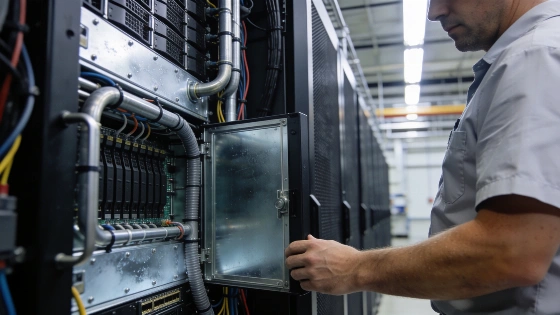
The hardware will also expose a less glamorous limit on hybrid quantum infrastructure: heat. Accelerated classical systems produce substantial thermal loads, while many physical QPUs require cryogenic environments. As Argonne and Los Alamos deploy these systems, the performance of cold-plate liquid cooling, supply temperatures and thermal ride-through during pump failures will become important operational data for facilities that place classical HPC beside cryogenic quantum hardware.
This is an engineering question rather than a minor facilities detail. A quantum processor can be scientifically valuable while its surrounding control electronics, cooling network and data path remain difficult to scale. The commitment therefore reaches beyond processor design into power delivery, thermal management, system reliability and the movement of data between classical and quantum components. The announcement does not report measured cooling results from the planned deployments, so those benchmarks remain future deliverables rather than demonstrated outcomes.
The program also follows a wider pattern in which quantum progress depends on conventional computing. A recent earlier funding report showed how quantum research programs can concentrate on controlling coherence in molecular systems; NVIDIA's initiative instead emphasizes the computational and infrastructure layer needed to model, control and correct operations across multiple platforms.
That infrastructure layer has parallels in other research environments. MIT and Stanford laboratories routinely combine specialized experimental apparatus with simulation, control software and statistical analysis, while national facilities connected to CERN and NASA depend on high-throughput computing to convert raw measurements into usable scientific results. The comparison is about workflow, not an assertion that those institutions participate in NVIDIA's Genesis Mission commitment.
The announcement establishes a major planned investment and identifies specific national-laboratory deployments. It does not establish a quantum-advantage claim because no application benchmark or classical comparison is provided. It does not demonstrate a logical qubit because no encoded-qubit performance is reported. Nor does it show that error correction will succeed at scale; the stated objective is to build systems for simulation, modeling and decoding work that may support that effort.
Its significance is therefore infrastructural. By putting GPU capacity, CUDA-Q and national-laboratory projects into the same program, NVIDIA is treating quantum computing as a tightly coupled system in which classical simulation and control remain indispensable. The serious test will be whether these commitments produce reproducible improvements in circuit modeling, decoder performance and operational reliability rather than simply a larger inventory of accelerated machines.
A physical qubit is an individual quantum device, while a logical qubit stores information across multiple physical components so that errors can be detected and potentially corrected. GPU simulation can help model that process, and a decoder can interpret error syndromes, but neither step by itself creates fault tolerance. This commitment is valuable because it funds the classical layer that quantum experiments require; it should be judged as infrastructure for future demonstrations rather than as proof that useful fault-tolerant quantum computing has arrived.