New York City is putting $29.2 million toward NYU's planned quantum fabrication center, with the university committing $255 million. The 2030 project pairs chipmaking facilities with workforce programs and a public share of some proceeds
New York City's $29.2 million grant to New York University comes with an unusual return: three seats on the planned Quantum Fabrication Facility's Executive Advisory Board and 15% of specified intellectual-property proceeds received by NYU Central Administration. The arrangement links municipal support for quantum hardware infrastructure to future revenue from IP created using city-funded equipment.
On October 14, 2026, Mayor Zohran Kwame Mamdani, Deputy Mayor Julie Su and NYC Economic Development Corporation President and CEO Anthony Shorris announced the grant. NYU has committed an additional $255 million: $100 million in capital spending and $155 million in operating costs over ten years. Together, the city and university commitments total about $284.2 million.
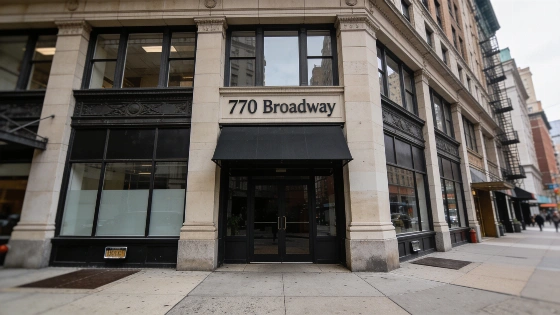
The 23,000-square-foot QFab is planned for 770 Broadway in Manhattan and is scheduled to open in 2030. NYU's announcement describes the facility as a place where researchers, students and companies can build and test quantum devices. The city's 15% share applies to NYU Central Administration proceeds from intellectual property created using city-funded equipment; it is not a share of all NYU patents or university activity.
The agreement also gives the city three seats on QFab's Executive Advisory Board. The announcement describes an advisory role, not operational control. The public return is therefore defined in two ways: participation in the facility's advisory structure and a share of a specified category of proceeds if intellectual property generated using city-funded equipment earns revenue.
This is a funding and infrastructure announcement, not a report of a new quantum device or experimental result. The 2030 project's announced figures concern investment, facility size and operating support, rather than qubit count, chip performance, fabrication yield or benchmarks.
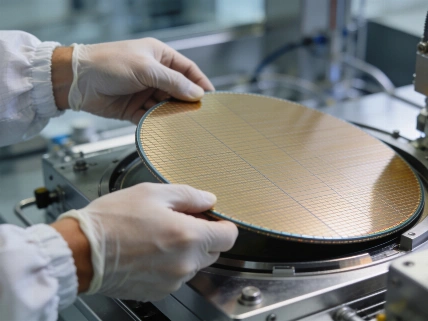
NYU plans specialized cleanrooms, cryogenic testbeds and advanced manufacturing equipment for fabricating, testing and prototyping quantum chips and components. Cleanrooms provide controlled environments for device fabrication, while cryogenic testbeds allow components to be evaluated at low temperatures. The facility is intended to serve researchers, students, startups and established companies.
A facility can provide tools and controlled space for research and manufacturing, but its existence alone does not establish the quality, reproducibility or scale of devices made there. QFab is scheduled to open in 2030, and the announcement sets out its planned infrastructure rather than technical measurements of hardware produced there.
The model sits within a wider effort to support quantum chip production. A fluxonium funding report described a Spanish company's Series A financing to expand fabrication and deployment of fluxonium-based systems. That company funding and New York's university-linked facility have different structures, but both put manufacturing capacity alongside the development of quantum hardware.
NYU and the city project that during QFab's first decade it will incubate 50 startups and provide specialized fabrication services to 50 additional companies. Those are projected outcomes. The project's education and workforce plans include partnerships with the City University of New York (CUNY) and NYC Public Schools, technician certificate programs, virtual-reality training labs, and undergraduate and graduate research pipelines.
The Manhattan Chamber of Commerce has also highlighted proposed opportunities for CUNY students, internships and summer learning programs for public-school students. These plans are intended to connect students with technical work around quantum hardware, including fabrication and testing.
For now, the scheduled 2030 opening at 770 Broadway is the next major milestone. The planned cleanrooms, cryogenic testbeds and manufacturing equipment are intended to give researchers and companies access to infrastructure for making and testing quantum components.
A fabrication center is not itself a quantum computer. It supplies equipment and controlled environments for making and testing components; the performance of any resulting device depends on its design, fabrication and measured operation. The investment announcement outlines the facility and its planned uses.
NYU's facility announcement sets out the city partnership, planned equipment and 2030 opening. The Manhattan Chamber of Commerce has described the project's intended education and workforce connections for CUNY and public-school students.