
Computing - Part 4
327 reports
JUPITER Simulates a 104-Qubit Magic-State Protocol
Using 8,192 GPUs on JUPITER, NVIDIA and Jülich modeled a 104-qubit magic state cultivation protocol with leakage and hardware noise. The result tests a route to lower qubit overhead, not a quantum processor running the computation

NASA Software Models Noise Across Aircraft Propulsion
NASA Glenn's software spans jet exhaust and fan-stage acoustics, with tools ranging from fast early-design estimates to computationally intensive analysis of realistic flows and blade geometries
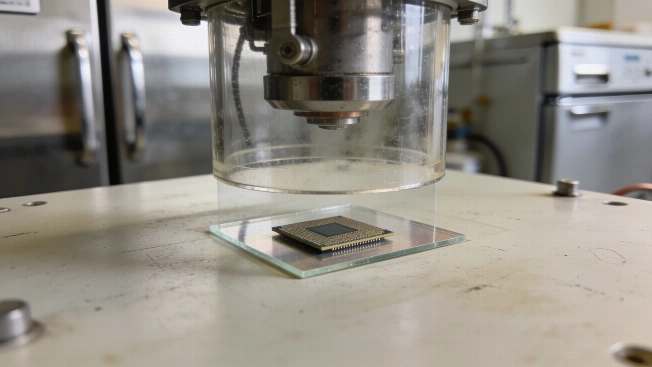
EeroQ bets on helium-bound electrons for quantum scaling
EeroQ aims to hold electron spins above superfluid helium on a semiconductor chip. The company reports charge-qubit work so far; its 10,000-qubit system remains a target rather than a demonstrated machine
Quantum Optimization Review Finds Baseline Gaps and Hardware Limits
A review of 119 papers finds that AI can help limit quantum hardware calls and handle constraints, while practical advantages from quantum components inside AI models remain unproven on current hardware

LLMs Cut Estimated Quantum Circuit Costs by Up to 9,100x
A classical evaluator checked LLM-written circuit programs and ranked them by Toffoli count multiplied by peak qubit use. The reported savings are algorithmic resource estimates, not results from quantum-hardware runs.
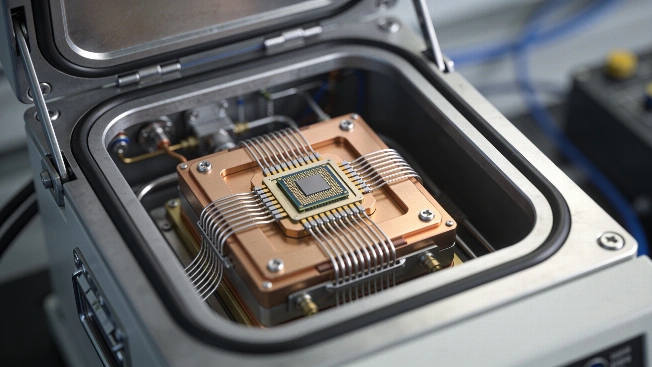
D-Wave Maps 3D Topology Across 728 Qubits
A D-Wave team reconstructed quantum dynamics on an Advantage2 processor to examine higher-order topological phases. The arXiv study reports corner-localized charge deficits and a quantized 3D invariant.
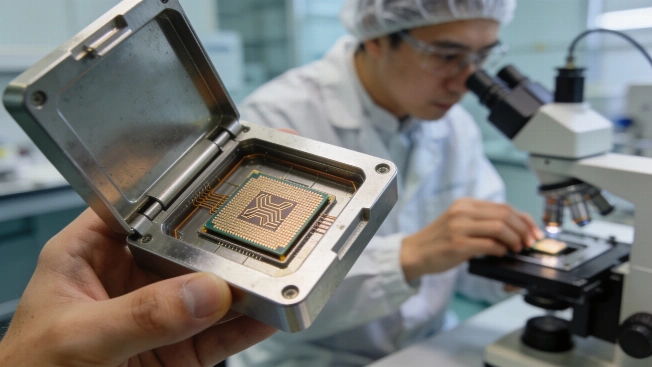
QiB1 Chip Maintains Performance Across Two Testbeds
A Gothenburg-made superconducting processor was evaluated at facilities in Sweden and Singapore. The reported tests found no loss of functional performance across the two sites, though detailed measurements have not yet been presented.
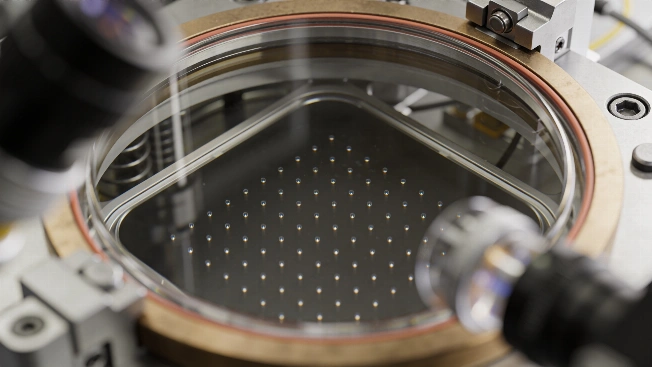
Neutral-Atom Features Improve Molecular Toxicity Scores
Kipu Quantum reports higher balanced accuracy and F1 scores when classical classifiers use features extracted from a 200-atom neutral-atom array. The benchmark tests toxicity classification, not a quantum computer's general advantage.
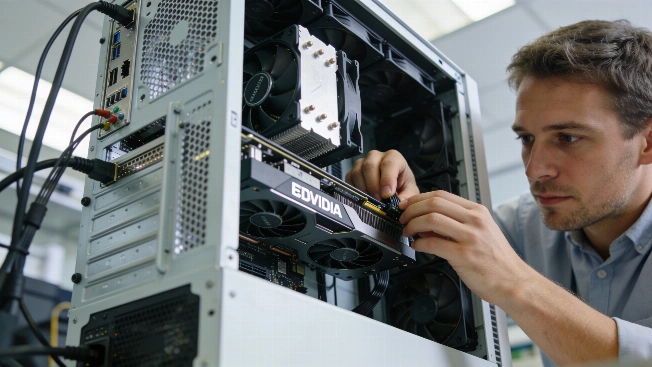
NVIDIA targets complex agents and local AI with Nemotron 3.5
NVIDIA's new open-weight lineup pairs a multimodal model for extended tool-using tasks with smaller options for local deployment. Its benchmark rankings and speed claims come from the company and need independent context

Maia 300 targets 40% more tokens per megawatt
Microsoft plans to deploy Maia 300 in 2027 in a 96-accelerator rack for AI inference. The announced efficiency gain over leading GPU systems has not been independently benchmarked.
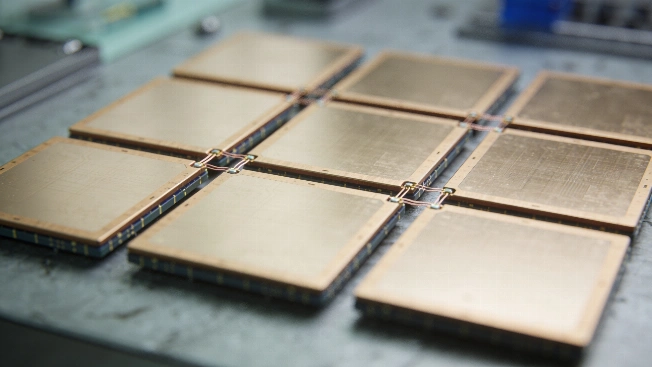
Flat quantum modules cut simulated QEC overhead by over 30-fold
A proposed modular code links 72-qubit and 116-qubit planar modules across sparse seams. Circuit-level simulations tested whether logical errors stay low when those links are noisier than on-chip gates.
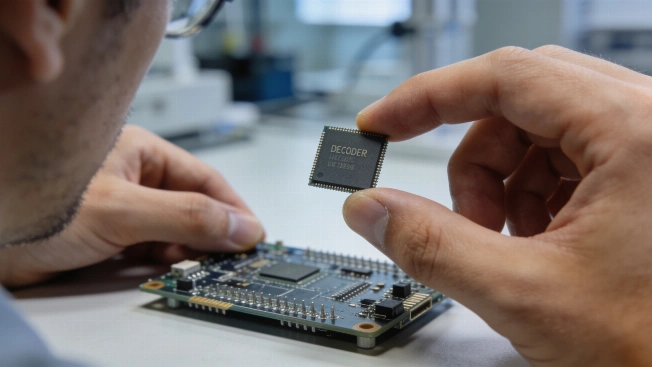
Open AI Agents Cut QEC Decoder Inference Costs 11.5-Fold
IBM Research used a coordinator and four worker agents to restructure Relay-BP decoder code for a qLDPC code. The reported speedups are hardware-design estimates and do not demonstrate performance from a fabricated chip.
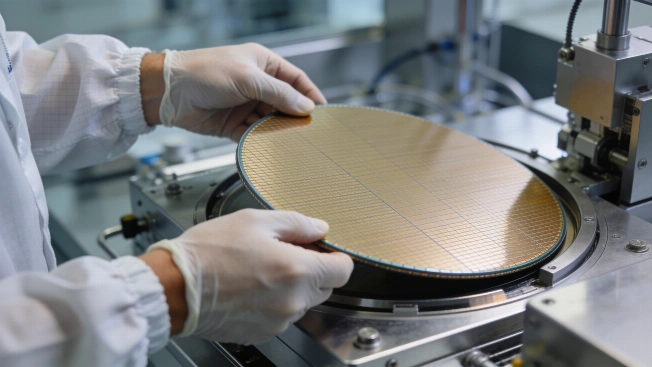
Anderon's New PDK Targets 300mm Superconducting Qubit Fabrication
Anderon has opened licensing for a design kit based on IBM's superconducting qubit process. Its Albany facility has processed more than 10,000 300mm wafers, but the release reports no qubit performance data.
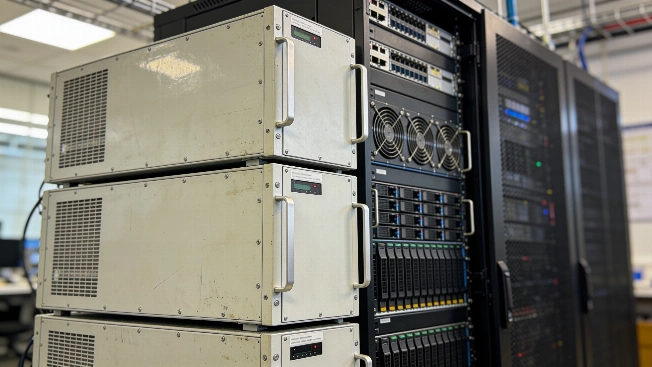
ORCA's PT-3 Brings Photonic Quantum Hardware Into London
A room-temperature PT-3 system is running alongside NVIDIA GPUs at a London new idea lab. ORCA reports results in protein design and energy scheduling, though its announcement leaves basic benchmark methods and comparative details unspecified.
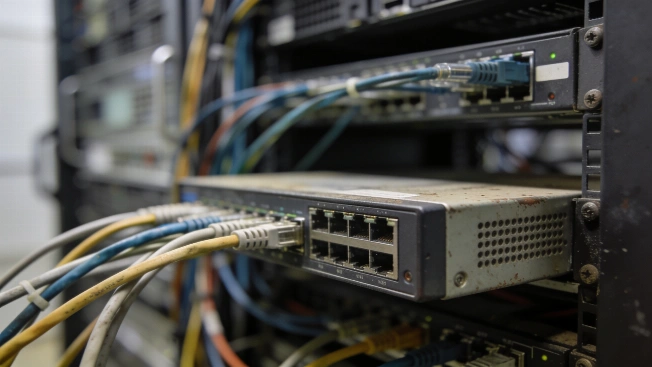
Blockchain signatures face a post-quantum size problem
Terra Quantum's analysis compares signature sizes for blockchain use and reviews mitigation plans across Solana, Algorand and Ethereum. Its preferred compact option remains under draft standardization.

Cambridge Opens IonQ Centre With a 256-Qubit Plan
Cambridge's new IonQ centre is set to pair a planned 256-qubit Superion computer with campus entanglement links. Innovate UK will arrange three years of computing access for the National Quantum Computing Centre.
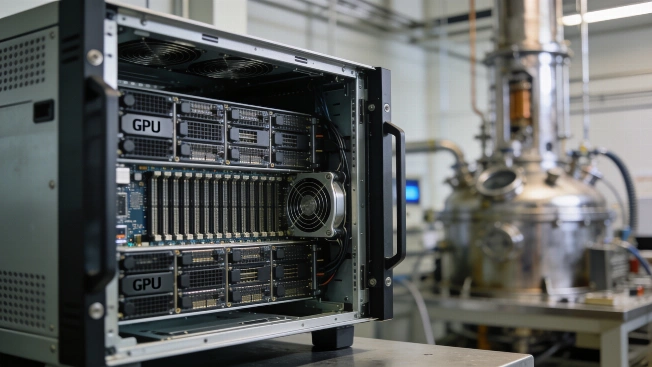
GPU Calibration Cuts Quantum Decoder Training to Seconds
Riverlane and NVIDIA report that an H100 GPU cuts surface-code decoder-training epochs from minutes to seconds, while recalibrated priors lower logical error rates by several percent to as much as twofold compared with uncalibrated starting weights.
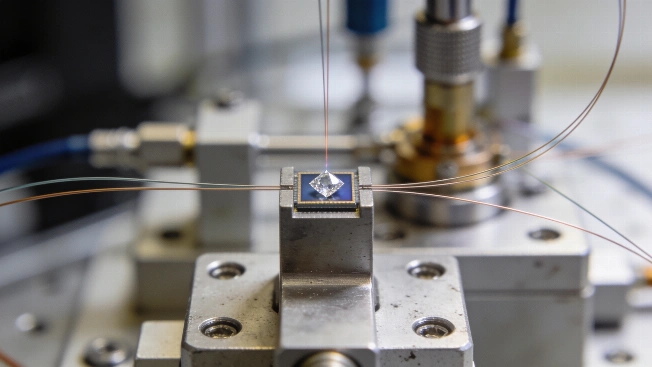
Diamond Spins Run Grover Search at Room Temperature
A diamond quantum computer in Dresden ran a three-qubit Grover search at 296.3 K, with a reported 77.3% success probability. The result approaches a roughly 78% result cited for a cryogenic superconducting processor.

Bloq Maya Targets Faster Quantum Algorithm Development
Bloq Quantum says its new enterprise assistant can convert high-level requirements into quantum code, parameterized circuits and QUBO models. The launch claims a faster process but reports no performance benchmarks
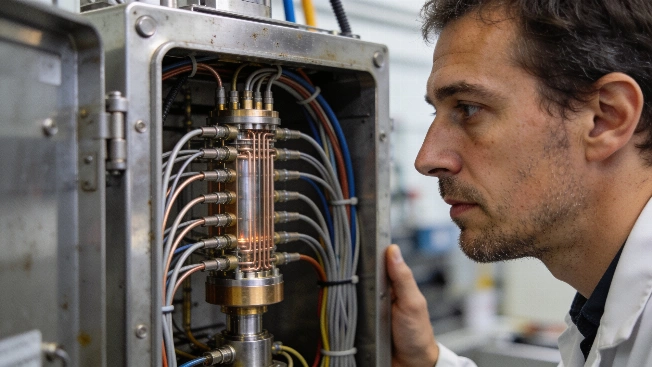
Qilimanjaro Raises €19.6 Million to Build Fluxonium Systems
The Spanish quantum company says its €19.6 million Series A first close will expand chip fabrication and deployment of fluxonium-based systems, but the announcement provides no benchmark or qubit-performance figures.
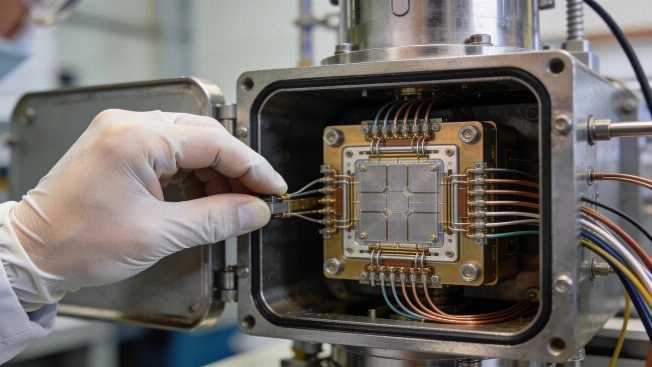
Software Reweighting Cuts Simulated Surface-Code Errors 1,600-Fold
Google Quantum AI reports that Virtual Error Cancellation reduced residual logical errors by more than 1,600-fold in distance-7 surface-code simulations. The offline method reuses recorded stabilizer measurements, but has not yet been demonstrated on a quantum processor.

Meta's New AI Models Face a Test Without Public Scores
Meta says Muse Wonder can retain useful context and work through extended coding and business tasks. But its launch announcement provides no benchmark scores, sample sizes or error rates with which to independently assess those claims.

IonQ Reports Up to 74-Fold Faster Logical Gates Through qLDPC Scheduling
An arXiv preprint by Mark Webster and Nicolas Delfosse describes scheduled joint measurements paired with CliNR, reporting up to 74-fold speedup for logical Clifford operations and up to fivefold for Toffoli gates against sequential logical measurements. The analysis considers Q70 and Q102 codes in IonQ's Walking Cat trapped-ion architecture, but does not establish a full fault-tolerant computer or a useful algorithm run.

IBM Moves Quantum Error Control to the Client Side
IBM Quantum has shifted basic error-mitigation controls from a server-side black box to researchers' local workflows, while its new Executor primitive handles large circuit families near the hardware.
IBM Opens Qiskit to High Performance Quantum Workflows
IBM has added native C API bindings to Qiskit v2.0, allowing Fortran, C++ and Julia programs to build and manipulate quantum circuits through Qiskit's Rust core without requiring Python as an intermediary.

Xanadu Reports Nearly Fourfold QROM Cost Reduction in Algorithmic Estimate
Xanadu-linked circuit constructions are reported to reduce the estimated non-Clifford cost of quantum read-only memory by about 3.9-fold for 32-bit entries. The result remains an unverified algorithmic resource estimate, not demonstrated hardware acceleration.

Quantum Industry Builds Leadership Around Security Research and Scale
PQShield, VTT, QuantWare, and Rensselaer Polytechnic Institute have named leaders for security strategy, quantum research, fabrication finance, and national-laboratory collaboration.
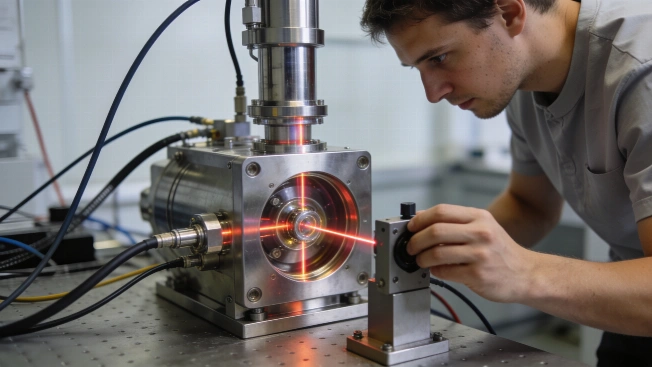
Quantum X Labs Targets Three Quantum Hardware Bottlenecks
Quantum X Labs has reported patent activity in neutral-atom control and quantum-circuit watermarking while developing a platform that combines Ramsey-CPT timing with Rydberg radio-frequency sensing; the available record shows active development, not a demonstrated quantum computer or field-ready instrument.

Moth Quantum puts real quantum hardware inside a browser game
Moth Quantum's browser maze uses qubits and their correlations to generate shifting walls on quantum hardware, without claiming a speed advantage over classical games
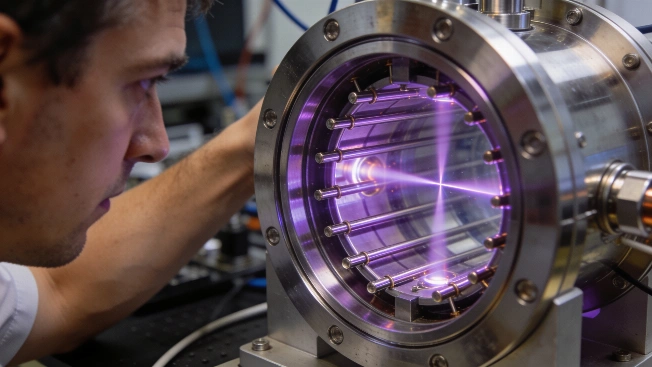
Trapped Ion Processor Resolves a Subtle NMR Double Peak
Quantinuum and HQS reproduced a difficult diphosphane NMR feature on trapped-ion hardware after compressing a 22-spin model into 21 effective spins, using 70 Trotter steps and circuits with more than 1,400 two-qubit gates.
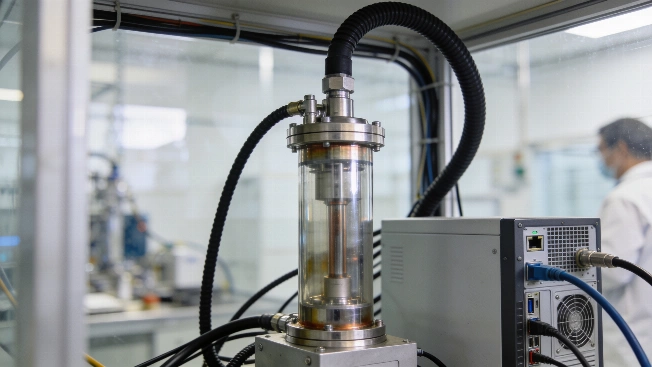
Europe Tests a CPU-QPU Path for Silicon-Spin Quantum Hardware
Quobly and SiPearl will study how an 80-core European ARM processor could interface with a silicon-spin QPU. The MoU targets hybrid HPC systems but does not yet demonstrate a working quantum integration or quantum advantage.
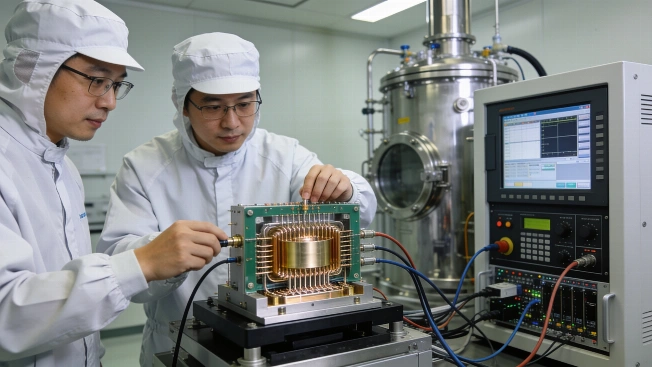
NTT DOCOMO BUSINESS and Classiq Plan Japan's Enterprise Quantum Software Push
On 8 October 2026, NTT DOCOMO BUSINESS and Classiq's Japanese subsidiary signed a memorandum of understanding to market Classiq's quantum software and jointly identify, develop and validate enterprise applications in Japan. The announcement describes a planned collaboration, not a completed deployment, performance result or demonstration of quantum advantage.

Humanoid Robots Move Into FAW-Volkswagen Factory Logistics
UBTECH and FAW-Volkswagen will jointly develop and test embodied-AI humanoid robots for factory logistics and smart-manufacturing demonstrations. The agreement expands earlier production-line trials but does not establish autonomous routine deployment or identify a timetable, site, robot fleet or logistics task list.

DEWALT's DALE Robot Drills 385000 Concrete Holes
DEWALT says its DALE drilling robot has completed more than 385000 concrete holes with over 99 percent accuracy. Company-reported deployments include more than 300 weeks saved across 44 data-center construction phases, while August Robotics separately reported 190 weeks saved across 26 major projects.
Shor's Algorithm Faces a Patent Eligibility Test
Shor's algorithm could threaten RSA by factoring large integers through quantum period finding. Yet a patent claim covering the method may struggle under current US eligibility rules.
Part 4 of 10