
Reports - Part 20
1626 reports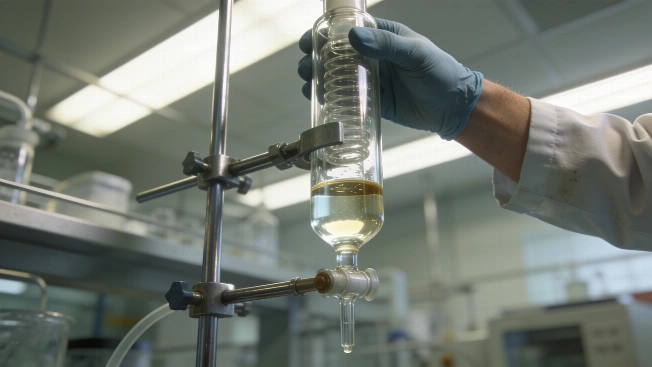
Quantum Models Target Rare Earth Separation Chemistry
USA Rare Earth, Pasqal and Riven Systems are developing a quantum-machine-learning process to identify selective extractants for separating mixed rare earth carbonate into individual oxides, using thousands of automated experiments and feedstocks from mining and recycling.

Sectigo Quantum Ready Maps the Enterprise PQC Migration
Sectigo announced Quantum Ready(TM) on 17 September 2026 as a Quantum Security Posture Management platform for discovering cryptographic assets, assessing post-quantum risk and prioritizing migration across hybrid enterprise environments.
Silicon Nitride Modulators Open a Route to Visible Quantum Photonics
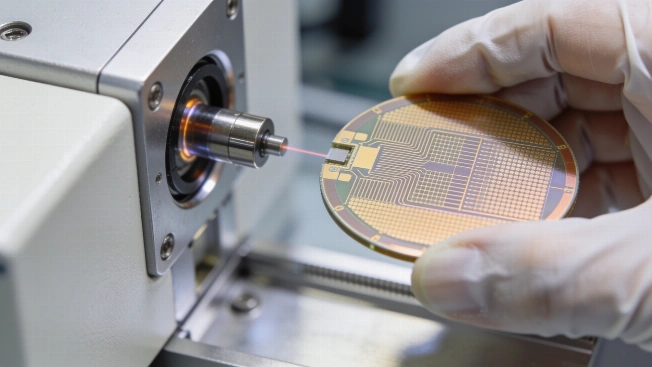
NLM Photonics, LIGENTEC SA and Spark Photonics have fabricated silicon nitride organic-hybrid modulators that could connect low-loss visible photonics with quantum routing and laser control.

QShield Brings Post-Quantum Protection to Linux Network Links
Qtonic Quantum has launched QShield as part of its SAFE/29 runtime for Linux hosts, using standardized post-quantum algorithms to secure active connections. In a reported 259,219-second AWS endurance test, the system completed 4,107 successful checks with zero failed checks and zero ping loss.
Japan Bets on Photonic Quantum Computing at 10,000 Qubits
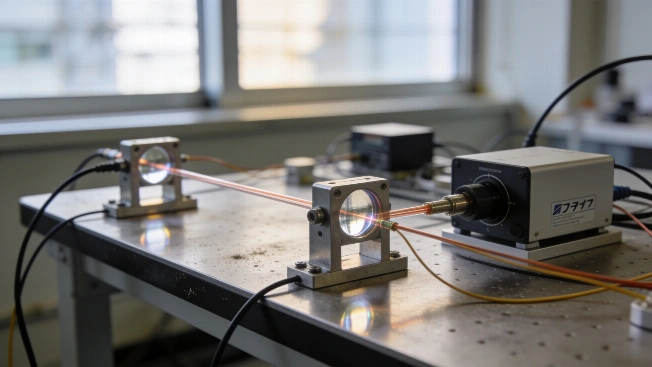
OptQC has closed a JPY 7 billion Series A2 round and plans a Tokyo R&D hub for photonic quantum processors, while Mitsubishi Electric expands its strategic role in Japan's quantum-hardware environment.
Mitsubishi Electric Targets Control Hardware for Million-Qubit-Scale Systems
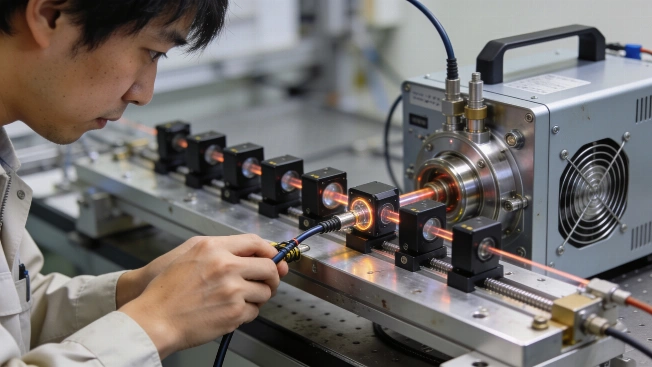
Mitsubishi Electric will lead two NEDO-backed projects aimed at addressing control and readout bottlenecks in neutral-atom, trapped-ion, and superconducting quantum platforms designed for million-qubit-scale systems.
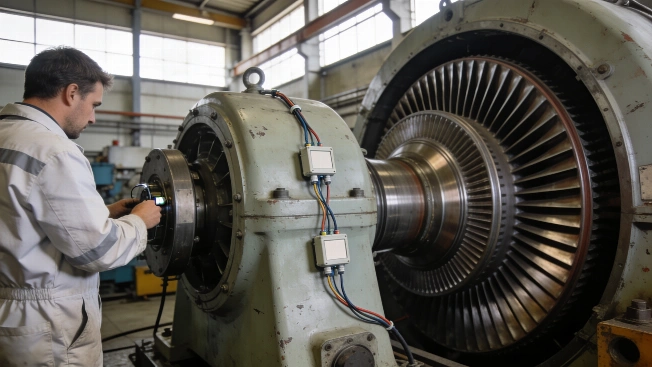
I-care adds AI anomaly detection without past failure data
I-care Group has acquired Amiral Technologies’ assets, including its DiagFit system, which detects abnormal machine behavior from normal operating data without needing a library of past failures.

Radar Evidence Revives Search Beyond Tutankhamun's Tomb
More than 1,200 microgravity readings and ground-penetrating radar surveys have identified low-density anomalies beyond Tutankhamun's burial chamber. The findings are consistent with possible corridors and rooms, but neither the structures nor a connection to Nefertiti has been confirmed by excavation.
XRISM Tracks Stellar Wind Falling Onto a Pulsar
XRISM has traced iron-rich plasma moving toward the pulsar GX 301-2 at about 540,000 kph, providing spectroscopic evidence that a neutron star captures its giant companion's stellar wind and powers recurring X-ray flares.

NASA Adds Three SpaceX Crew Flights Through 2030
NASA has added $946 million for SpaceX's Crew-15, Crew-16, and Crew-17 missions, raising the company's total number of Commercial Crew missions to 17 and its contract value to $5.92 billion. The decision secures transportation and lifeboat services through 2030 as NASA evaluates schedule pressures, Dragon inspections, and the future role of Boeing's Starliner.
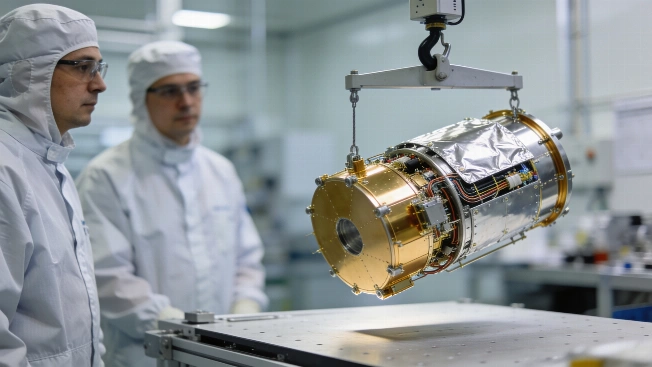
COSI Detector Assembly Moves Toward Gamma-Ray Science
A detector assembly for NASA's COSI gamma-ray telescope was raised from a laboratory table on July 8, 2026, revealing hardware designed to study matter and antimatter, along with dying stars, as the mission prepares for a planned 2027 launch.

PQC Migration Moves From Crypto Inventory to Hardware Trust
ICTK and Jiran Security are building Q-BRIDGE to connect cryptographic asset discovery with hardware-rooted post-quantum security for enterprise, government, and financial clients
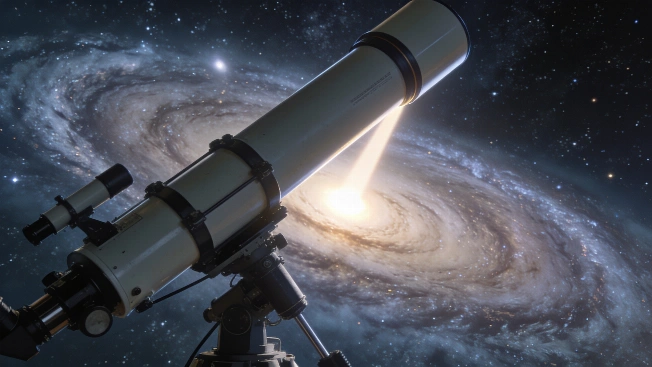
Hubble captures a spiral galaxy with a twisted core
NASA's Hubble Space Telescope has imaged NGC 4698, a spiral galaxy in Virgo whose central bulge and inner rotation axis lie at right angles to its disk, hinting at a past shaped by external gas or a minor merger.
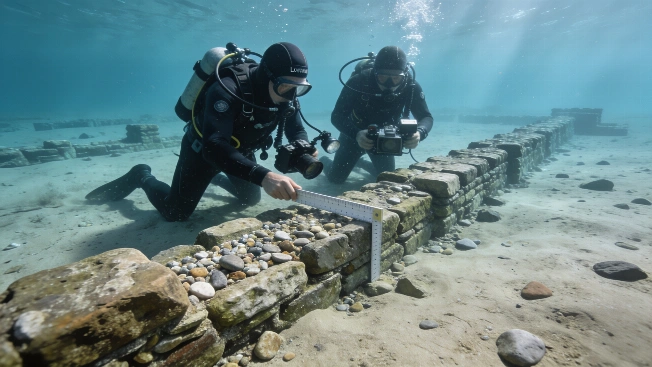
Submerged Medieval Settlement Shipden Reveals New Evidence off Norfolk Coast
Underwater archaeologists have mapped 25 manmade features on the seabed near Cromer, offering new understanding into the medieval town of Shipden, lost to the North Sea around 700 years ago, while prompting a fresh look at local legends about its fate

Quantum-Safe Network Platform Launches on Existing Fiber in Europe
Q-SAFE Solutions has introduced a quantum-safe communications platform built in the EU-27. It combines quantum key distribution and post-quantum cryptography for telecom, infrastructure, and government networks without requiring dedicated dark fiber.

NASA's Enterprise Shuttle: How a Test Vehicle and Star Trek Fans Shaped the Shuttle Era
On September 17, 1976, NASA introduced its first space shuttle orbiter, OV-101. Named Enterprise after a wave of public support, the vehicle became basic to early shuttle flight tests and helped set the stage for the program's future.
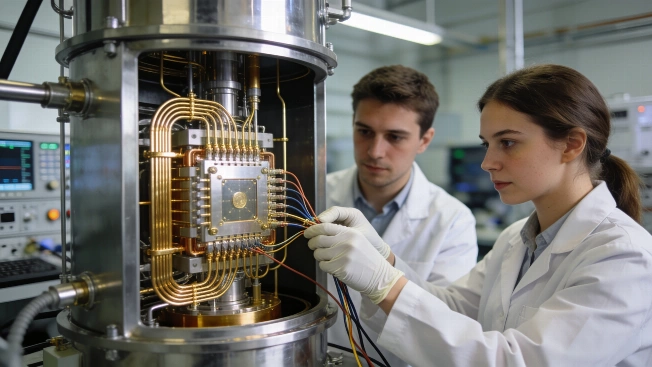
Surface code error suppression tested on IBM heavy-hex quantum processors
A team from the University of Southern California and Quantum Elements has experimentally tested surface code error suppression on IBM's 156-qubit heavy-hex superconducting processors, challenging assumptions about lattice geometry and quantum error correction.

NASA tests new Moon and Mars landing system at Armstrong flight lab
NASA's Dale Reed Subscale Flight Research Laboratory is testing the SPLICE guidance system on the Alta-X drone to improve hazard detection and precision landing for future Moon and Mars missions.
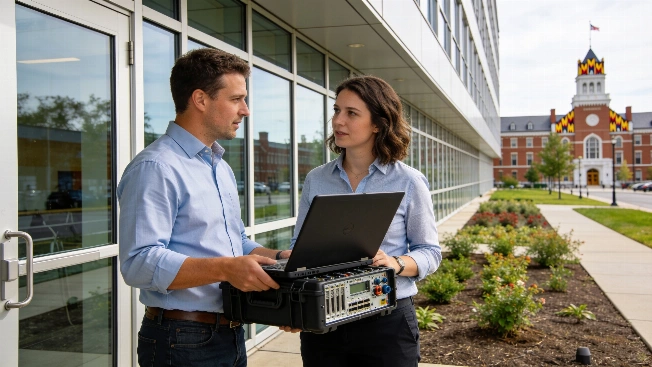
Riverlane opens US quantum error correction hub in Maryland
Riverlane has established its US headquarters in Maryland's Discovery District to accelerate real-time quantum error correction projects and strengthen ties with quantum hardware makers and academic researchers.
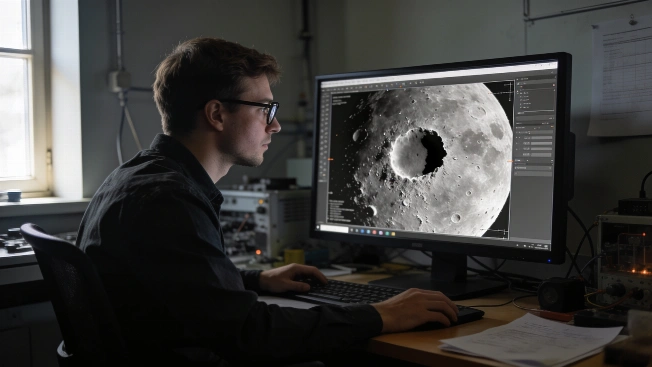
NASA orbiter spots largest new lunar crater in a century
NASA's Lunar Reconnaissance Orbiter has found a 728-foot-wide impact crater on the Moon's eastern limb, created between April and May 2024 by a building-sized asteroid or comet. The discovery gives scientists a rare look at how the lunar surface changes after a major collision.
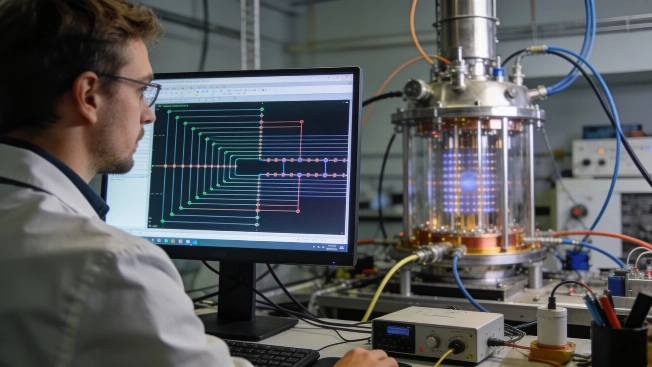
Erasure Noise Simulator Targets Quantum Error Mitigation in Qiskit Circuits
Oxford Quantum Circuits has launched erado, a Python library that simulates erasure noise and post-selection in Qiskit circuits. The tool enables researchers to test error mitigation strategies before running algorithms on superconducting quantum hardware.
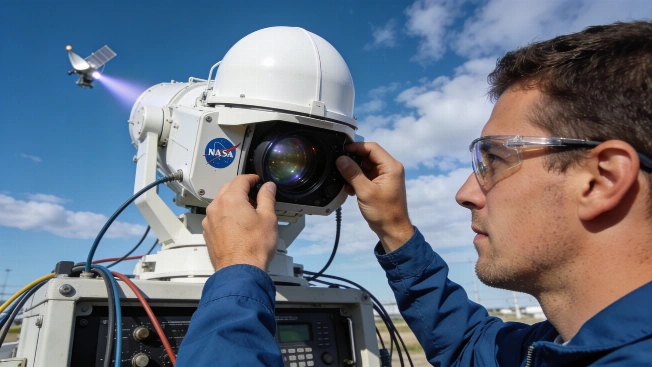
NASA tracks Earth's shifting center of mass with satellites
NASA scientists have measured how Earth's center of mass moves by millimeters each year as water, ice, and air shift across the globe, using satellite laser ranging and GPS data.
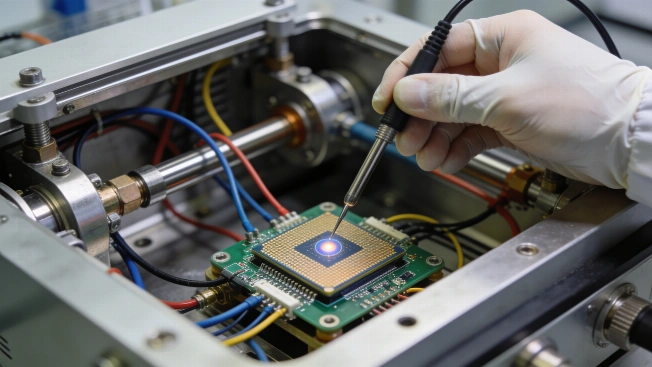
Patent eligibility for quantum dot Pauli Z gate hardware faces legal scrutiny
A proposed hardware method for implementing the Pauli Z gate in quantum dot-based quantum computers highlights unresolved legal barriers to patenting quantum operations that rely on established physical laws.
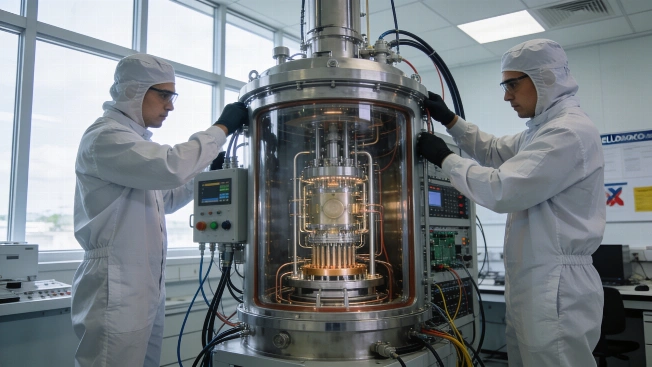
Brazilian Research Institute Orders On-Premises Superconducting Quantum Computer
IQM Quantum Computers will supply its IQM Spark superconducting quantum system to Brazil's Eldorado Research Institute, marking the first time a private research institution in South America has ordered an on-site quantum computer.
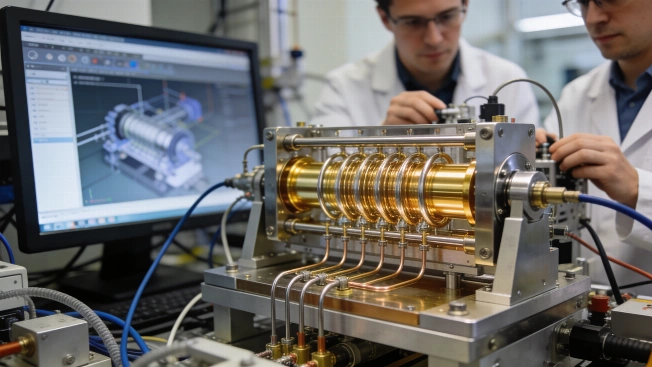
Trapped-ion quantum processor trims engineering simulation time by 14 percent
IonQ, Synopsys, and NVIDIA have linked a trapped-ion quantum processor with large-scale engineering simulation software, reporting up to 14.6% total runtime savings in benchmarked industrial workloads.
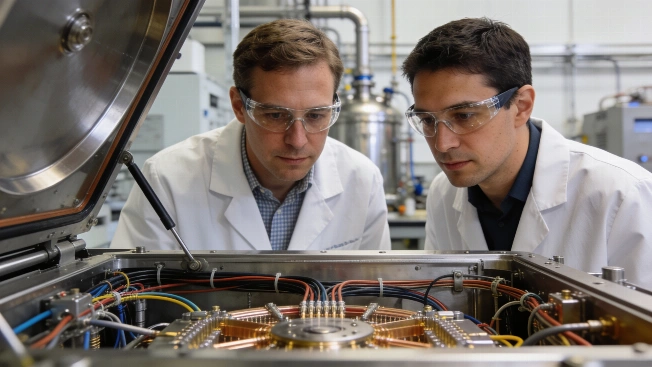
DOE launches $215 million competition for logical qubit quantum computers
The US Department of Energy is offering $215 million to teams that can build quantum computers with at least 100 logical qubits and run hundreds of millions of fault-tolerant operations, alongside a $45 million program for independent hardware benchmarking.

Stone-Lined Graves and Ship Timbers Documented in Arctic Svalbard Survey
Archaeologists have identified 45 stone-lined graves and ship timber fragments on Svalbard using non-invasive survey methods, raising fresh questions about burial traditions and the erosion threat to Arctic heritage.

Rare Eleventh Century Sword Scabbard Fitting Found in Mazovia
Archaeologists in Poland have documented a rare metal chape from an eleventh-century sword scabbard found near the surface in Mazovia, raising new questions about early medieval craftsmanship and cross-regional connections.

Ancient Hidalgo rock art reveals encounters with the underworld
Archaeologists have identified 55 rock art scenes at 25 sites in Hidalgo depicting figures meeting the lord of the underworld. The findings offer new evidence about how ancient communities understood death and the supernatural.
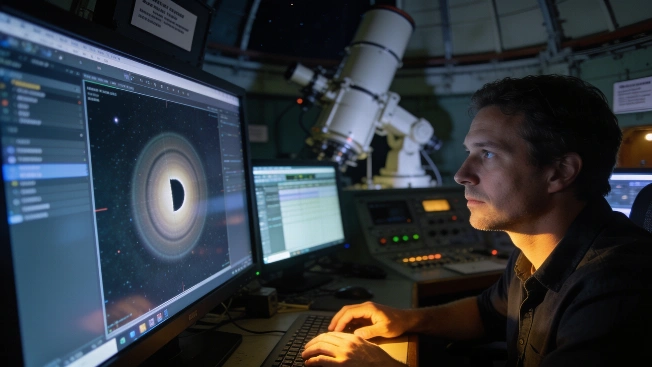
Youngest exoplanet yet found emerges from archival telescope data
Astronomers have identified Elias 2-24 b, the youngest known exoplanet, using direct imaging techniques and archival data from the Keck Observatory. The planet is less than a million years old and still sits within its birth disk.

Solar Storm Forces Historians to Revise Timeline of Early Technology Disruption
A new review of historical records has corrected the date of a well-known 19th-century train delay caused by a solar storm, offering a clearer picture of how early electrical systems responded to space weather.

US military expands defense planning from ocean floor to lunar orbit
The US military's top officer says future conflicts could extend from the seafloor to the Moon's orbit, as the Space Force openly acknowledges operating defensive weapons in space for the first time.
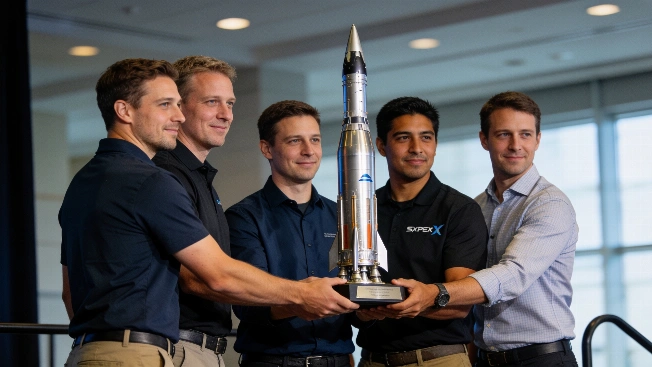
SpaceX Falcon 9 landing team wins Neil Armstrong Space Prize
SpaceX's Falcon 9 booster landing team has received the first Neil Armstrong Space Prize, recognizing its work in making large-scale rocket reuse routine and changing the economics of space launches.

Java 27 Integrates Hybrid Post Quantum Cryptography for TLS 1.3
Oracle has released Java 27 with native support for hybrid post-quantum cryptography in TLS 1.3, aiming to address harvest-now, decrypt-later threats and ease the shift to quantum-resistant security for cloud and enterprise applications.
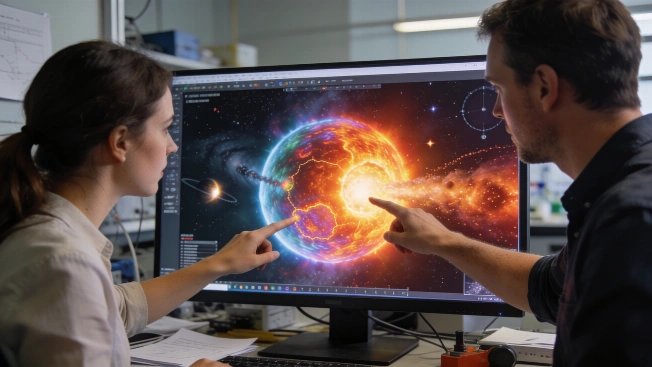
Vampire white dwarfs can collapse into neutron stars under precise conditions
Researchers have modeled how certain white dwarfs feeding on companion stars can collapse into neutron stars if their mass and accretion rate fall within a narrow range, revealing a rare but physically distinct pathway for stellar evolution.
Part 20 of 20