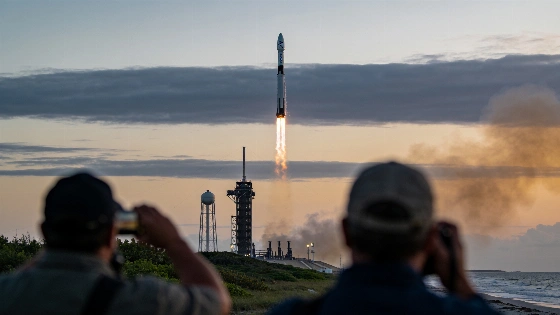
NASA has added $946 million for SpaceX's Crew-15, Crew-16, and Crew-17 missions, raising the company's total Commercial Crew missions to 17 and the contract value to $5.92 billion. The decision secures transportation and lifeboat services through 2030 while NASA evaluates schedule pressure, Dragon inspections, and the future role of Boeing's Starliner.
NASA has committed $946 million to three additional SpaceX crew missions that will carry astronauts and cargo to the International Space Station through 2030. The contract modification covers Crew-15, Crew-16, and Crew-17 and lifts SpaceX's total missions under the agency's Commercial Crew Transportation Capability program to 17. The expanded award brings the total value of SpaceX's CCtCap contract to $5.92 billion.
The New Missions are intended to preserve regular crew transportation to the station while NASA continues working with two commercial crew providers. The award is not a new spacecraft or launch system: each mission will use SpaceX's Dragon spacecraft and Falcon 9 rocket under the existing CCtCap framework. In NASA's procurement model, the agency buys an integrated transportation service whose performance depends on the rocket, spacecraft, ground teams, mission controllers, station interfaces, and recovery infrastructure operating as one system.
The fixed-price indefinite-delivery/indefinite-quantity modification includes far more than launch services. Its scope covers ground operations, launch, in-orbit activities, return and recovery, cargo transportation, and a lifeboat capability for the crew while Dragon is docked to the station. That last function is particularly important operationally: a crew vehicle attached to the outpost must remain capable of supporting an emergency departure if conditions aboard the station or in orbit require evacuation. The performance period runs through 2030 and brings SpaceX's total CCtCap contract value to $5.92 billion.
NASA issued a notice of intent to buy the additional missions in May. The agency then proceeded with a sole-source modification, while stating that the decision does not prevent it from seeking further contract changes for transportation services if future requirements demand them. The arrangement reflects a broader engineering principle also used in large NASA and ESA programs: reliability is assessed across the complete mission architecture, not only by the moment of liftoff.
How Crew Access Works begins with CCtCap, the contractual structure through which NASA buys crew transportation rather than owning every element of the transport system itself. The agency awarded contracts to Boeing and SpaceX in 2014 as part of its Commercial Crew Program, but a provider must first demonstrate that its complete space transportation system meets NASA's requirements before astronauts fly on its missions.
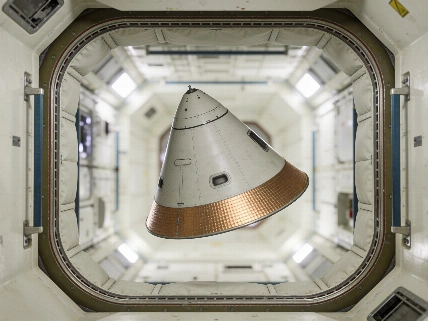
SpaceX received NASA certification for crew transportation in November 2020. Dragon can transport up to four astronauts as well as critical cargo to the station, making the vehicle both a crew carrier and a logistics system. The station's lifeboat requirement adds another operational function: a docked spacecraft must remain available for crew return if an emergency requires them to leave the outpost. These requirements involve coupled problems in propulsion, thermal protection, life support, guidance, communications, docking mechanics, and human factors rather than a single isolated spacecraft test.
The arrangement also places the rocket and spacecraft inside a larger mission architecture. Falcon 9 provides the ascent to orbit, Dragon carries the crew and supplies, and NASA's contract encompasses the recovery and return work after the spacecraft leaves the station. That full chain is what the modification purchases. In practical terms, a successful mission requires controlled ascent, orbital rendezvous, autonomous and crew-supervised docking, stable environmental control while attached to the station, safe undocking, atmospheric reentry, and recovery at sea.
The Operational Record is evolving alongside the new contract. SpaceX's Crew-12 mission is in orbit and docked to the station in the reporting context, while NASA and SpaceX have publicly moved Crew-13 to the earliest feasible point in October 2026 as teams investigate an oxidizer leak in Dragon. The delay illustrates why crew transportation contracts include inspection, ground processing, contingency planning, and return capability: a schedule change can affect crew rotations, station occupancy, cargo flow, and the availability of an emergency spacecraft.
Crew-10 illustrates the international character of these flights. It launched on March 14, 2025, from Launch Complex 39A at NASA's Kennedy Space Center in Florida with NASA astronauts Anne McClain and Nichole Ayers, JAXA astronaut Takuya Onishi, and Roscosmos cosmonaut Kirill Peskov aboard. The Falcon 9 and Dragon system therefore carried four people representing three participating space agencies and Roscosmos, while the mission also formed part of NASA's continuing station operations.
The technical service being purchased is therefore not limited to a ride uphill. It includes crew rotation, cargo delivery, time attached to the orbital outpost, station-support activities, undocking, atmospheric return, and recovery. The same systems perspective is common in peer-reviewed engineering work published in journals such as Nature, where mission performance is generally treated as the result of interacting subsystems rather than a single headline metric.
For readers tracking the wider commercial space sector, the contract sits alongside other NASA decisions about future space capability. An earlier NASA report concerned a proposed U.S. Space Academy rather than station transportation, but both stories show how agency plans divide long-term space activity between infrastructure, training, and operational services.
What the Award Signals is first and foremost contractual continuity. NASA has secured three more SpaceX missions with defined coverage for launch, station operations, cargo, and recovery, rather than announcing a change to the Dragon system itself. The value and duration of the modification give the agency a concrete transportation commitment through 2030.
That commitment also makes the Commercial Crew Program's two-provider model operationally important. NASA says the additional missions help maintain access to the station with two unique commercial crew industry partners, while the contract itself is specifically a modification for SpaceX. The award does not provide schedules for Crew-15, Crew-16, or Crew-17, and it does not describe a new technical milestone for Dragon or Falcon 9.
At the same time, independent reporting indicates that NASA is considering whether additional piloted flights may be needed because Crew Dragon remains the only currently operational U.S. transportation system routinely flying astronauts to low Earth orbit. An industry planning report describes growing discussion of additional Starliner missions and certification support as NASA assesses how to maintain station staffing through 2030.
Those reports also attribute to SpaceX an intention to retire Crew Dragon by 2030 or earlier. That claim is a reported planning position rather than a new NASA contract requirement, but it helps explain why the agency is examining longer-term options involving both SpaceX and Boeing. Industry summaries have additionally pointed to an audit concern that existing contracted flights might not be sufficient to fully staff the station through 2030.
The strongest reading of the decision is therefore practical rather than promotional: NASA is buying more certified transportation capacity for a continuing orbital program while evaluating future redundancy. It is not evidence that every future station flight is guaranteed or that commercial crew has eliminated the engineering and logistical risks of human spaceflight. The award is significant because it converts NASA's need for continued access into three defined missions and a measurable contract obligation.
In this context, a crew mission is best understood as a complete transportation service rather than a launch alone. The rocket delivers the spacecraft to orbit, but mission success also depends on rendezvous and docking, life-support operations while attached to the station, cargo handling, undocking, atmospheric return, and recovery. NASA's $946 million modification explicitly covers that wider chain, which is why the award matters more than the headline number of three launches: it protects the operational link between Earth and the station through 2030 while the agency plans for the transition beyond Dragon.