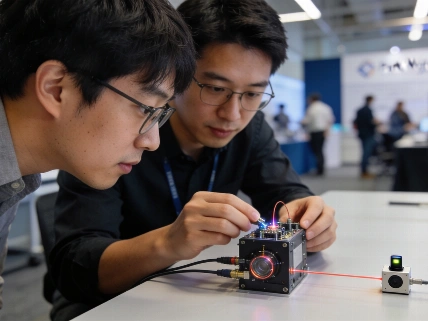
The General Services Administration and US Treasury have launched coordinated initiatives to migrate federal identity systems and financial networks to post-quantum cryptography, aiming to address future quantum threats to digital security
The General Services Administration (GSA) and the US Department of the Treasury have jointly announced a set of operational initiatives to accelerate the adoption of post-quantum cryptography (PQC) across critical federal and financial infrastructure. These efforts are designed to address the anticipated risk that future fault-tolerant quantum computers could compromise widely used public-key cryptographic systems, which currently secure digital identity, facility access, and financial transactions.
Federal Identity and Access Systems
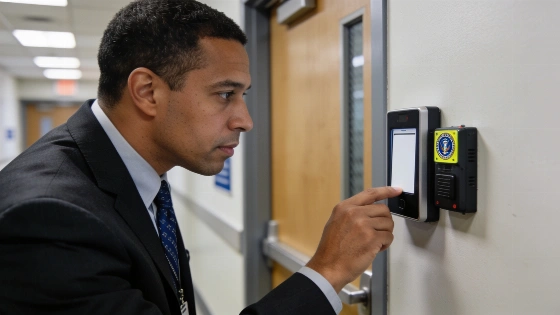
GSA's Office of Government-wide Policy is leading a technical overhaul of federal identity management and physical access control systems. The modernization program targets the Federal Identity, Credential, and Access Management (FICAM) framework, integrating quantum-resistant algorithms standardized by the National Institute of Standards and Technology (NIST). The updated framework is intended to maintain compatibility with legacy federal IT environments while introducing cryptographic agility, allowing systems to transition to new algorithms as standards evolve. In parallel, the FIPS 201 Evaluation Program is expanding its laboratory testing to validate PQC-compliant building access controls, visitor credentials, and Personal Identity Verification (PIV) badges. Hardware and credentials that meet these requirements will be listed on GSA's mandatory Approved Products List, setting a baseline for federal procurement.
Interagency Coordination and Governance
On August 12, 2026, GSA convened the first interagency FICAM modernization working group, bringing together 40 participants from 17 federal agencies. This group is tasked with addressing the technical and operational challenges of deploying PQC credentials, including the management of non-human identities and automated access systems. The working group's agenda includes developing migration strategies, coordinating standards adoption, and identifying dependencies that could delay the transition to quantum-resistant cryptography across federal infrastructure.
Financial Sector Quantum-Readiness
The Treasury Department has established a Quantum-Readiness Task Force, led by Secretary Scott Bessent and Assistant Secretary for Financial Institutions Luke Pettit, to coordinate the migration of core financial systems to PQC standards. The task force includes public and private sector participants and is responsible for aligning banks, payment processors, asset managers, and insurance networks with phased PQC adoption. Key priorities include assessing software and hardware supply chain dependencies to eliminate single points of cryptographic failure, and evaluating quantum vulnerability in digital asset platforms, including blockchain networks and smart contract systems. The Treasury initiative is aligned with global standards set by the G7 Cyber Expert Group, reflecting the international dimension of quantum security policy.
Technical Benchmarks and Remaining Challenges
While the announced initiatives establish a policy and governance framework, the technical migration to PQC remains a complex engineering challenge. NIST's standardized PQC algorithms, such as CRYSTALS-Kyber for key establishment and CRYSTALS-Dilithium for digital signatures, are designed to resist attacks from quantum computers but require careful integration and validation in existing systems. The FIPS 201 Evaluation Program's expanded testing capacity is expected to accelerate the certification of PQC-compliant hardware, but the scale of federal and financial infrastructure means that full migration will take years. The GSA will host the 2026 Post-Quantum Cryptography Summit on September 16, 2026, to facilitate collaboration between government and industry stakeholders. For context on the technical challenges of quantum error correction and cryptographic transition, readers may refer to recent developments in quantum decoding accuracy, such as the AI-based decoder benchmarked against Google's surface-code data (see this related analysis).
Post-quantum cryptography refers to cryptographic algorithms that are designed to be secure against attacks by both classical and quantum computers. Unlike quantum key distribution, which relies on quantum physical principles and specialized hardware, PQC algorithms are implemented on conventional digital systems and are intended as drop-in replacements for current public-key schemes. The transition to PQC involves not only algorithm selection but also the validation of hardware, software, and operational processes to ensure that new vulnerabilities are not introduced during migration. The timeline for full adoption depends on the pace of standardization, procurement, and integration across diverse legacy systems, as well as ongoing research into the practical capabilities of quantum computers.