Sweden has released a national quantum strategy outlining infrastructure, security, and commercialization plans through 2036, aiming to translate research into scalable quantum technologies and align with European defense and cryptography standards
Sweden has formally published its National Quantum Strategy, establishing a coordinated policy and infrastructure framework to guide quantum technology development through 2036. The strategy, released by the Swedish Ministry of Education and Research, aims to bridge the gap between academic research and commercial quantum systems, while strengthening national security and aligning with European and Nordic defense priorities.
Infrastructure and Ecosystem Expansion
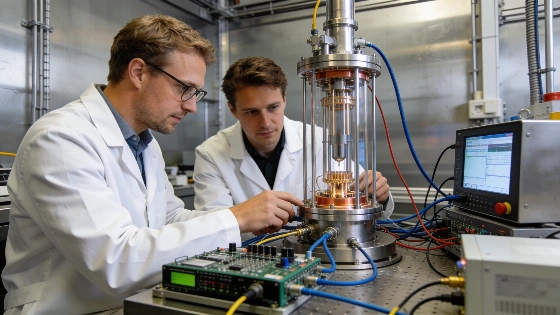
The strategy prioritizes the expansion of national quantum infrastructure, including testbeds and cleanroom access at facilities such as MAX IV and the European Spallation Source. These resources are intended to support startups and established companies in scaling quantum hardware, including cryogenic electronics, photonic devices, quantum processors, and algorithm development. Coordination is managed through the Quantum Sweden Innovation Platform (QSIP) and the state innovation agency Vinnova, which are tasked with mobilizing private risk capital to sustain long-term research and development cycles across sectors such as defense, telecommunications, automotive, and life sciences.
Security, Cryptography, and Alliances
A central component of the strategy is the proactive transition to post-quantum cryptography (PQC). Swedish public institutions and critical infrastructure operators are directed to replace vulnerable public-key algorithms with standardized PQC and hybrid key exchange protocols, in line with the National Cybersecurity Centre and European Union migration timelines for 2026-2030. The strategy also introduces enhanced risk management, investment screening, and export control measures to protect sovereign intellectual property and dual-use quantum technologies from industrial espionage. Sweden's approach is closely integrated with European and Nordic defense initiatives, including the Nordic Council of Ministers quantum working group, EuroQCI, and the anticipated European Quantum Act. Bilateral agreements, such as the U.S.-Sweden Technology Prosperity Deal and NATO's Transatlantic Quantum Community, are leveraged to strengthen supply chain resilience and joint technology integration.
Workforce and Commercialization Challenges
To address the shortage of specialized quantum engineers and researchers, the strategy aligns with Sweden's national STEM policy to expand graduate research schools, industrial PhD programs, and international talent recruitment. These measures are designed to alleviate engineering bottlenecks that currently limit the scaling of quantum devices and systems. The strategy also emphasizes the importance of private investment and venture capital in supporting deep-tech commercialization, recognizing that quantum hardware and software development typically require extended R&D timelines and significant upfront capital. This approach mirrors efforts in other European countries, where quantum education and industry partnerships are being integrated into business and technical curricula, as seen in initiatives like the integration of quantum software into business school programs in Luxembourg.
Implementation and Remaining Barriers
While the strategy sets out a comprehensive roadmap, the transition from laboratory research to scalable, fault-tolerant quantum systems remains a significant engineering challenge. The expansion of testbed access and cleanroom facilities is intended to improve device yield and reproducibility, but issues such as fabrication variability, calibration drift, and cryogenic system integration persist. The adoption of post-quantum cryptography standards is also dependent on international standardization and the timely migration of legacy systems. Sweden's approach reflects a broader European trend toward coordinated quantum policy, but the practical impact will depend on sustained investment, workforce development, and the ability to translate research prototypes into reliable, manufacturable technologies.
Quantum strategies like Sweden's are built around the distinction between laboratory-scale quantum devices and scalable, fault-tolerant systems. Physical qubits-individual quantum systems such as superconducting circuits, trapped ions, or photonic modes-are subject to noise, decoherence, and fabrication defects. Achieving practical quantum computation or communication requires not only increasing the number of physical qubits, but also implementing error correction to create logical qubits that can withstand errors over time. The engineering challenge lies in improving device yield, gate fidelity, and system integration while maintaining coherence and minimizing error rates. National strategies aim to address these barriers by investing in infrastructure, workforce, and standards, but the transition from research to useful technology remains a complex, multi-year process.