Italy's Consiglio di Stato has annulled the €61.2 million quantum computer procurement for the University of Salerno, citing unlawful deadline extension and requiring the Campania Region to restart the evaluation process
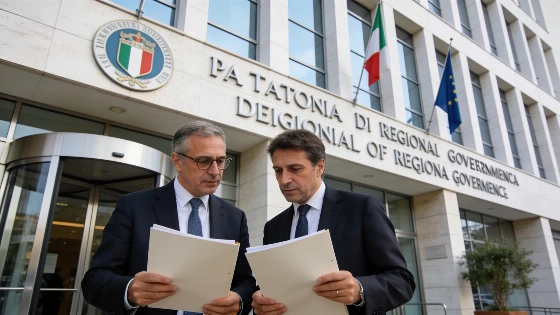
The procurement of a regional quantum computer for the University of Salerno in Fisciano has been set back after Italy's Consiglio di Stato, the country's highest administrative court, upheld the annulment of a €61.2 million public tender. The decision, published on August 26, 2026, follows a legal dispute over the Campania Region's extension of the bidding deadline, which allowed IBM Italia to submit its offer and ultimately win the contract. The court's ruling resets the process to the evaluation phase before the contested extension, leaving the local consortium Tea Tek-partnered with Rigetti Computing and TreQ-as the only valid bidder remaining at this stage.
Procurement Process and Legal Challenge
The original tender, valued at €61.2 million, aimed to establish a quantum processing unit (QPU) at the University of Salerno. In February 2025, the Campania Region extended the submission deadline, citing technical issues with the procurement portal. IBM Italia used this extension to file its bid, which was later selected over Tea Tek's initial proposal. Tea Tek challenged the extension, arguing that it unfairly altered the competitive landscape. The lower administrative court agreed, annulling the award to IBM Italia. The Consiglio di Stato has now confirmed this decision, rejecting the region's argument that a system failure justified the extension, as no such justification was documented in the original proceedings.
Technical and Procedural Implications
The court's ruling reinstates Tea Tek's original bid as the only timely submission prior to the extension. However, the judges clarified that Tea Tek's participation during the extension period did not forfeit its initial offer, instead viewing it as a legitimate competitive response to the evolving process. The court also ordered both the Campania Region and IBM Italia to pay €5,000 each in legal costs. Importantly, the decision does not automatically award the contract to Tea Tek. Instead, the regional administration retains discretion to assess whether Tea Tek's proposal meets technical and financial requirements, or to cancel the tender entirely if it deems no suitable offer exists.
Quantum Hardware and Consortium Details
The only remaining valid bid involves a hardware stack developed by Rigetti Computing and TreQ, integrated by Tea Tek. While the specific technical specifications of the proposed quantum processor have not been disclosed in the legal proceedings, Rigetti's platforms typically employ superconducting qubits operating at cryogenic temperatures, with device performance characterized by coherence times, gate fidelities, and error rates that are still subject to ongoing engineering improvement. The procurement's scale-€61.2 million-reflects the significant infrastructure, cryogenics, and integration costs associated with deploying a research-grade quantum computer in a university setting. No evidence has been presented that the system would deliver fault-tolerant or application-ready quantum computation at this stage.
Administrative Discretion and Next Steps
Despite Tea Tek's status as the only timely bidder, the Consiglio di Stato explicitly rejected its request for an immediate contract award. Citing Article 108, Paragraph 10 of the Italian Public Contracts Code, the court emphasized that the Campania Region must independently determine whether the remaining offer is technically and economically advantageous. The region may proceed to evaluate Tea Tek's proposal or exercise its right to cancel the procurement if no suitable solution is found. This outcome underscores the complexity of public quantum-computing tenders, where legal, technical, and administrative factors intersect, and where the path from procurement to operational quantum hardware remains uncertain.
In quantum computing, the distinction between physical and logical qubits is central to understanding system capability. Physical qubits are the actual quantum devices-such as superconducting circuits or trapped ions-that can be individually controlled and measured. However, due to noise and decoherence, practical quantum computation requires encoding information across multiple physical qubits to form logical qubits, which can detect and correct errors. Achieving fault-tolerant operation-where logical error rates decrease as more resources are added-remains a major engineering challenge. Most current quantum processors, including those proposed for public procurements, operate in the noisy intermediate-scale quantum (NISQ) regime, where error correction is limited and practical utility for real-world problems is not yet established.