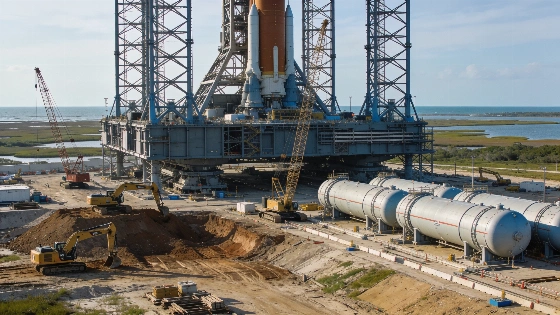
SpaceX and Louisiana officials have announced a $100 billion investment to build Starbase Louisiana, a major new launch and manufacturing site designed to support thousands of Starship launches annually from the Gulf Coast.
SpaceX has unveiled plans for Starbase Louisiana, a large-scale launch and manufacturing complex on the Gulf Coast, following a $100 billion investment agreement with the state. The proposed facility in Vermilion Parish is intended to become the company's largest operational site, supporting a dramatic increase in Starship launch cadence and manufacturing capacity. The announcement, made jointly with Louisiana Governor Jeff Landry, positions the site as a central hub for SpaceX's long-term ambitions in orbital and lunar transportation.
Facility Design and Launch Capacity
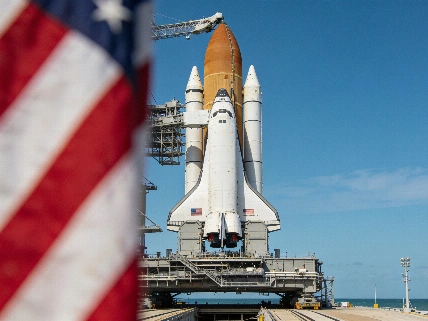
According to the current outline, Starbase Louisiana will feature five complexes, each equipped with two Starship launch towers, for a total of ten launch pads. Each pad will have its own propellant farm, with fuel production taking place onsite. The facility is also expected to include power generation infrastructure, deep-water shipping access, vehicle processing buildings, and potentially an airport. SpaceX has cited the region's abundant natural gas resources as a key factor in site selection, given the fuel requirements for Starship's methane-powered engines.
Once operational, the site is projected to support thousands of Starship launches per year. SpaceX founder Elon Musk has previously suggested that Starship could reach a flight rate exceeding 30 launches per day by 2030, which would require a robust and scalable ground infrastructure. The new Louisiana complex is intended to address the limitations of SpaceX's existing launch sites, which cannot accommodate the anticipated launch frequency or volume.
Mission Objectives and Scientific Role
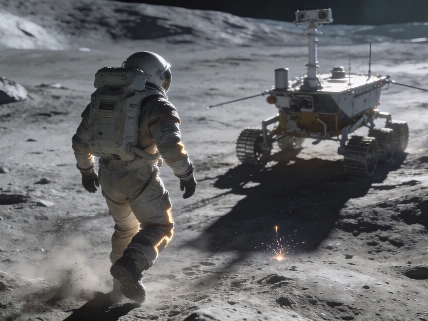
Starbase Louisiana is designed to serve multiple mission profiles, including lunar lander development for NASA's Artemis program, deployment of next-generation Starlink satellites, and support for in-orbit refueling operations. NASA has contracted SpaceX to deliver a lunar lander variant of Starship for Artemis III and Artemis IV, with the first crewed lunar landing currently targeted for 2028. These missions will require multiple Starship launches for propellant delivery and vehicle assembly in Earth orbit, placing high demands on launch infrastructure.
Beyond lunar operations, SpaceX plans to use Starship for large-scale satellite deployment and to build out orbital infrastructure for artificial intelligence-driven supercomputing. The company has already begun transitioning Starlink launches from Falcon 9 to Starship, with the eventual retirement of Falcon 9 anticipated once Starship is fully operational. For context, SpaceX's evolving launch strategy was recently discussed in a Science Report analysis of the Falcon 9 phase-out.
Construction Timeline and Environmental Considerations
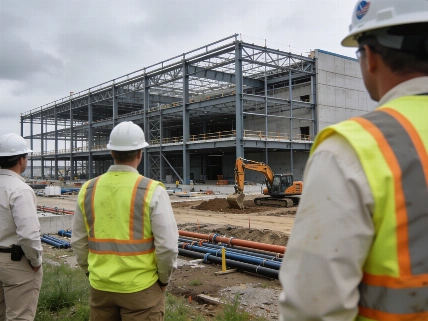
Construction of Starbase Louisiana is scheduled to begin in 2027, with the first launch from the site targeted for 2029. The project is expected to create approximately 3,000 direct jobs over the next decade, with additional indirect employment linked to the facility's development and operations. SpaceX has initiated environmental assessments in collaboration with Louisiana wildlife and coastal agencies to evaluate the impact of the new complex on the Gulf Coast ecosystem.
As part of its commitment to coastal resilience, SpaceX has announced plans to partner with state and federal agencies on shoreline protection, marsh restoration, and wildlife conservation. The company has emphasized the importance of integrating launch operations with ongoing efforts to preserve Louisiana's vulnerable coastal environment, which faces ongoing threats from erosion and sea-level rise.
Technical and Operational Challenges
While the scale of Starbase Louisiana is unprecedented for a commercial launch site, significant technical and regulatory challenges remain. Achieving a launch cadence of thousands of flights per year will require advances in vehicle reusability, rapid turnaround, and ground support automation. The facility's design must also account for safety, noise, and environmental constraints associated with high-frequency launches of methane-fueled rockets.
SpaceX's ability to deliver on its projected launch rates will depend on the successful maturation of Starship technology, including the transition from test flights to operational missions. The company is currently preparing for Starship's 14th test flight, with a tight timeline to qualify the vehicle for crewed lunar landings and high-volume satellite deployment. Regulatory approvals, infrastructure buildout, and environmental mitigation will all play critical roles in determining the pace and scope of Starbase Louisiana's development.
Understanding the scale and ambition of Starbase Louisiana requires context on how modern launch facilities operate. A launch site of this magnitude must integrate propellant production, vehicle assembly, and rapid launch turnaround while minimizing environmental impact. The complexity of supporting thousands of launches annually places unique demands on ground systems, safety protocols, and regulatory oversight. As commercial spaceflight infrastructure evolves, the balance between operational efficiency and environmental stewardship will remain a central challenge for projects of this scale.