Florida-based Lonestar Data Holdings has signed a contract with Polish startup Ares Shield to supply high-power microwave defense systems for its planned orbital data centers, aiming to counter satellite threats without generating space debris
As commercial activity in Earth orbit accelerates, the security of satellite infrastructure is becoming a growing concern for operators. Lonestar Data Holdings, a Florida-based company developing off-Earth data centers, has announced a contract with Polish startup Ares Shield to provide active protection for its future satellite network. The agreement, valued at up to $6 million, will see Ares Shield deliver defense modules designed to detect and neutralize potential threats to Lonestar's orbital assets.
Microwave Defense for Orbital Data Centers
Lonestar's approach to data security involves placing storage platforms in space, physically distancing critical information from terrestrial risks such as natural disasters. The company's StarVault platform, scheduled for its first deployment on Sidus Space's LizzieSat-4 during SpaceX's Transporter 18 mission from Vandenberg Space Force Base in late October, will use advanced cryptographic key escrow and space-based storage to enhance digital resilience. As Lonestar expands its network in low Earth orbit and beyond, the company is seeking to address the increasing risk of hostile satellite encounters.
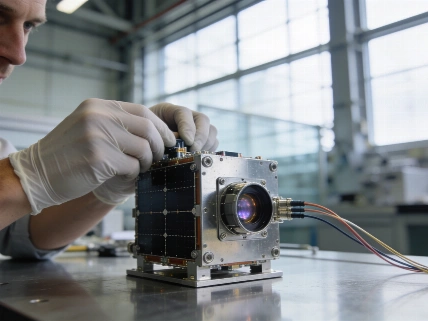
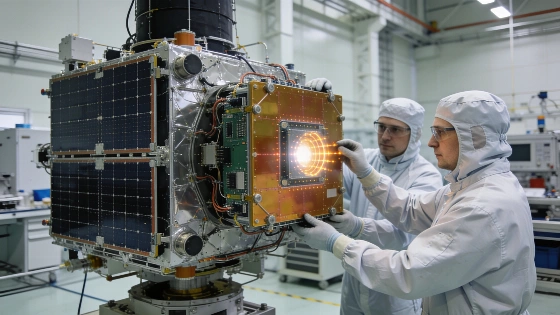
Ares Shield's defense system integrates sensors, artificial intelligence analytics, and a high-power microwave (HPM) emitter into a module that attaches to the client satellite. The system is designed to detect, classify, and respond to potential threats, including so-called "inspector" satellites that may attempt to approach or interfere with data storage payloads. The HPM emitter can disable electronics on approaching spacecraft without producing additional space debris, a key consideration for orbital safety.
Rising Threats in Crowded Orbits
The need for active satellite defense has grown as more actors deploy spacecraft capable of rendezvous and proximity operations (RPO), which can be used for both legitimate inspection and potentially hostile interference. According to Ares Shield, the frequency of such encounters has increased since the onset of the war in Ukraine, with Russian and Chinese satellites reportedly conducting more aggressive maneuvers near Western assets. The company's CEO, Grzegorz Zwolinski, notes that the defense system is intended to deter attacks by demonstrating the ability to disrupt or disable adversary hardware, ideally without escalating to destructive force.
Initial deployment of Ares Shield modules is planned for three Lonestar satellites, with the first systems expected to be delivered in 2028 or 2029. The agreement allows for additional modules to be supplied as Lonestar's constellation grows. Ares Shield is also in discussions with other satellite operators, reflecting broader industry concern about the vulnerability of commercial and governmental spacecraft to in-orbit interference.
Technical and Operational Considerations
The Ares Shield module's core capability is its high-power microwave emitter, which can disrupt or disable electronic systems on nearby satellites. The system's sensors and AI-driven analytics are tasked with distinguishing between benign and potentially hostile approaches, reducing the risk of accidental engagement. While the technology is designed to avoid generating space debris, its use raises questions about escalation and the potential for unintended consequences in the already congested orbital environment.
Beyond space applications, Ares Shield is developing ground-based HPM systems for counter-drone operations, with current prototypes reportedly effective at distances up to 100 meters and plans to extend this range to 2 kilometers. The dual-use nature of such technology highlights the intersection of commercial, security, and military interests in both terrestrial and orbital domains.
Commercial Space Security in Context
Lonestar's contract with Ares Shield reflects a wider trend as commercial operators seek to safeguard their assets in an increasingly contested space environment. The deployment of active defense systems marks a shift from passive protection to more assertive measures, raising new policy and safety questions for the industry. As the number of satellites in orbit grows-SpaceX, for example, has outlined plans for a massive AI-enabled constellation-operators are looking for ways to ensure the integrity of their infrastructure.
Recent years have seen a surge in interest in advanced satellite technologies, with agencies such as NASA supporting early-stage concepts for future missions, including those focused on lunar and planetary exploration. For a broader perspective on how agencies are backing innovative space technologies, see this overview of NASA's recent funding for advanced mission concepts.
As commercial and governmental interests converge in orbit, the challenge of balancing security, safety, and sustainability will remain central to the evolution of space infrastructure.
High-power microwave (HPM) systems operate by emitting focused bursts of electromagnetic energy capable of disrupting or damaging electronic circuits. In the context of satellite defense, HPM modules must be carefully calibrated to avoid collateral effects on nearby spacecraft and to minimize the risk of generating space debris. The use of such technology in orbit is subject to both technical and policy constraints, including the need for reliable threat identification and adherence to international agreements governing the peaceful use of space. As satellite constellations proliferate, the development and regulation of active defense measures will play a critical role in shaping the future of orbital operations.