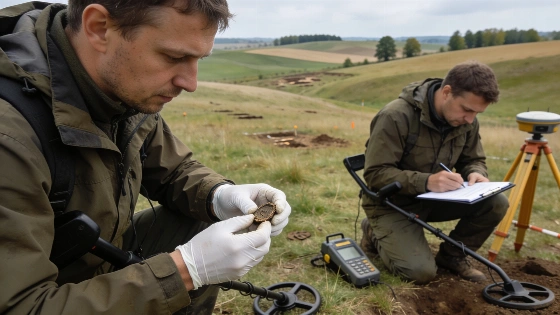
Archaeologists and metal detectorists are conducting a targeted survey at the Grunwald battlefield in Poland, aiming to clarify the distribution of medieval artifacts and better understand the events of the 1410 conflict through systematic fieldwork
Archaeological teams have launched a new phase of fieldwork at the Grunwald battlefield in Poland's Warmian-Masurian region, focusing on the central area where the Polish-Lithuanian alliance confronted the Teutonic Order in 1410. This campaign brings together around 40 specialists, including archaeologists, metal detectorists, and museum staff, to systematically survey both previously investigated and unsurveyed zones. The primary aim is to address gaps in the spatial understanding of the battlefield, particularly in the central sector where the most intense fighting is believed to have occurred.
Surveying the Battlefield
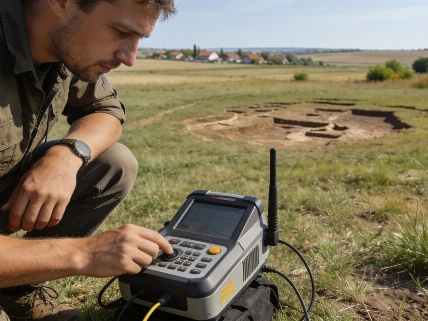
Since 2014, systematic surveys using metal detectors have covered hundreds of hectares of agricultural land at Grunwald. The current project extends this work by targeting the central battlefield and expanding into areas west and north of the main conflict zone. Earlier in the year, an initial phase near the village of Leszcz yielded an early 15th-century Tatar coin and revealed a previously undocumented archaeological site from the Roman period, highlighting the region's complex occupational history.
Researchers are using artifact concentrations-such as weapons, military equipment, and personal items-to reconstruct the distribution and intensity of combat. The site of a battle chapel built in 1411, where approximately 250 individuals killed in the conflict were interred, serves as a key reference point. However, the locations of many other burials remain unidentified, and the full extent of the battlefield is still being mapped.
Material Evidence and Interpretation
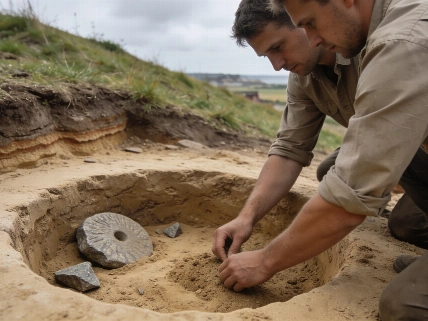
Over a decade of investigation has produced a substantial assemblage of medieval military artifacts. Common finds include crossbow bolt heads, arrowheads, spurs, horse equipment, battle axes, sword fragments, armored gauntlets, and belt fittings. Coins from both the Teutonic Order and the Jagiellonian realm have been recovered, providing chronological and cultural context for the battlefield activity. More unusual objects, such as cloak clasps inscribed with "Ave Maria" and a medieval seal depicting a pelican, add further detail to the material record.
Spatial analysis of artifact distributions has helped clarify the positions of opposing forces and the likely routes of movement during the battle. Evidence suggests that the armies assembled near Grunwald and Łodwigowo, with the fiercest combat occurring along the connecting route. Archaeological work has also contributed to the identification of the Teutonic camp, believed to be at the site where a post-battle chapel was later constructed by order of Grand Master Heinrich von Plauen.
Context and Ongoing Research
The Grunwald battlefield remains a dynamic research area, with each season's fieldwork refining the understanding of medieval conflict and landscape use. The integration of metal-detected finds, historical records, and spatial analysis is gradually producing a more detailed reconstruction of the 1410 battle. The ongoing search for additional burial sites and artifact concentrations continues to inform debates about the scale and organization of the engagement.
Recent discoveries at Grunwald echo broader trends in battlefield archaeology, where systematic survey and artifact mapping are reshaping interpretations of medieval warfare. Comparable approaches have been applied at other European sites, such as the investigation of medieval fortifications in southwestern France, as seen in the study of defensive earthworks above the Gironde Estuary.
Understanding the archaeological context of battlefields like Grunwald depends on the careful integration of material evidence, spatial data, and historical sources. The preservation of artifacts is influenced by agricultural activity, soil conditions, and past land use, which can complicate efforts to reconstruct the original distribution of objects and human remains. As research continues, the Grunwald site offers a case study in the challenges and possibilities of reconstructing large-scale medieval conflict from the archaeological record.
Archaeological battlefield surveys rely on the systematic recovery and mapping of artifacts across extensive areas. Metal detecting, when conducted under controlled research protocols, allows for the identification of artifact concentrations that may correspond to specific phases of combat or troop movement. However, the interpretation of these patterns requires careful consideration of post-depositional processes, such as plowing, erosion, and modern disturbance, which can redistribute objects and obscure original contexts. The integration of spatial analysis, historical documentation, and targeted excavation is essential for building a robust understanding of past conflict events.