The National Science Foundation has committed $290 million to eight Quantum Leap Challenge Institutes, including a $37.5 million renewal for the University of Chicago-led QuBBE, aiming to advance quantum sensors for biomedical research and clinical translation
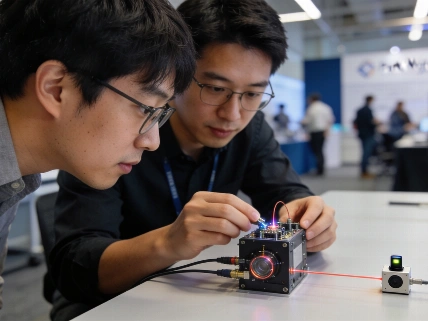
The U.S. National Science Foundation (NSF) has announced a $290 million investment across eight Quantum Leap Challenge Institutes (QLCIs), expanding its national quantum research network under the National Quantum Initiative Act. Among the renewed centers, the University of Chicago-led Quantum Leap Challenge Institute for Quantum Sensing for Biophysics and Bioengineering (NSF QuBBE) has secured a $37.5 million, five-year grant to develop quantum sensors for direct use in living biological systems. The program aims to move quantum sensing from laboratory demonstrations toward robust, in vivo measurement tools for biomedical research and clinical applications.
Genetically Encodable Qubits
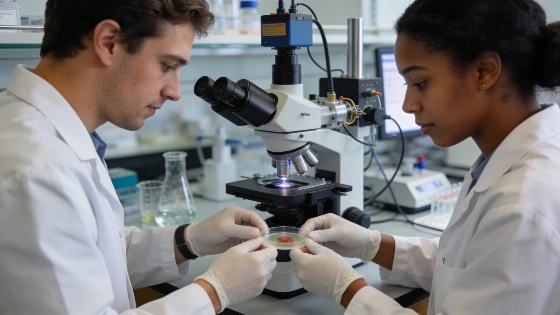
QuBBE's second phase focuses on integrating quantum sensors into complex cellular environments. Building on earlier work that demonstrated fluorescent proteins can function as spin qubits, researchers are now engineering genetically encodable protein qubits that can be expressed directly inside living cells. These protein-based qubits are approximately one-tenth the size of diamond nitrogen-vacancy (NV) nanodiamond sensors, potentially allowing for more precise targeting and less disruption to cellular function. The approach contrasts with NV-center nanodiamonds, which offer high sensitivity but present challenges in precise intracellular placement and biocompatibility.
In Vivo Quantum Sensing
The renewed QuBBE program will advance four interconnected research streams: the development of novel biological nanoprobes, entanglement- and squeezed-light-enhanced sensing, direct measurement of cellular activity in vivo, and strategies for broad clinical and biological adoption. The integration with the new Berggren Center for Quantum Biology and Medicine at the University of Chicago is intended to accelerate the translation of quantum sensor technology into healthcare tools and to train clinicians in their use. The research will also address the engineering and calibration challenges of operating quantum sensors in the noisy, variable environment of living tissue, where magnetic, electric, and thermal fluctuations can degrade quantum coherence and measurement fidelity.
National Quantum Research Network
The NSF's $290 million package supports three new research centers and renews five established institutes, spanning 36 higher education institutions in 19 states. In addition to QuBBE, the funded institutes include new centers focused on fault-tolerant quantum hardware and practical error correction, as well as renewed efforts in hybrid quantum networks, manufacturable superconducting devices, and quantum simulation architectures. The QuBBE renewal is led by Director Prof. Greg Engel, Deputy Director Prof. Allison Squires, and Chicago State University Workforce Lead Prof. Valerie Goss, with the grant period running from September 1, 2026, through August 31, 2031. The program also includes workforce development initiatives such as the CSU Quantum Institute, Q-Cert certification, and K-12 pathways through the UIC Quantum Academy.
Engineering and Scalability Challenges
While the promise of quantum-enhanced sensing in biology is significant, several engineering barriers remain. Achieving reliable quantum coherence and high-fidelity readout in the complex, fluctuating environment of living tissue is a major technical challenge. Protein qubits must be engineered for stability, minimal toxicity, and compatibility with cellular processes, while maintaining sensitivity to relevant biological signals. Calibration, error mitigation, and reproducibility will be critical for translating laboratory prototypes into clinically useful devices. The NSF's investment reflects a broader trend toward integrating quantum technologies with biomedical research, but the timeline for widespread clinical adoption will depend on overcoming these technical and engineering hurdles. Related efforts to develop scalable quantum processors, such as those described in recent U.S. initiatives in silicon spin qubit development, highlight the parallel challenges of moving from laboratory demonstration to robust, manufacturable quantum systems.
Quantum sensing leverages the extreme sensitivity of quantum states-such as spin, charge, or photon number-to detect minute changes in physical quantities like magnetic fields, electric fields, or temperature. In biological applications, quantum sensors can potentially achieve spatial and temporal resolution beyond classical techniques, enabling new insights into cellular processes. However, quantum coherence is fragile, and maintaining it in the presence of biological noise, temperature fluctuations, and chemical interactions remains a central challenge. The development of genetically encodable qubits represents a step toward minimally invasive, high-precision measurement tools, but practical deployment will require advances in sensor engineering, calibration, and integration with existing biomedical workflows.