The EuroHPC Joint Undertaking has chosen 13 quantum hardware and software startups for its Quantum Grand Challenge, awarding initial funding to develop proof-of-concept quantum processors and systems for integration into European supercomputing centers
The EuroHPC Joint Undertaking (EuroHPC JU) has announced the selection of 13 European quantum technology startups as part of its Quantum Grand Challenge, a competitive call aimed at accelerating the development of quantum processing units (QPUs) and related systems for integration with high-performance computing (HPC) infrastructure across Europe. The decision, formalized as Decision No. 31/2026, marks a significant step in the European Union's strategy to advance quantum hardware and software capabilities within its borders.
Selected Quantum Platforms
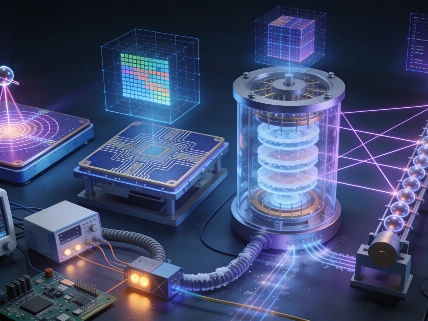
The chosen startups represent a range of quantum hardware modalities and software approaches, including superconducting qubits, trapped-ion processors, silicon spin qubits, photonic quantum devices, and quantum sensing platforms. Among the selected companies are Alice & Bob (France), eleQtron (Germany), Equal 1 Laboratories (Ireland), Groove Quantum (Netherlands), IQM (Finland), NVISION Imaging (Germany), Planckian (Italy), Qilimanjaro (Spain), Quandela (France), QUDORA Technologies (Germany), QuiX Quantum (Netherlands), QUOBLY (France), and Sparrow Quantum (Denmark). Each project will receive approximately €300,000 in Phase 1 Coordination and Support Action (CSA) funding to establish technical proof-of-concept devices or software stacks over a four-month period.
Technical Milestones and Integration
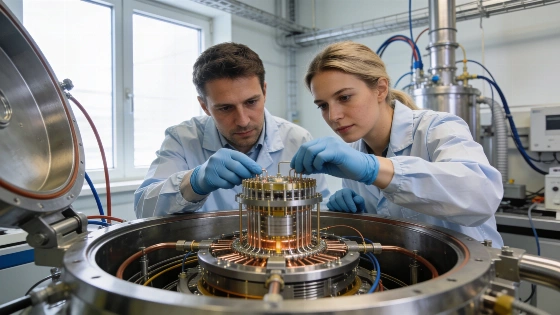
To progress beyond the initial phase, startups must demonstrate both technical and business milestones, including the fabrication, control, and preliminary benchmarking of their quantum devices or software. Successful completion of Phase 1 will qualify these companies to apply for up to €30 million each in venture debt financing from the European Investment Bank (EIB), drawn from a dedicated €100 million InvestEU pool. The selected hardware platforms are intended for integration into EuroHPC supercomputing centers, where they will be evaluated for interoperability, control fidelity, and potential for scaling within hybrid quantum-classical workflows.
Funding, Evaluation, and Reserve List
The Quantum Grand Challenge call attracted 27 eligible proposals from across Europe, with the main list of 13 projects receiving a cumulative EU contribution of approximately €3.87 million in Phase 1. Reserve list allocations include C12 Quantum Electronics (France), neQxt GmbH (Germany), and PASQAL (France), which may be considered for future funding if additional resources become available. The selection process prioritized technical feasibility, potential for integration with existing HPC infrastructure, and the ability to address key engineering challenges such as error rates, device yield, and control system compatibility.
Strategic Context and Industry Implications
This initiative is part of the EU's broader effort to maintain technological sovereignty in quantum computing and HPC, as outlined in Regulation (EU) 2021/1173. By supporting a diverse set of hardware and software approaches, the program aims to mitigate the risks associated with technological lock-in and to foster a competitive ecosystem of quantum technology providers. The integration of quantum processors into supercomputing centers is expected to provide valuable data on device performance, error sources, and the practical challenges of hybrid quantum-classical computation. For context, similar efforts to advance quantum sensing and integration have been reported in other regions, such as the National Science Foundation's support for quantum sensor development in the United States, as described in this recent coverage of quantum sensing initiatives.
Each selected project will be required to report on device performance metrics, including qubit coherence times, gate fidelities, error rates, and system integration benchmarks. These figures will inform subsequent funding decisions and help establish a baseline for future quantum-HPC integration efforts. The program's structure is designed to ensure that only platforms demonstrating reproducible technical progress and credible engineering pathways will advance to larger-scale deployment and financing.
Quantum error correction remains a central challenge for all hardware modalities represented in the call. While some projects, such as those based on superconducting or silicon spin qubits, are pursuing error-corrected logical qubits, others focus on analog or photonic architectures where error mitigation strategies differ. The diversity of approaches reflects the current uncertainty about which physical platform will ultimately prove most scalable and reliable for practical quantum computation.
Physical qubits are the fundamental quantum systems-such as superconducting circuits, trapped ions, or photons-that can be individually controlled and measured. However, these physical qubits are highly sensitive to noise and environmental disturbances, leading to errors during computation. Logical qubits are constructed by encoding information across multiple physical qubits using error-correcting codes, allowing the system to detect and correct certain types of errors. Achieving low logical error rates is essential for running deep quantum circuits and realizing practical quantum algorithms. The transition from physical to logical qubits, and the engineering required to maintain coherence and fidelity at scale, remains one of the most significant hurdles in the field.