India's Centre for Development of Telematics has released 14 production-grade quantum-secure hardware and software products, aiming to integrate quantum cryptography and post-quantum standards into national telecom and financial infrastructure
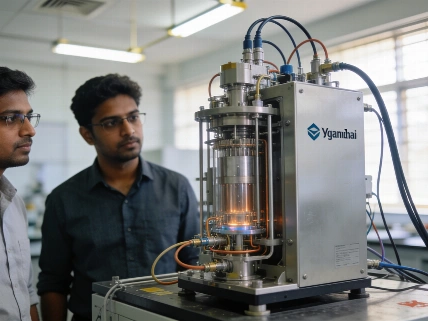
India's Centre for Development of Telematics (C-DOT) has announced the deployment of 14 quantum-secure products designed to address emerging cryptographic risks in national telecommunications and financial networks. The release, timed with C-DOT's 43rd Foundation Day, marks a shift from laboratory prototypes to production-grade hardware and software intended for operational use in critical infrastructure. The suite includes quantum key distribution (QKD) devices, post-quantum cryptography (PQC) modules, quantum-safe encryption units, and secure routing protocols, all developed within India's public research and engineering ecosystem.
Quantum Security Integration
The new devices are engineered to support migration away from classical public-key infrastructure, which is increasingly vulnerable to advances in quantum computing. C-DOT's portfolio targets both fiber-based quantum key distribution and PQC algorithms that can be implemented on conventional hardware. The products are intended for deployment by telecom operators, financial institutions, and regulatory bodies, with early adoption focused on securing backbone networks and digital identity systems. According to C-DOT, the quantum stack has already generated over $1 million in commercial revenue, indicating initial market traction within sovereign Indian networks.
Technical Scope and Standards
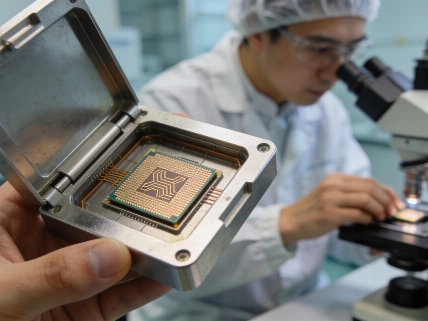
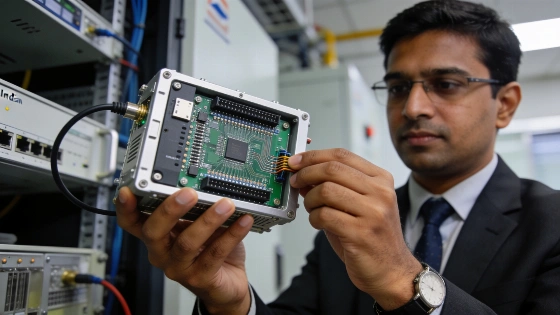
The hardware and software offerings include QKD transmitters and receivers, PQC digital signature modules, and quantum-safe encryption appliances. These systems are designed to operate across India's existing 4G and 5G backbone, which spans approximately 100,000 sites. The devices are built to comply with government guidelines developed in collaboration with the Telecommunication Engineering Centre (TEC), and regulatory frameworks have been circulated to agencies such as the Reserve Bank of India (RBI), Securities and Exchange Board of India (SEBI), and Telecom Regulatory Authority of India (TRAI). The integration of quantum and post-quantum protocols is positioned as a response to the anticipated threat of quantum computers to classical cryptographic schemes, but the practical security of these systems will depend on implementation quality and ongoing standards development.
Alignment with National and Global Initiatives
C-DOT's quantum-secure products are being positioned within the broader Bharat 6G Vision, which aims to establish India as a contributor to international 6G standards by 2030. The Department of Telecommunications is working to incorporate quantum key encryption, PQC, and disaster-resilient communications into the 3GPP and ITU IMT-2030 frameworks. The government has directed C-DOT to move beyond research and development, emphasizing commercialization and export of "Made in India, For the World" quantum and cybersecurity products. This strategy is intended to reduce reliance on foreign vendors for critical security infrastructure, particularly in defense, satellite, and national backbone networks.
Commercialization and Early Adoption
While the announcement highlights early revenue and regulatory engagement, the long-term impact of these quantum-secure devices will depend on their performance under operational conditions, interoperability with legacy systems, and resistance to implementation-level attacks. The transition from laboratory demonstration to field deployment remains a significant engineering challenge, especially as quantum and post-quantum standards continue to evolve. For context, recent advances in quantum error correction and cryptographic benchmarking, such as those described in AI-based decoding of quantum error correction codes, illustrate the rapid pace of change in both quantum hardware and security protocols. Independent evaluation and transparent reporting will be essential to assess the real-world security and reliability of these new systems.
Quantum key distribution (QKD) is a cryptographic technique that uses quantum states-typically single photons-to generate and share secret keys between distant parties. Unlike classical key exchange, QKD can detect eavesdropping attempts due to the fundamental properties of quantum measurement. However, practical QKD systems face challenges including photon loss, detector imperfections, and side-channel vulnerabilities. Post-quantum cryptography (PQC), by contrast, refers to classical cryptographic algorithms designed to resist attacks from quantum computers. Both approaches are being pursued in parallel to address the future risk that large-scale quantum computers could compromise widely used public-key encryption schemes. The effectiveness of quantum-secure infrastructure depends not only on the underlying physics but also on robust engineering, standards compliance, and continuous security evaluation.