The University of New Mexico's Quantum New Mexico Institute will receive $3 million in state funding to expand quantum research, develop specialized workforce programs, and support commercialization efforts across the Southwest quantum corridor
The State of New Mexico has formalized a $3 million investment in The University of New Mexico's Quantum New Mexico Institute (QNM-I), aiming to strengthen the region's quantum research infrastructure, workforce training, and technology transfer. The funding, delivered through an Intergovernmental Agreement with Economic Development New Mexico, is intended to accelerate the translation of quantum information science from laboratory research to regional economic activity.
Research and Talent Pipeline
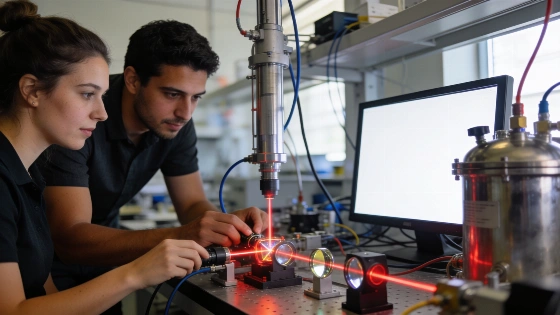
The initiative targets three operational priorities. First, it will support quantum information science research at UNM, with resources allocated to attract and retain faculty, graduate students, and undergraduates specializing in quantum physics and engineering. This focus is designed to address the persistent challenge of building a sustainable talent pipeline for quantum technologies, which require expertise in experimental physics, device fabrication, and quantum control systems.
Second, the funding will expand educational and outreach programs across high schools, community colleges-including Central New Mexico Community College-and university systems. These programs are structured to prepare students for roles in quantum hardware, software, and supporting engineering fields, reflecting the growing demand for technical skills in quantum device operation, calibration, and measurement.
Commercialization and Technology Transfer
The third pillar of the investment is commercialization. QNM-I will establish an Entrepreneur-in-Residence program, host industry workshops, and provide intellectual property support and accelerator bootcamps. These efforts are intended to facilitate the transition of laboratory discoveries from UNM, Sandia National Laboratories, and Los Alamos National Laboratory into commercial startups. The approach recognizes that moving quantum prototypes from research environments to viable products requires not only technical validation but also business development and regulatory navigation.
New Mexico's strategy aligns with broader trends in quantum workforce development, as seen in other regions integrating quantum curricula into higher education. For example, a recent initiative in Luxembourg embedded quantum computing and hybrid algorithm workflows into business education, as described in this report on quantum software integration in business schools. Such programs highlight the need for interdisciplinary training that bridges quantum science, engineering, and commercial application.
Statewide Quantum Infrastructure
The $3 million allocation is part of a larger state commitment exceeding $450 million to establish New Mexico as a global quantum hub. Previous investments include economic development grants and the deployment of ABQ-Net, a $450 million open-access quantum testbed designed to attract commercial partners and support experimental validation of quantum devices. Companies such as Infleqtion, Aliro Technologies, Qunnect, Tensora, and Bandelier Technologies have engaged with these testbed facilities, reflecting growing industry interest in scalable quantum infrastructure.
QNM-I also serves as the academic anchor for Elevate Quantum, a regional Tech Hub designated by the U.S. Economic Development Administration and supported by $127 million in combined federal and state funding. The partnership, led by state and university leadership, is structured to align with industry projections that estimate the global quantum technology sector could surpass $4 billion by 2028. However, the practical realization of these projections depends on sustained progress in device performance, error correction, and reproducibility.
Technical and Engineering Challenges
Despite the scale of public investment, significant technical barriers remain between laboratory quantum devices and deployable commercial systems. Quantum processors and sensors are highly sensitive to noise, require precise calibration, and often operate at cryogenic temperatures. Engineering challenges include improving device yield, scaling up the number of high-fidelity qubits, and integrating error correction protocols that can reduce logical error rates to practical levels. The transition from prototype to scalable technology also depends on reproducible fabrication, robust control electronics, and reliable measurement infrastructure.
While the new funding will support workforce and infrastructure development, the timeline for achieving fault-tolerant quantum computing or widespread quantum sensing remains uncertain. Progress will require not only technical advances but also effective collaboration between academic researchers, industry partners, and policymakers to address the full spectrum of scientific, engineering, and regulatory hurdles.
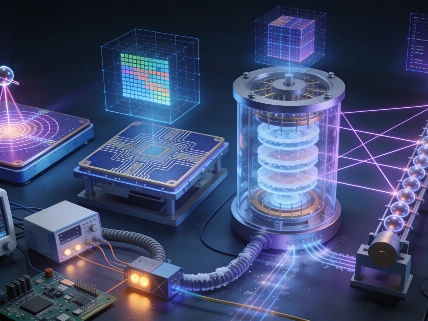
Quantum information science relies on the manipulation and measurement of quantum states-such as superposition and entanglement-using physical systems like superconducting circuits, trapped ions, or photonic devices. Achieving useful quantum computation or sensing requires maintaining coherence and high-fidelity control over many qubits, while minimizing errors from environmental noise and device imperfections. Error correction protocols encode logical qubits across multiple physical qubits to detect and correct errors, but implementing these codes at scale remains a major engineering challenge. The distinction between laboratory demonstrations and practical, deployable quantum systems is defined by the ability to reproduce results, manage noise, and integrate devices into real-world workflows.