
Milky Way - Part 2
59 reports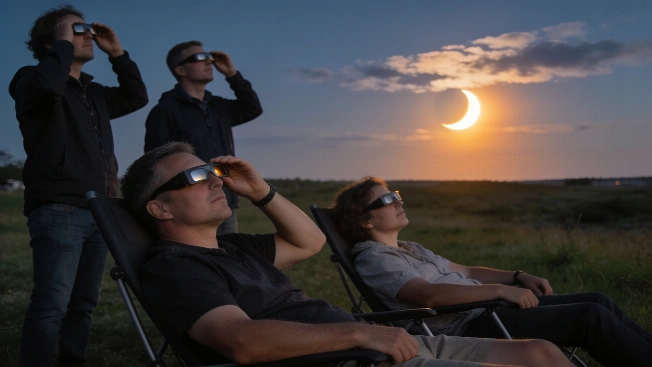
Partial Solar Eclipse and Perseid Meteors Offer Rare Double Event
On August 12, observers across North America and Europe will see a partial solar eclipse by day and the Perseid meteor shower by night. The new moon and clear skies in many regions are expected to offer favorable viewing conditions.
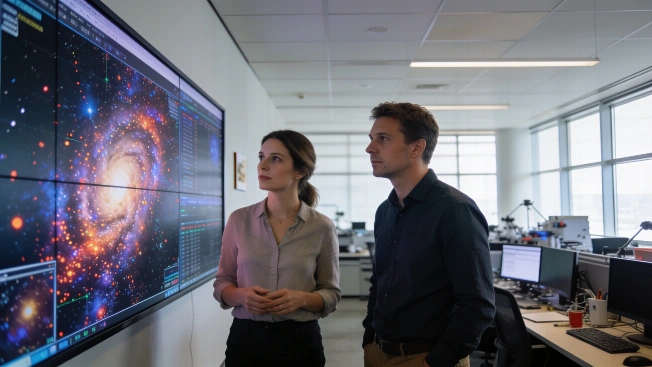
eROSITA X-ray Survey Nearly Doubles Known High-Energy Cosmic Sources
The eROSITA X-ray telescope's latest data release catalogs nearly 2 million X-ray sources, offering a sweeping view of black holes and galaxy clusters, alongside stellar remnants across the universe.
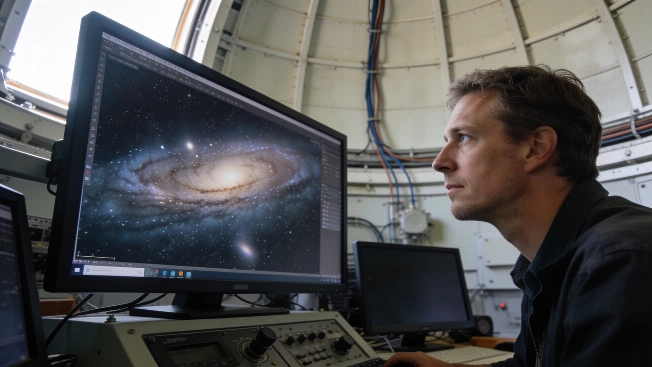
Hubble Data Links Andromeda's Star Formation Slowdown to Nearby Galaxy
Astronomers using the Hubble Space Telescope have mapped a sharp decline in star formation across the Andromeda galaxy, with evidence pointing to gravitational influence from its smaller neighbor, M32
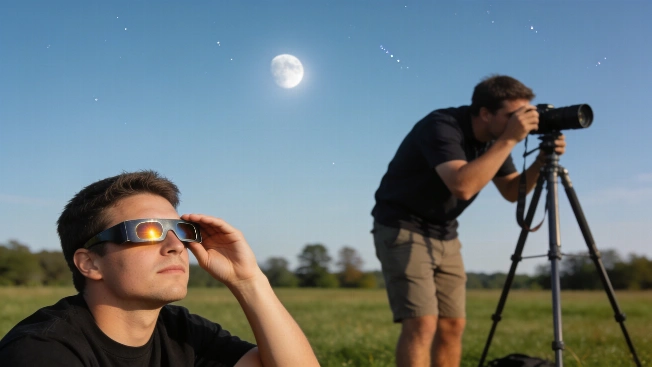
Partial Solar Eclipse and Perseid Meteor Shower Align on August 12
On August 12, skywatchers in North America and Europe will witness a solar eclipse by day and the peak of the Perseid meteor shower by night, offering a rare chance for coordinated solar and meteor observations under favorable conditions.
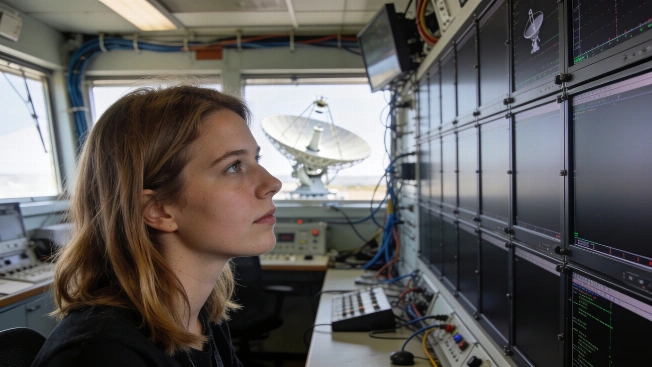
Radio Surveys Reveal Millions More Milky Way Stars Searched for SETI
A new analysis using the Besançon Galactic Model estimates that radio telescopes have surveyed over 6 million stars for extraterrestrial signals, far more than earlier estimates based on star catalogues
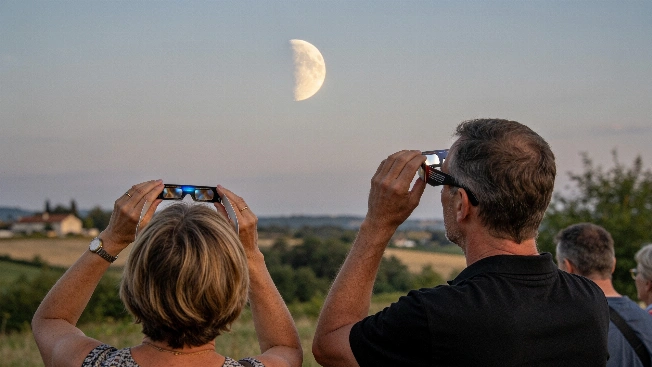
Aug. 12, 2026, brings an unusually complete night of skywatching
On Aug. 12, 2026, observers can follow a solar eclipse by day, then watch Venus and the Perseid meteor shower, with the Milky Way visible under a nearly moonless sky.
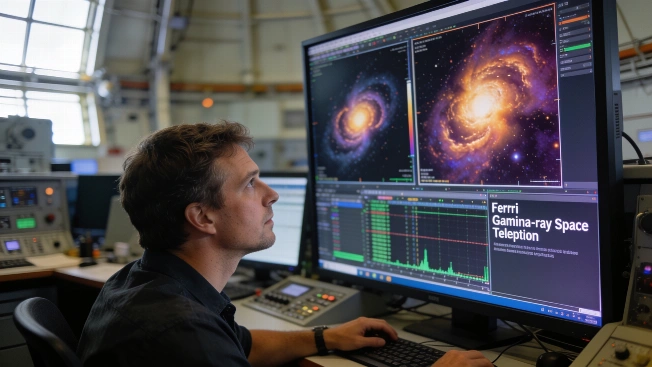
Astronomers Link Two Supernova Remnants to a Single Binary Star System
A faint supernova remnant near the Jellyfish Nebula has been identified as the likely companion explosion from a binary star system, based on 16 years of gamma-ray data and multiwavelength observations

NASA Prepares Roman Space Telescope for Early Launch to L2 Orbit
NASA's Nancy Grace Roman Space Telescope launched on August 30 and is heading to L2, where it will conduct wide-field infrared surveys and exoplanet imaging
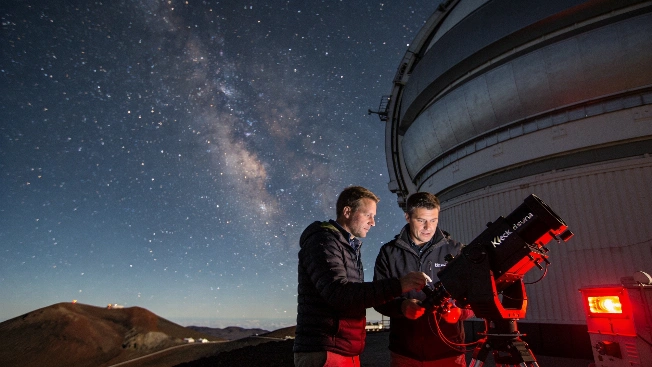
Dwarf Galaxy DF9 Found Without Dark Matter After Cosmic Collision
Astronomers using the Keck Cosmic Web Imager have identified a faint dwarf galaxy, DF9, that appears to lack dark matter, supporting the idea that galactic collisions can separate dark and visible matter.
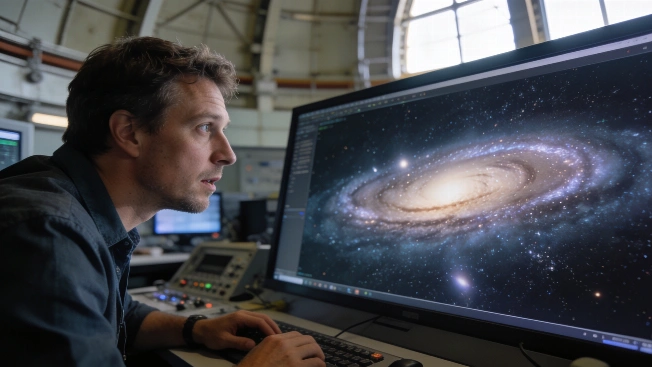
Milky Way Disk May Have Flipped, Altering Solar System's Orbit
Supercomputer simulations suggest the Milky Way's spiral disk may have rotated by 90 degrees in the distant past, potentially changing the solar system's path and explaining the galaxy's unusually slow stellar halo rotation
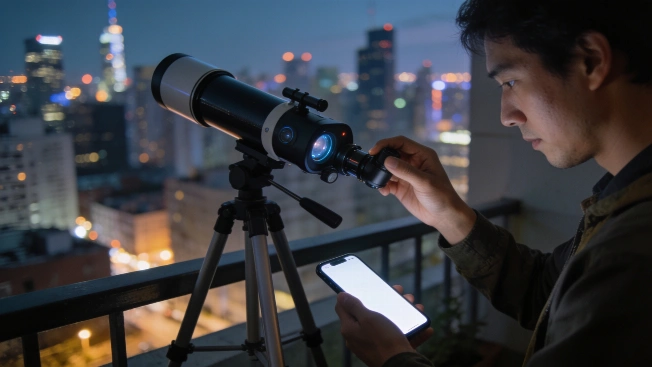
Seestar S30 Pro Smart Telescope Expands Urban Astrophotography Access
The Seestar S30 Pro pairs a high-resolution sensor with dual cameras and automated image processing in a compact, smartphone-controlled telescope, bringing deep-sky imaging within reach even from light-polluted locations.
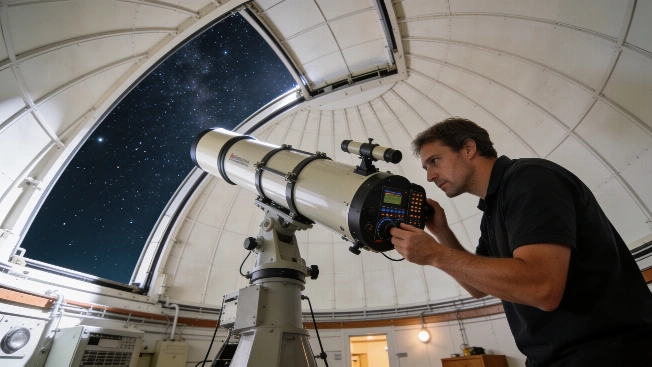
What a Parsec Really Measures in Astronomy and Why It Matters
Astronomers use the parsec to measure vast cosmic distances, relying on precise observations of stellar parallax to determine how far away stars are from Earth. The unit is central to mapping the Milky Way and beyond.

Hubble Reveals High-Speed Gas Bullets from Rare Helium Nova in Milky Way
Astronomers using Hubble and other observatories have observed V445 Puppis, the Milky Way's only known helium nova, ejecting dense gas clumps at speeds of up to 32 million kilometers per hour.
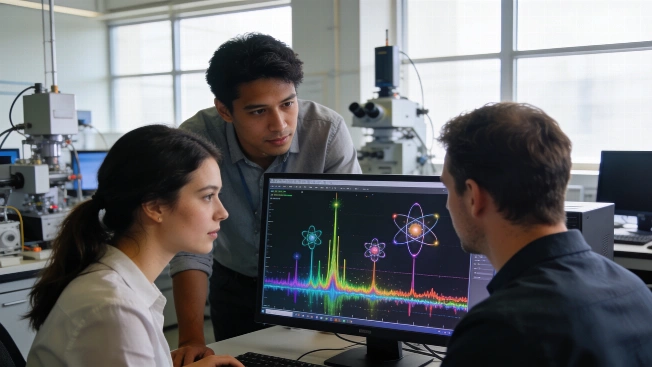
Sun's Silver Shortfall Explained by Advanced Atomic Modeling
Researchers examining solar spectra explain how atomic simulations affect estimates of the sun’s silver abundance and comparisons with meteorites, while emphasizing the limits of those measurements.
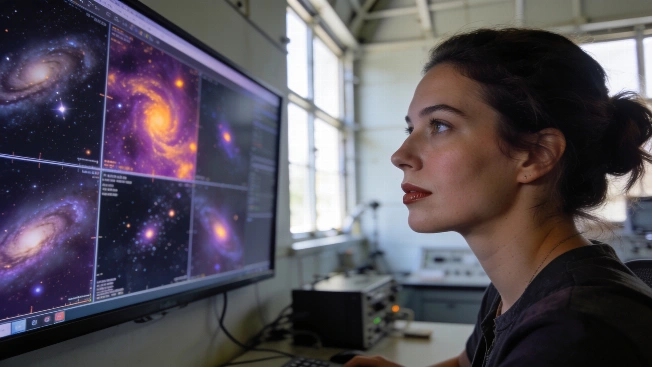
Webb Telescope Links 'Little Red Dots' to Ancient Star Clusters
Astronomers using the James Webb Space Telescope have traced mysterious 'Little Red Dots' in the early universe to the possible origins of globular clusters, offering new clues about how these dense stellar systems formed.
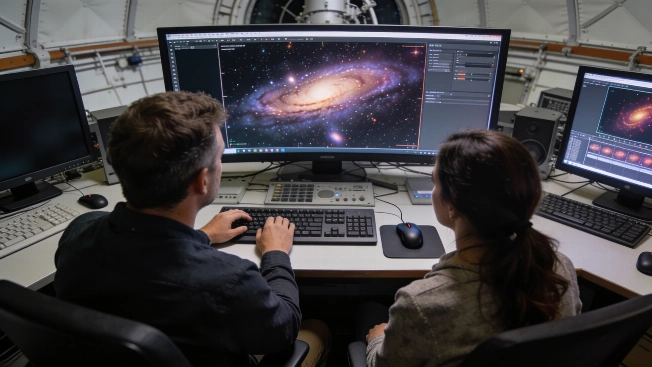
Webb Telescope Reveals How Early Galaxies Produced Cosmic Dust
Astronomers used the James Webb Space Telescope to study a nearby dwarf galaxy, uncovering how ancient galaxies enriched the early universe with stardust impressive for star and galaxy formation.
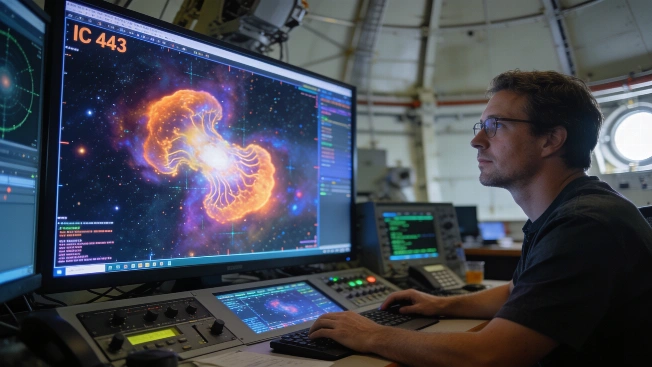
Possible Twin Supernova Remnants Identified in the Jellyfish Nebula
Astronomers analyzing data from NASA's Fermi Gamma-ray Space Telescope and other observatories have found evidence suggesting that both stars in a binary system exploded as supernovae, leaving overlapping remnants in the IC 443 region.
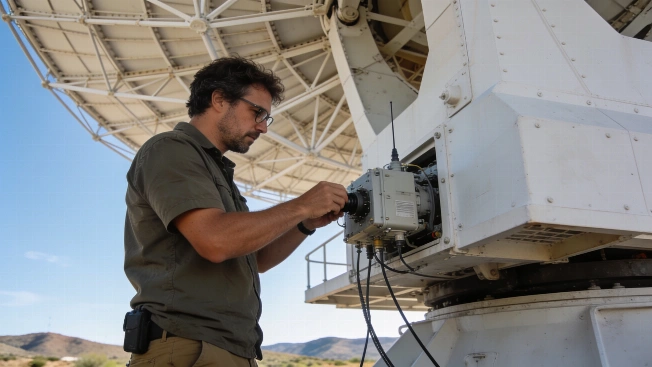
Detection of Four-Carbon Sugar Molecule in Interstellar Space
Researchers have identified the sugar molecule erythrulose in a molecular cloud near the Milky Way's center using radio telescopes, providing new evidence that complex organic compounds can form in interstellar environments under extreme conditions
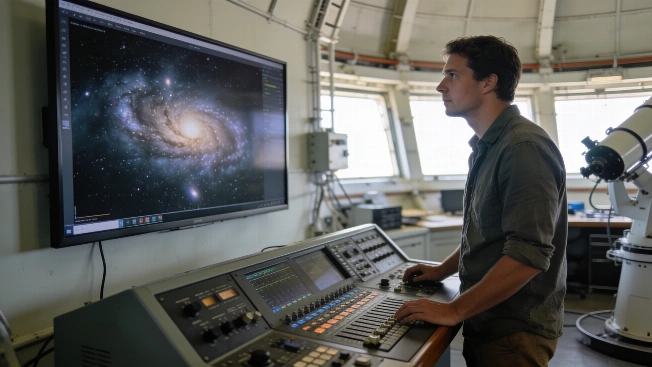
Webb Telescope Uses Gravitational Lensing to Reveal Ancient Galaxies
The James Webb Space Telescope has captured a detailed image of the galaxy cluster MACS J0553.4-3342, using gravitational lensing to magnify galaxies from the universe's first billion years
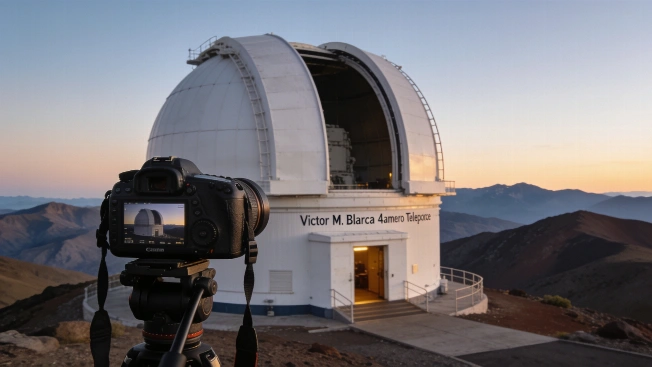
Dark Energy Camera Reveals Star Formation in Corona Australis Cloud
The Dark Energy Camera has imaged the Corona Australis Molecular Cloud, capturing intricate details of a nearby star-forming region and highlighting the interplay of gas, dust, and young stars in one of the closest stellar nurseries to Earth
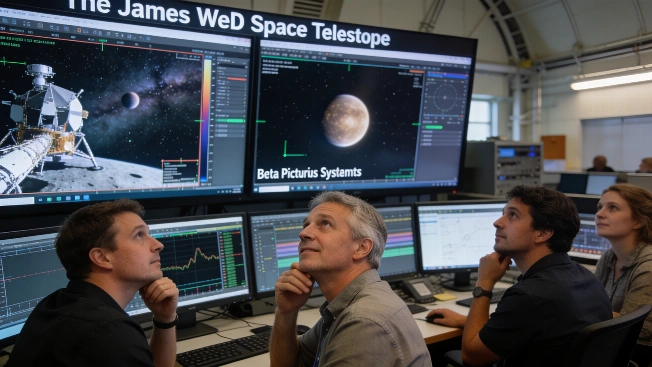
Webb Telescope Detects Hidden Giant Planet in Beta Pictoris System
The Beta Pictoris system contains three known giant exoplanets, while radio observations of β Pictoris b may offer clues to auroral activity and help investigate magnetic fields around distant planets.
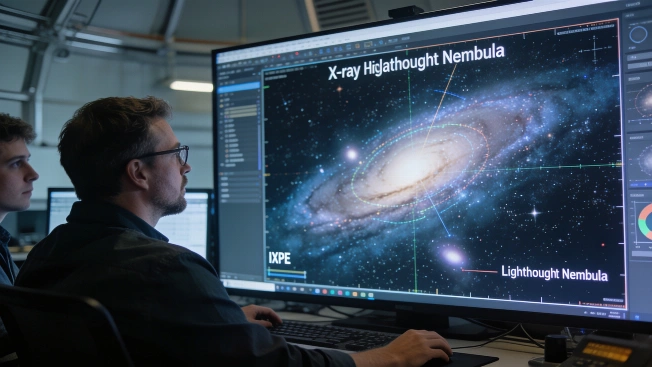
NASA's IXPE Maps Magnetic Field of Unusual Pulsar in Milky Way
Astronomers used NASA's Imaging X-ray Polarimetry Étudier to map the magnetic field around pulsar PSR J1101-6101, revealing how high-energy particles stream through the Milky Way and testing long-standing theoretical predictions.
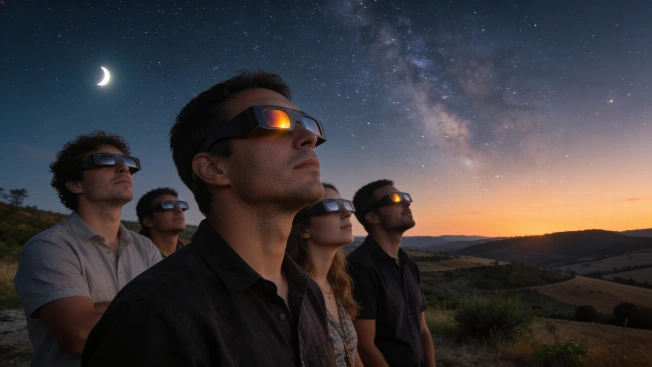
Total Solar Eclipse and Perseid Meteor Shower Align on 12 August 2026
On 12 August 2026, a total solar eclipse will cross eastern Greenland and Iceland before reaching Spain, coinciding with the Perseid meteor shower and a prominent evening appearance of Venus. Observers in North America and Europe will experience a rare overlap of astronomical events.
Hidden White Dwarfs Detected Near Earth in Red Dwarf Binaries
Astronomers have identified four white dwarfs concealed by red dwarf companions within 65 light-years of Earth. Ultraviolet observations from the Hubble Space Telescope revealed these elusive stellar remnants.
Part 2 of 2