A new analysis using the Besançon Galactic Model suggests that radio telescopes have surveyed over 6 million stars for extraterrestrial signals, far exceeding previous estimates based on star catalogues
Efforts to detect extraterrestrial intelligence in the Milky Way have covered a much larger portion of the galaxy than previously recognized, according to a new study that re-examines how many stars have been included in major radio surveys. The research, presented at the Royal Astronomical Society's National Astronomy Meeting, suggests that the true number of stars observed for potential alien signals is more than twenty times higher than earlier estimates.
Reassessing the Scope of SETI Surveys
Traditionally, the number of stars surveyed for radio signals has been calculated using optical and infrared star catalogues, such as those from the Gaia mission. These catalogues, however, are limited to stars bright enough to be detected in visible or near-infrared light, leaving out the vast population of fainter stars. Louisa Mason, a doctoral researcher at the University of Manchester, addressed this gap by applying the Besançon Galactic Model-a simulation of the Milky Way's stellar population-to the fields observed by the Green Bank and Parkes radio telescopes.
While previous counts based on catalogues suggested that 288,315 stars had been observed in 1,327 radio pointings, Mason's model-based approach indicates that more than 6.1 million stars actually fell within the telescopes' fields of view. Most of these stars are too faint to appear in standard catalogues, but they could still emit detectable radio signals if technologically active civilizations exist there.
Implications for SETI and Observational Limits
This expanded estimate does not mean that the search for extraterrestrial intelligence (SETI) is close to exhausting the galaxy's possibilities. Although the number of stars surveyed is much larger, the time spent listening to each star remains brief, and the range of radio frequencies covered is still limited. A signal could easily be missed if it is intermittent or transmitted outside the observed frequency bands.
Radio telescopes do not isolate a single star during observations; instead, they capture signals from all stars within their field of view. This characteristic is especially valuable for commensal SETI, where searches for technosignatures piggyback on routine astronomical observations. However, the sensitivity to faint or distant signals depends on both the instrument's capabilities and the properties of the potential transmitters.
Expanding the Frequency Range
Historically, most SETI searches have focused on the so-called "water hole" region of the radio spectrum, between 1,420 and 1,666 megahertz, where natural cosmic noise is relatively low and Earth's atmosphere is transparent. Mason's recent work also explored higher-frequency radio data from the Atacama Large Millimeter/submillimeter Array (ALMA) in Chile, marking the first SETI search using this facility. ALMA operates at shorter wavelengths and higher frequencies than traditional radio telescopes, which can reduce signal dispersion caused by interstellar electrons.
Although no promising technosignature candidates were found in the initial ALMA archival data, the study demonstrates that the millimeter and submillimeter bands remain largely unexplored for SETI. By opening new regions of parameter space, researchers hope to increase the chances of detecting artificial signals, should they exist.
Context Within Galactic Surveys
The new findings highlight the importance of considering the full stellar population, not just catalogued stars, when evaluating the reach of SETI efforts. This approach is reminiscent of recent large-scale stellar surveys, such as those mapping star formation in the Andromeda galaxy, which have revealed unexpected trends in galactic evolution. For example, a recent Hubble-based census of Andromeda's stars provided new insights into how star formation rates change over time, underscoring the value of comprehensive modeling in galactic research.
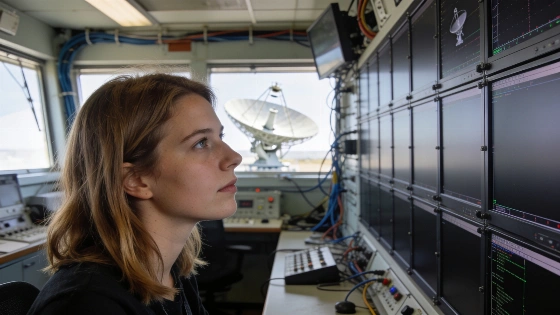
Both the Green Bank and Parkes telescopes have played central roles in SETI, with their wide fields of view enabling the simultaneous monitoring of millions of stars. The application of the Besançon Galactic Model to these surveys provides a more realistic assessment of the search volume, but also emphasizes the need for longer integration times and broader frequency coverage to improve detection prospects.
While the research expands the known scope of SETI observations, it does not alter the fundamental challenge: the absence of a confirmed technosignature. The results have been described in two papers published in Monthly Notices of the Royal Astronomical Society, one focusing on the ALMA search and the other on the revised star counts using the galactic model.
Understanding the true reach of SETI surveys requires careful modeling of both the telescope's field of view and the underlying stellar population. The Besançon Galactic Model is a computational tool that simulates the distribution, brightness, and types of stars in the Milky Way, based on current knowledge of galactic structure and stellar evolution. By comparing the model's predictions with the actual sky coverage of radio telescopes, researchers can estimate how many stars-both visible and invisible to optical surveys-have been included in SETI searches. This approach helps clarify the limits of current observations and guides future strategies for detecting potential technosignatures.