A faint supernova remnant near the Jellyfish Nebula has been identified as the likely companion explosion from a binary star system, based on 16 years of gamma-ray data and multiwavelength observations
Astronomers have identified compelling evidence that two neighboring supernova remnants in the Milky Way-one well-known and one previously overlooked-are the remains of a binary star system that exploded in separate events. The finding, published in Nature Communications, marks the first time researchers have traced two distinct supernova remnants to a single pair of stars that once orbited each other.
Gamma-Ray Data Reveals a Hidden Remnant
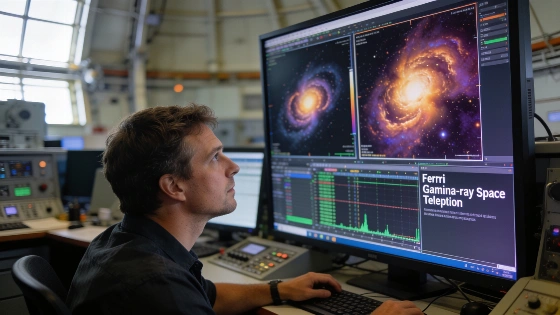
The discovery centers on G189.6+3.3, a faint supernova remnant located adjacent to the prominent Jellyfish Nebula (IC 443). Using 16 years of observations from NASA's Fermi Gamma-ray Space Telescope, researchers detected high-energy gamma rays from G189.6+3.3, which had long been overshadowed by its brighter neighbor. By combining Fermi data with X-ray, radio, ultraviolet, and optical observations, the team was able to isolate the remnant's weak signal and analyze its structure in detail.
Analysis revealed an unusual split within G189.6+3.3: its northern half is dominated by accelerated protons, while the southern half is dominated by electrons. This division is unprecedented in a single supernova remnant. The researchers attribute the difference to environmental factors-specifically, the northern edge of G189.6+3.3 is pressing against a dense hydrogen cloud, providing material for protons to interact with and generate gamma rays, while the southern region lacks such material, allowing electron-driven processes to dominate.
Binary Origin Supported by Statistical Modeling
To determine whether the proximity of G189.6+3.3 and IC 443 was coincidental, the team conducted simulations of one million hypothetical binary star systems. They calculated the likelihood that two unrelated supernova remnants would appear so close together by chance, finding odds between 1 in 1,000 and 1 in 100 depending on the method. This statistical analysis strongly supports a shared origin for the two remnants.
Further evidence comes from ultraviolet observations, which show that both remnants interact with the same hydrogen cloud, indicating they are at similar distances from Earth. The researchers also estimated the timing of the explosions, concluding that the two supernovae likely occurred tens of thousands of years apart-a sequence consistent with the expected evolution of massive binary stars, where one star explodes first and the companion follows after a delay.
Implications for Stellar Evolution and Supernova Physics
This real-world example provides a rare opportunity to test longstanding theories about the life cycles of massive binary stars and the physics of supernova explosions. Rather than relying solely on computer models, astronomers can now study the spatial relationship and energy output of two remnants with a common origin. Measuring the distance between the explosion centers may help constrain the actual energy released in each supernova, a quantity that has previously been estimated only from theoretical models.
The discovery also highlights the value of multiwavelength observations and long-term datasets in uncovering subtle features in the galactic environment. As researchers continue to search for additional binary supernova remnant pairs, the methods developed in this study may help identify similar systems elsewhere in the Milky Way. The result builds on a growing body of work exploring the complex interactions between massive stars and their surroundings, such as the recent direct imaging of a companion star to Betelgeuse using the Very Large Telescope (see related coverage).
Remaining Questions and Future Directions
While the evidence for a binary origin is strong, some uncertainties remain. The precise ages of the remnants and the detailed sequence of stellar evolution leading to the explosions are still subject to modeling assumptions and observational limits. The team plans to search for additional binary remnant pairs to determine whether this system is unique or part of a broader population. Improved measurements of the remnants' expansion and chemical composition could further clarify the physical processes at work.
Ultimately, the identification of two supernova remnants from a single binary system opens new avenues for testing models of stellar death and the production of cosmic rays. As observational capabilities continue to advance, astronomers expect to refine their understanding of how massive stars interact, evolve, and shape the interstellar medium through their explosive ends.
Supernova remnants are the expanding shells of gas and energetic particles left behind after a massive star explodes. These remnants emit radiation across the electromagnetic spectrum, from radio waves to gamma rays, depending on the physical processes and surrounding environment. Gamma-ray observations, such as those from the Fermi Gamma-ray Space Telescope, are particularly sensitive to high-energy particles accelerated by the shock waves of the explosion. By analyzing the spatial distribution and energy of this emission, astronomers can infer the composition, age, and interaction history of the remnant, as well as test models of particle acceleration and cosmic ray production.