NASA's Nancy Grace Roman Space Telescope is set for launch on August 30, aiming to deliver wide-field infrared surveys and exoplanet imaging from a stable orbit beyond the Moon
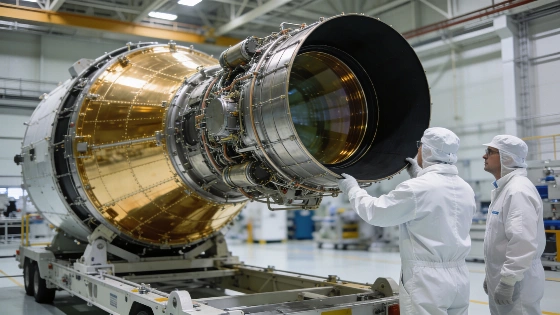
NASA's Nancy Grace Roman Space Telescope is entering its final pre-launch phase, with the $4 billion observatory scheduled to depart Earth on August 30, 2026. The mission, which will launch aboard a SpaceX Falcon Heavy rocket from Kennedy Space Center, is designed to expand the agency's capacity for wide-field infrared surveys and exoplanet imaging. Roman's early readiness-nine months ahead of its original schedule-reflects a period of accelerated integration and testing, culminating in the recent fueling of the spacecraft with hydrazine propellant.
Mission Architecture and Launch Milestones
The Roman Space Telescope will be delivered to the Sun-Earth Lagrange Point 2 (L2), a gravitationally stable region approximately 1.5 million kilometers from Earth. This location, already home to the James Webb Space Telescope, offers a thermally stable environment and uninterrupted access to deep space targets. After launch, Roman will undergo a series of trajectory corrections, with final orbit insertion planned around 100 days after departure. The spacecraft's hydrazine reserves are sized to support five years of station-keeping and momentum management, with the possibility of extended operations if fuel margins allow.
In the coming weeks, Roman will be encapsulated within the Falcon Heavy's payload fairing, marking the last major integration step before launch. NASA's project team reports that all major systems have completed pre-flight checks, and the observatory is now being prepared for transfer to the launch pad. The mission's timeline places Roman among a new generation of space observatories, following the operational milestones set by Hubble and Webb.
Scientific Objectives and Instrumentation
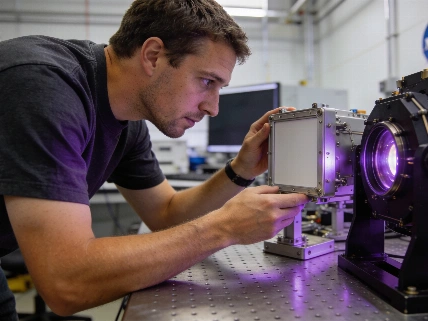
Roman's primary instrument, the Wide-Field Instrument (WFI), is engineered to capture panoramic infrared images with a field of view roughly 50 times larger than Hubble's. This capability will enable the survey of billions of galaxies and the mapping of large-scale cosmic structures. The mission is also equipped with a coronagraph technology demonstration, designed to suppress starlight and directly image exoplanets orbiting nearby stars-a method that leverages the wave properties of light to reveal faint planetary companions.
Data volume is a defining feature of the mission: Roman is expected to return over 500 terabytes of data annually, surpassing Hubble's total data output over its multi-decade lifetime. The observatory's survey speed and sensitivity will allow astronomers to conduct statistical studies of galaxy evolution, dark matter distribution, and the expansion history of the universe. While Roman's near-infrared sensitivity does not match the depth of the James Webb Space Telescope, its wide-field coverage is optimized for identifying rare objects and phenomena across vast regions of sky.
Comparisons and Anticipated Discoveries
Roman's design reflects lessons from previous flagship missions. Its imaging sharpness is comparable to Hubble's, but its survey efficiency is dramatically higher, enabling projects that would be impractical with earlier telescopes. For example, a Milky Way survey that would require a century with Hubble can be completed in a month with Roman. The mission's coronagraph will provide a testbed for future direct imaging of exoplanets, while the WFI will support cosmological studies of dark energy and dark matter through gravitational lensing and supernova surveys.
As with earlier observatories, Roman's scientific impact will depend not only on its planned investigations but also on its capacity to reveal unexpected phenomena. The mission is expected to clarify the nature of elusive objects seen in deep-field images from Webb, such as the so-called "little red dots," by enabling statistical searches across much larger sky areas. The Roman team anticipates that the observatory's data will support both targeted studies and serendipitous discoveries, echoing the experience of missions like Hubble and Webb that have enabled research far beyond their original goals.
Context in the Era of Space Observatories
Roman's launch comes as the landscape of space-based astronomy continues to evolve, with new missions targeting complementary regions of the electromagnetic spectrum and scientific parameter space. The telescope's wide-field surveys will provide context for the deep, narrow-field observations of Webb and other specialized instruments. This approach mirrors the strategy seen in other recent projects, such as the use of the Dark Energy Camera to map star-forming regions in the Milky Way, as described in a recent Science Report feature on molecular cloud imaging.
Roman is named for Nancy Grace Roman, NASA's first chief of astronomy and a key architect of the Hubble Space Telescope. The mission's legacy will be shaped by its ability to deliver large, high-quality datasets to the astronomical community, supporting both planned science and the pursuit of new questions as they arise from the data.
Space telescopes at Lagrange Point 2 (L2) benefit from a unique orbital environment. L2 is a gravitationally balanced location on the far side of Earth from the Sun, allowing spacecraft to maintain a stable position with minimal fuel use. This stability is crucial for sensitive astronomical observations, as it reduces thermal fluctuations and enables continuous communication with ground stations. After launch, a spacecraft must execute precise maneuvers to reach and remain at L2, followed by a commissioning phase in which instruments are activated, calibrated, and tested before routine science operations begin. The success of this process determines how quickly a new observatory can begin delivering scientific results.