The Dark Energy Camera has imaged the Corona Australis Molecular Cloud, capturing intricate details of a nearby star-forming region and highlighting the interplay of gas, dust, and young stars in one of the closest stellar nurseries to Earth
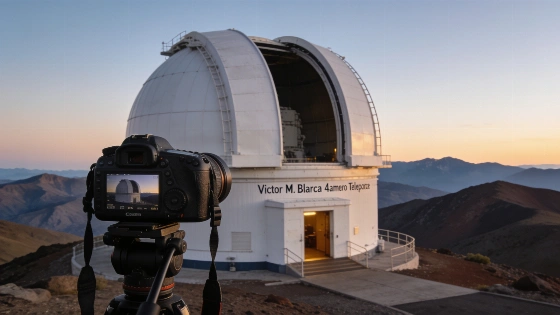
A new image from the Dark Energy Camera (DECam) has provided a detailed look at the Corona Australis Molecular Cloud, a nearby region of active star formation. The observation, made using the DECam mounted on the Víctor M. Blanco 4-meter Telescope at Cerro Tololo Inter-American Observatory in Chile, captures the complex structure of gas and dust where new stars are taking shape. The resulting image, notable for its swirling patterns and luminous features, has drawn comparisons to Vincent Van Gogh's The Starry Night, though its scientific value lies in the physical processes it reveals.
A Nearby Laboratory for Star Formation
The Corona Australis Molecular Cloud is located approximately 430 light-years from Earth and spans about 16 light-years in diameter. This proximity makes it one of the closest stellar nurseries to the solar system, offering astronomers a rare opportunity to study the early stages of star formation in detail. The DECam image shows dark lanes of dense molecular gas and dust, which serve as the raw material for new stars, alongside regions illuminated by the energetic radiation of young stellar objects.
On the left side of the image, the reflection nebula NGC 6729 stands out. This nebula is composed of interstellar dust that reflects the light of recently formed stars embedded within the molecular cloud. Among these, the binary star system R Coronae Australis is particularly prominent. This system consists of a pre-main-sequence star—still accumulating mass and not yet fusing hydrogen in its core—and a red dwarf companion. The two stars orbit each other every 43 to 47 years, and their combined light both reflects off nearby dust and ionizes surrounding gas, producing emission nebulae that are also visible in the image.
An Ancient Star Cluster in the Background
In the upper right of the field, the globular cluster NGC 6723, sometimes called the Chandelier Cluster, is visible. Located roughly 29,000 light-years away, NGC 6723 contains tens of thousands to millions of stars, including some of the oldest known in the Milky Way, as well as a population of younger stars. The contrast between this ancient cluster and the nearby star-forming region highlights the diversity of stellar environments within a single field of view.
DECam's wide field and sensitivity allow astronomers to capture both the fine structure of the molecular cloud and the broader context of its surroundings. The instrument's ability to resolve faint features in visible and near-infrared wavelengths is essential for tracing the distribution of dust and identifying sites of ongoing star formation. This approach complements other recent observations of distant galaxy clusters, such as the imaging of merging sub-clusters by the James Webb Space Telescope, which can be explored in more detail through this analysis of galaxy cluster evolution.
What the Image Reveals About Stellar Birth
While the visual resemblance to The Starry Night is striking, the scientific significance of the DECam image lies in its ability to map the interplay between gas, dust, and young stars. By studying regions like Corona Australis, astronomers can test models of star formation, investigate the initial mass function, and examine how feedback from young stars shapes their natal environment. The data also provide a benchmark for comparing nearby star-forming regions with more distant and less accessible sites of stellar birth.
DECam's observations of the Corona Australis Molecular Cloud add to a growing archive of high-resolution images that inform our understanding of how stars and planetary systems emerge from cold interstellar material. As new instruments come online and existing surveys continue, astronomers expect to refine their models of star formation and better constrain the physical conditions that govern the earliest stages of stellar evolution.
The Physics Inside Molecular Clouds
Understanding the structure and evolution of molecular clouds is central to modern astrophysics. These clouds are composed primarily of molecular hydrogen, which is difficult to detect directly, so astronomers rely on observations of dust and trace molecules to map their distribution. The interplay of gravity, turbulence, magnetic fields, and radiation within these clouds determines when and where stars form.
High-resolution imaging, such as that provided by DECam, allows researchers to identify dense cores, track the influence of young stars, and test theoretical models against observed structures. This process is essential for connecting the physics of interstellar matter to the formation of stars and planetary systems.