
Dark Energy
15 reportsReporting makes sense of Dark Energy by comparing large-scale structure and cosmological parameters, with separate attention to competing models. Conclusions concerning large-scale structure remain tied to instrument calibration, population statistics, and transparent methods; any broad claim must allow for the fact that selection effects and uncertain source distances can alter inferred rates or energies.

Neil deGrasse Tyson releases Lost in Space, a new encyclopedia of the cosmos
Neil deGrasse Tyson and Lindsey Nyx Walker introduce Lost in Space, a 400-page National Geographic encyclopedia packed with thousands of facts, images, and profiles of planets, telescopes, and cosmic phenomena.
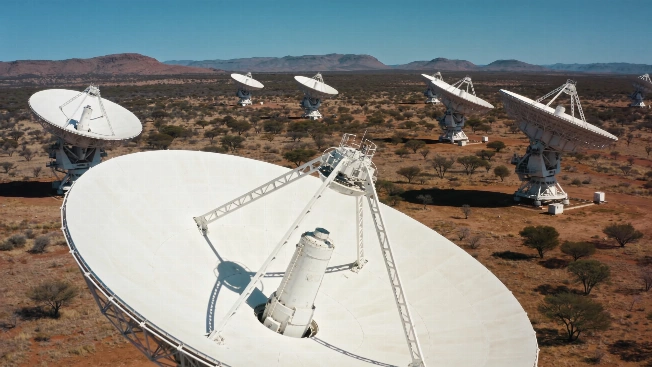
MeerKAT Telescope Maps Ancient Hydrogen Across Billions of Light Years
Researchers using South Africa's MeerKAT radio telescope have detected faint hydrogen signals from galaxies 4 to 5 billion light-years away, offering a new approach to mapping the universe's large-scale structure through radio intensity mapping

Roman Space Telescope Launch Draws Attention Amid Policy Reversal
NASA's Nancy Grace Roman Space Telescope launched successfully, marking a milestone for infrared astronomy after years of budget uncertainty and political debate over its funding and future
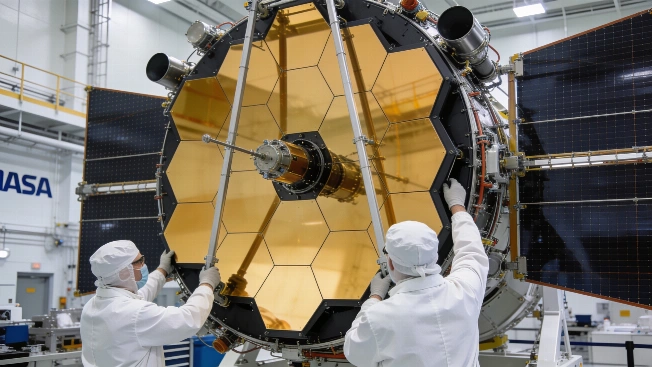
Nancy Grace Roman Space Telescope Prepares for Launch and Legacy
NASA's Nancy Grace Roman Space Telescope, named for the agency's first chief astronomer, is nearing launch. The mission aims to investigate dark matter, dark energy, and exoplanets with advanced infrared instruments

Nancy Grace Roman's Legacy: The Astronomer Who Shaped NASA's Vision
As NASA prepares to launch the Nancy Grace Roman Space Telescope, the story of its namesake-pioneering astronomer and the agency's first chief of astronomy-offers insight into the evolution of space science and the people who shaped it
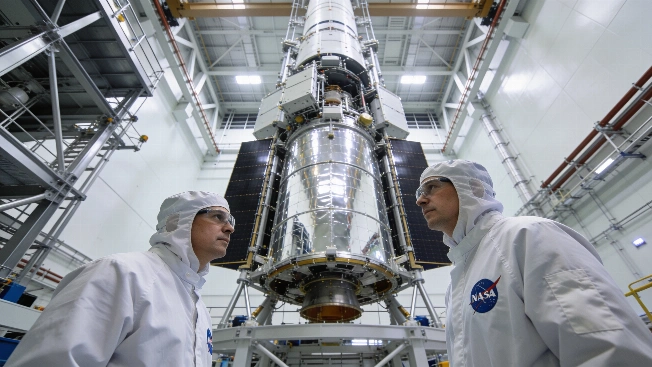
NASA's Roman Space Telescope Set for Launch to Map Distant Cosmos
NASA's Nancy Grace Roman Space Telescope is scheduled to launch from Florida, aiming to investigate exoplanets, dark matter, and distant galaxies with a wide-field infrared observatory. Its first science images are not expected until 2027
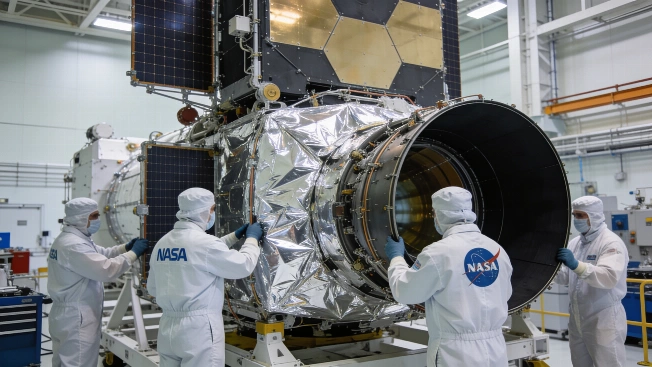
NASA's Roman Space Telescope Nears Launch After Budget Uncertainty
NASA's Nancy Grace Roman Space Telescope is set for launch after nearly two decades of development, overcoming a threatened cancellation and major funding cuts to become the agency's next flagship observatory for dark energy, exoplanets, and cosmic structure
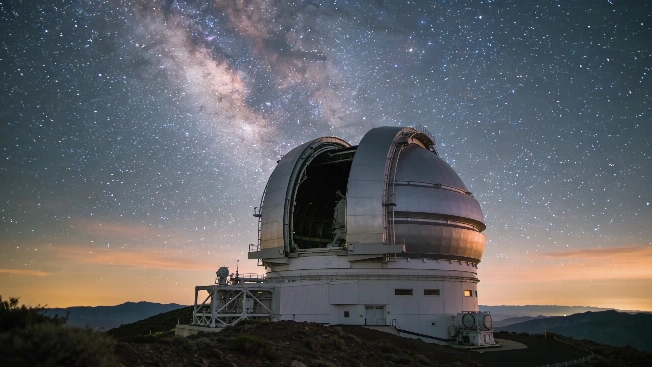
Dark Energy Camera Reveals Ancient Stars and Stellar Birth in Corona Australis
A new image from the Dark Energy Camera on the Blanco 4-meter Telescope captures the Corona Australis Molecular Cloud, highlighting both newborn stars and one of the oldest star clusters in the Milky Way
eROSITA X-ray Survey Nearly Doubles Known High-Energy Cosmic Sources
The eROSITA X-ray telescope's latest data release catalogs nearly 2 million X-ray sources, offering an unprecedented view of black holes, galaxy clusters, and stellar remnants across the universe
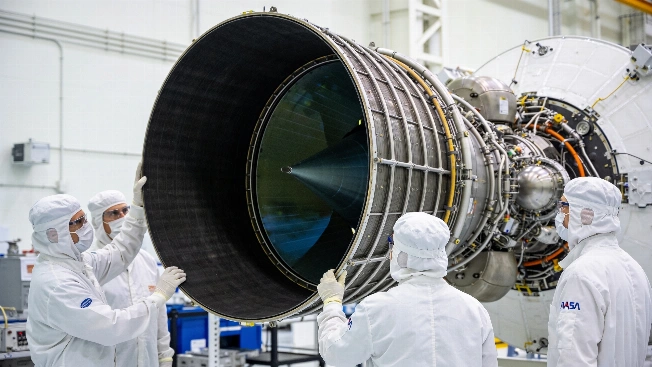
NASA's Roman Space Telescope Targets Dark Energy and Exoplanets
NASA's Nancy Grace Roman Space Telescope, set for launch in 2026, will use infrared instruments to investigate dark energy, dark matter, and exoplanets from a stable orbit 1.5 million kilometers from Earth
Astronomers Map 4 Billion Cosmic Objects in Largest 2D Sky Survey
A new 2D map of the universe, built from 13 years of ground and space-based observations, catalogs 4 billion stars, galaxies, and other objects, offering an unprecedented resource for future astronomical research
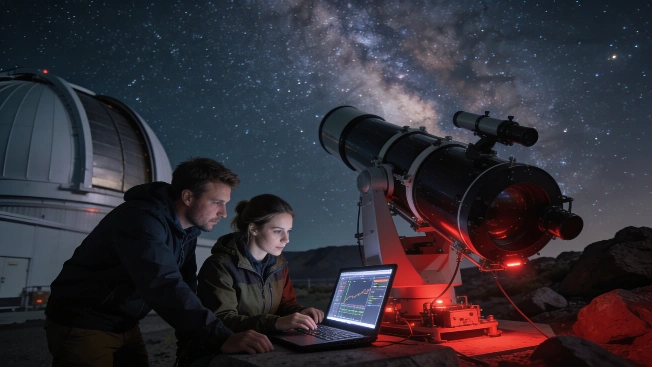
Faint X-ray Flash Reveals Unusual Supernova in Nearby Galaxy
A brief X-ray signal detected by China's Einstein Probe in March 2026 has allowed astronomers to observe the earliest moments of a rare Type Ic supernova, offering new insight into how massive stars end their lives
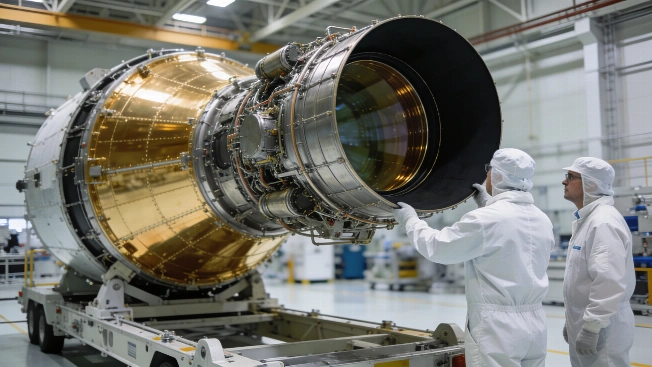
NASA Prepares Roman Space Telescope for Early Launch to L2 Orbit
NASA's Nancy Grace Roman Space Telescope is set for launch on August 30, aiming to deliver wide-field infrared surveys and exoplanet imaging from a stable orbit beyond the Moon
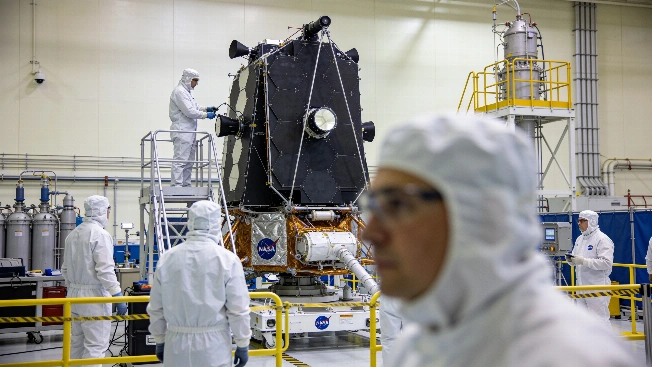
NASA Prepares Roman Space Telescope for 2026 Launch to L2 Orbit
NASA has fueled the Roman Space Telescope, a next-generation infrared observatory scheduled for launch in August 2026, aiming to collect hundreds of terabytes of cosmic data annually and expand studies of dark matter, dark energy, and exoplanets
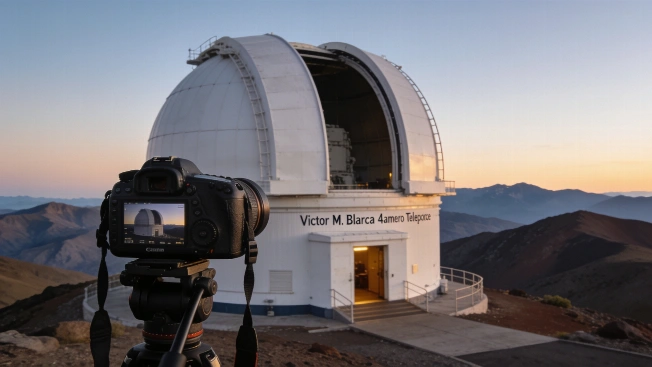
Dark Energy Camera Reveals Star Formation in Corona Australis Cloud
The Dark Energy Camera has imaged the Corona Australis Molecular Cloud, capturing intricate details of a nearby star-forming region and highlighting the interplay of gas, dust, and young stars in one of the closest stellar nurseries to Earth