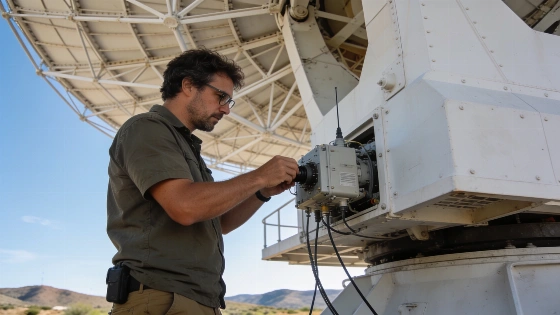
Researchers have identified the sugar molecule erythrulose in a molecular cloud near the Milky Way's center using radio telescopes, providing new evidence that complex organic compounds can form in interstellar environments under extreme conditions
The presence of complex organic molecules in space has long been a subject of interest for physicists and chemists investigating the origins of life. A recent study led by researchers at the Centro de Astrobiología in Spain reports the detection of the four-carbon sugar molecule erythrulose in the interstellar medium, specifically within the molecular cloud G+0.693-0.027 near the center of the Milky Way. This finding, published in Nature Astronomy, adds to the growing body of evidence that prebiotic chemistry can occur in environments far removed from planetary surfaces.
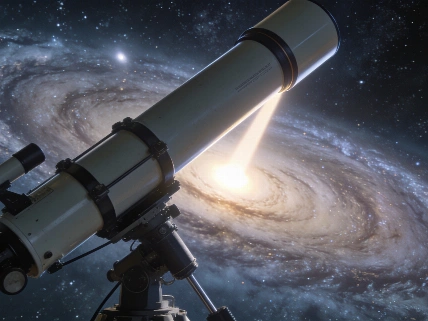
Using the Yebes 40 m and IRAM 30 m radio telescopes, the team conducted broadband spectral surveys to search for molecular signatures in the dense gas cloud. The identification of erythrulose required distinguishing its spectral lines from those of more than 180 other molecular species present in the same region. The researchers report that the abundance of erythrulose is approximately eight times higher than that of three-carbon sugars, which remain undetected at the current sensitivity limits of these instruments.
Interstellar Chemistry and Measurement
The detection relied on the unique rotational transitions of erythrulose, which produce characteristic emission lines in the millimeter-wave region of the electromagnetic spectrum. These transitions were matched against laboratory spectra to confirm the molecular identity. The measurements were performed under the extreme conditions typical of interstellar clouds: temperatures of just a few tens of kelvins and extremely low pressures. The team's analysis suggests that erythrulose likely forms on the surfaces of dust grains through reactions involving simpler two-carbon aldehydes and alcohols, followed by desorption into the gas phase.
Quantitative analysis indicates that the column density of erythrulose in G+0.693-0.027 is significantly higher than that of simpler sugars, with the observed abundance exceeding that of three-carbon analogs by a factor of eight. The detection threshold was set by the sensitivity and spectral resolution of the telescopes, and the assignment of spectral features was cross-checked against known molecular databases to minimize the risk of misidentification due to line blending or interference from other species.
Implications for Prebiotic Chemistry
The discovery of erythrulose in interstellar space supports the hypothesis that some of the molecular precursors to life on Earth may have originated in the cold, diffuse environments of molecular clouds. Previous analyses of asteroid samples, such as those from Bennu, have revealed the presence of sugars like glucose and ribose, which are essential for biological processes and nucleic acid formation. The current result extends this inventory to include a four-carbon sugar, suggesting that a wider range of prebiotic molecules can form before planetary accretion.
On Earth, erythrulose is found in certain fruits and can convert into threose in aqueous environments. Threose is notable for its role in threose nucleic acid (TNA), a nucleic acid hypothesized to have participated in early genetic systems. The interstellar detection of erythrulose raises the possibility that such molecules could be delivered to forming planets via comets or meteorites, contributing to the chemical diversity available for the emergence of life.
Experimental Limitations and Future Directions
While the identification of erythrulose is robust within the constraints of current instrumentation, the absence of three-carbon sugars in the same environment highlights the limitations imposed by sensitivity and spectral confusion. The researchers emphasize that further improvements in telescope sensitivity and spectral coverage will be necessary to detect a broader range of prebiotic molecules and to clarify the chemical pathways leading to their formation.
Future work will focus on searching for larger sugars, such as ribose, and on combining astronomical observations with laboratory experiments and theoretical modeling. These efforts aim to map the chemical evolution of organic molecules from interstellar clouds to planetary systems, providing a more complete picture of the processes that may have contributed to the origin of life on Earth and elsewhere.
Understanding the formation and detection of complex organic molecules in space requires careful analysis of rotational spectra, rigorous cross-referencing with laboratory data, and attention to the limitations of current observational technology. The detection of erythrulose demonstrates that interstellar chemistry is capable of producing molecules relevant to prebiotic evolution, but the full inventory and distribution of such compounds remain to be established.
Rotational spectroscopy is a key technique for identifying molecules in space. Each molecule has a unique set of rotational energy levels, leading to a characteristic pattern of emission or absorption lines at specific frequencies. By comparing observed spectra with laboratory measurements, researchers can assign molecular identities with high confidence. However, the complexity of interstellar environments, where many molecules coexist and spectral lines can overlap, makes unambiguous identification challenging. Advances in telescope sensitivity, spectral resolution, and laboratory spectroscopy are essential for expanding our understanding of interstellar chemistry and its implications for the origins of life.