
Observatories and Telescopes - Part 5
170 reports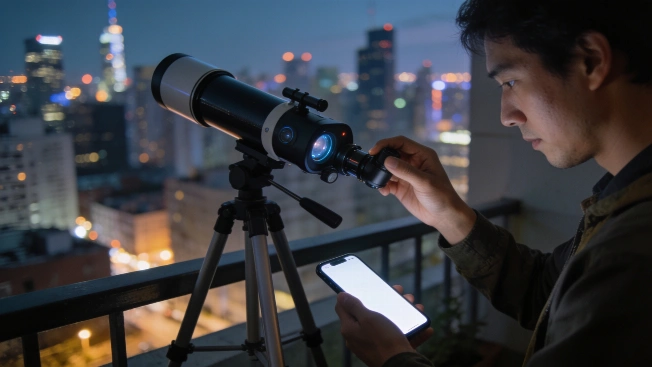
Seestar S30 Pro Smart Telescope Expands Urban Astrophotography Access
The Seestar S30 Pro pairs a high-resolution sensor with dual cameras and automated image processing in a compact, smartphone-controlled telescope, bringing deep-sky imaging within reach even from light-polluted locations.
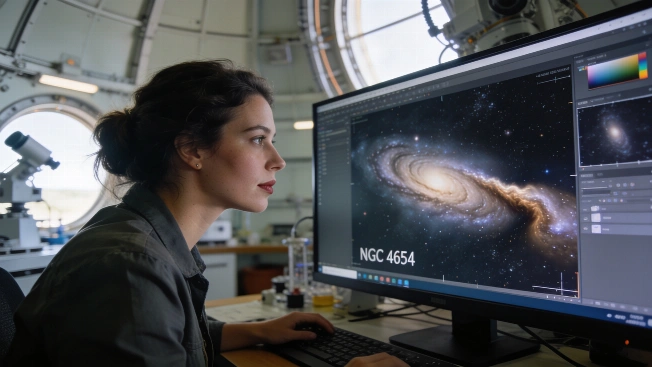
Hubble Reveals Asymmetric Spiral Galaxy Shaped by Cluster Forces
A new Hubble Space Telescope image captures NGC 4654, a spiral galaxy in Virgo, showing dramatic asymmetry caused by ram pressure stripping and past gravitational encounters

Hubble Reveals High-Speed Gas Bullets from Rare Helium Nova in Milky Way
Astronomers using Hubble and other observatories have observed V445 Puppis, the Milky Way's only known helium nova, ejecting dense gas clumps at speeds of up to 32 million kilometers per hour.
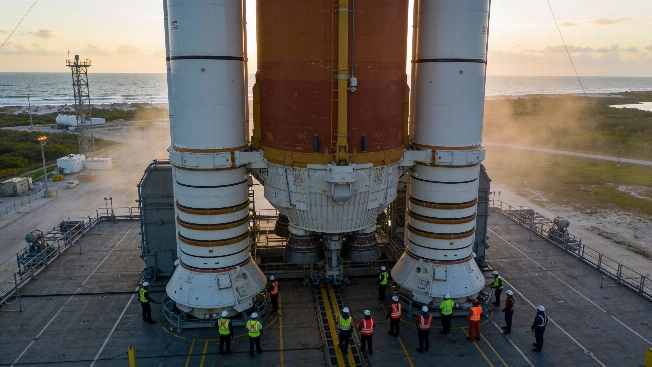
NASA Assigns SunRISE Mission to SpaceX Falcon Heavy After Vulcan Issues
NASA's SunRISE mission, designed to study solar radio bursts, will now launch aboard a SpaceX Falcon Heavy after technical concerns paused United Launch Alliance Vulcan Centaur flights
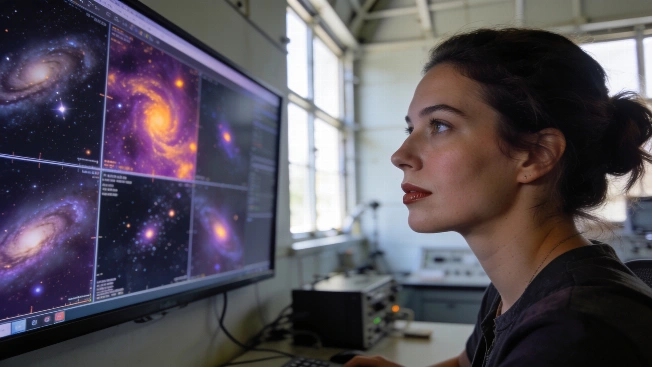
Webb Telescope Links 'Little Red Dots' to Ancient Star Clusters
Astronomers using the James Webb Space Telescope have traced mysterious 'Little Red Dots' in the early universe to the possible origins of globular clusters, offering new clues about how these dense stellar systems formed.
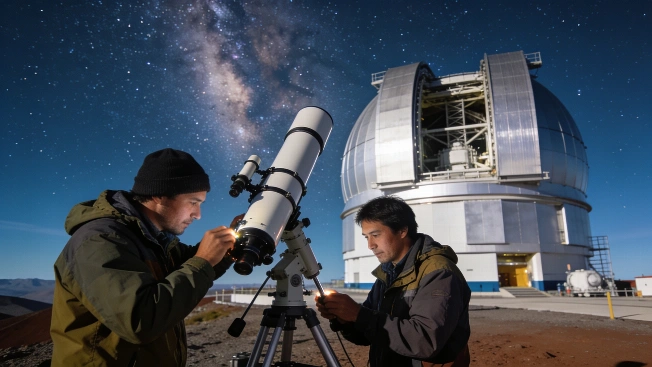
Possible Exomoon Candidate Challenges Definitions in Distant Star System
Astronomers using the Very Large Telescope have detected a moon-like object orbiting a brown dwarf in the CD-35 2722 system, prompting questions about how to classify such bodies beyond our solar system.
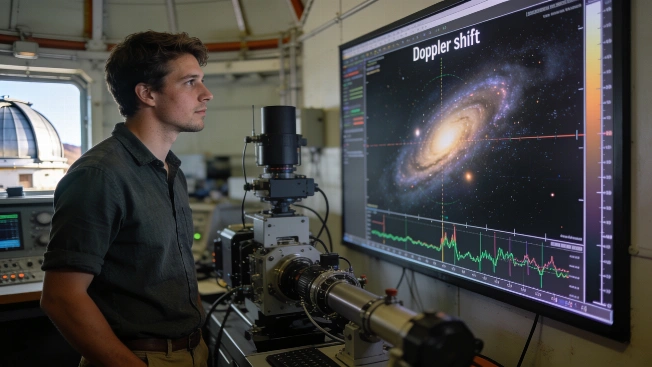
Giant Exosatellite Discovery Redefines Boundaries of Planetary Systems
Astronomers have identified a Jupiter-sized exosatellite candidate orbiting a brown dwarf, which itself orbits the star CD-35 2722. Detected using high-resolution spectroscopy, the candidate challenges current definitions of moons and planets.
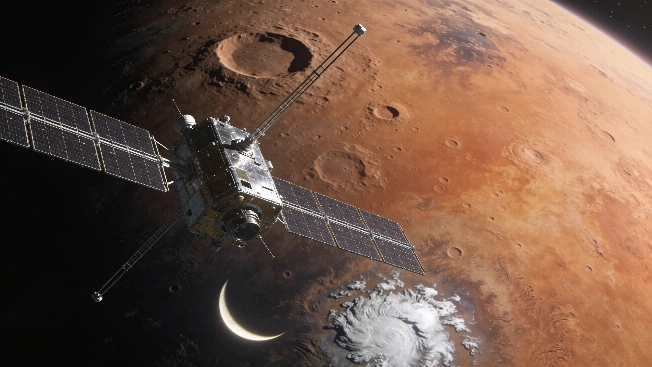
NASA's Psyche Spacecraft Uses Mars Flyby to Refine Asteroid Trajectory
NASA's Psyche probe has completed a close flyby of Mars, capturing a time-lapse sequence and using the planet's gravity to adjust its course toward the metal-rich asteroid Psyche, its target for arrival in 2029.
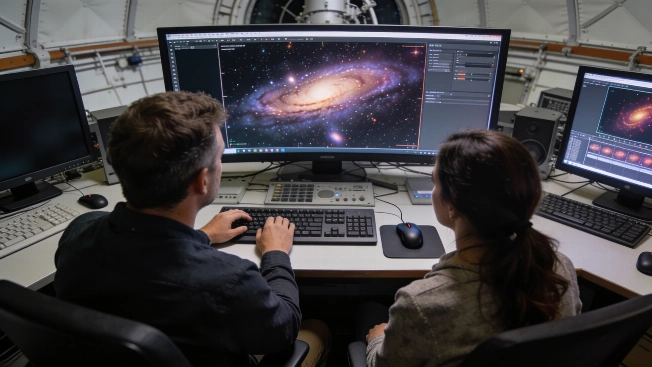
Webb Telescope Reveals How Early Galaxies Produced Cosmic Dust
Astronomers used the James Webb Space Telescope to study a nearby dwarf galaxy, uncovering how ancient galaxies enriched the early universe with stardust impressive for star and galaxy formation.
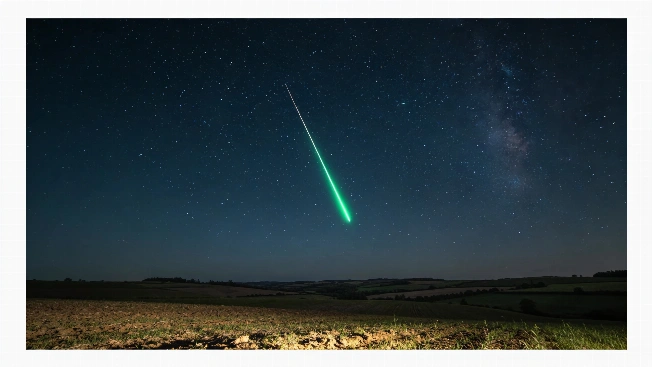
How Perseid Meteors Trace a Journey from Comet to Night Sky
The Perseid meteor shower offers a glimpse into the solar system's ancient debris, as fragments from comet 109P/Swift-Tuttle enter Earth's atmosphere and produce visible streaks of light each August.
Webb Telescope Reveals 4.4-Billion-Year-Old Galaxy Cluster in Formation
The James Webb Space Telescope has imaged the young galaxy cluster MACS J0553.4-3342, capturing light that began its journey 4.4 billion years ago and offering new understanding into the assembly of large-scale cosmic structures.
Magnetic Field of Galaxy Cluster Abell 2255 Mapped in Unprecedented Detail
Using deep radio observations from LOFAR, astronomers reconstructed the magnetic field structure of galaxy cluster Abell 2255, revealing how gas dynamics shape cosmic magnetism across millions of light-years.
Webb data links early red dots to UV-bright companions and black hole seeds
A new analysis of James Webb Space Telescope images suggests that compact 'little red dots' in the early universe may form near ultraviolet-bright companions, offering a possible route to the rapid birth of supermassive black holes
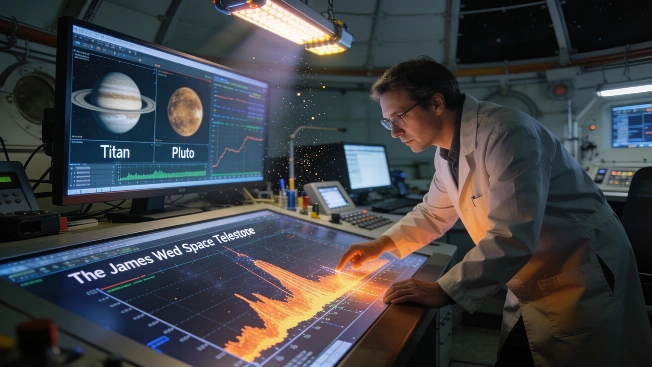
James Webb Telescope Detects Unidentified Infrared Signal on Titan and Pluto
The James Webb Space Telescope has recorded a mysterious infrared absorption feature on both Saturn's moon Titan and the dwarf planet Pluto, hinting at shared surface chemistry despite their contrasting environments.
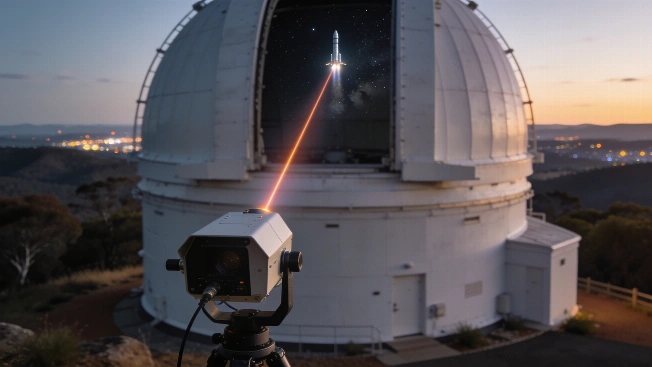
NASA Tests Laser Link for Live 4K Video Transmission From the Moon
NASA's Artemis II mission used an experimental laser communications system to transmit live high-definition video from lunar orbit to Earth, testing a lower-cost, higher-bandwidth alternative to traditional radio links under real mission conditions.
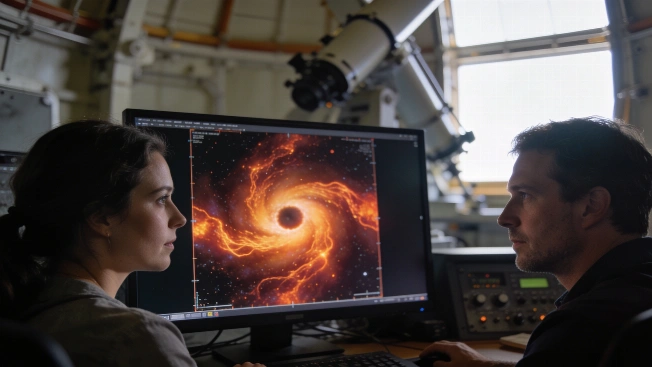
Webb Telescope Maps Gas Feeding a Supermassive Black Hole
Astronomers using the James Webb Space Telescope have studied gas clouds around Sagittarius A*, finding metal-rich gas whose local conditions shape cooling and may affect how material reaches the black hole.
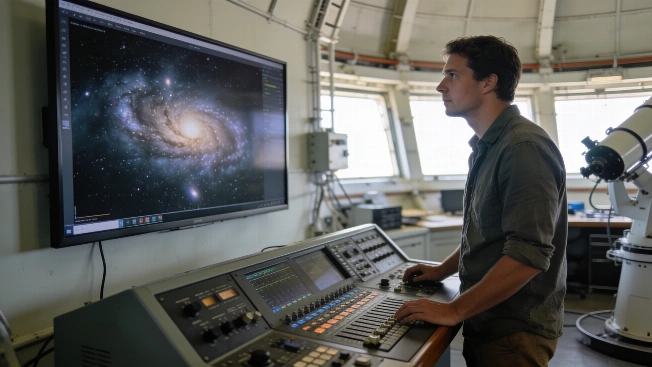
Webb Telescope Uses Gravitational Lensing to Reveal Ancient Galaxies
The James Webb Space Telescope has captured a detailed image of the galaxy cluster MACS J0553.4-3342, using gravitational lensing to magnify galaxies from the universe's first billion years
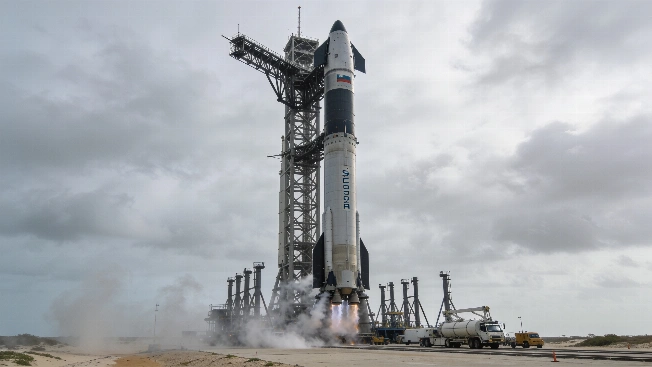
SpaceX Starship Test Aborted as Defense and Science Missions Advance
SpaceX's Starship Flight 13 test launch was halted seconds before liftoff, highlighting ongoing technical challenges as the company expands its role in US military and scientific space operations

NASA Contracts Chugach for Ames Research Center Facility Operations
NASA has awarded Chugach Intelligence Solutions LLC a five-year contract to manage facility operations and maintenance, including repairs, at Ames Research Center in California, supporting its scientific missions and infrastructure needs
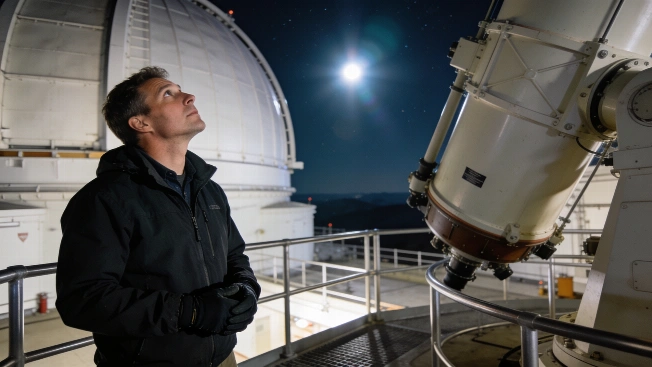
Astronomers Warn of Night Sky Risks From Sun-Reflecting Satellite
A private company has received regulatory approval to launch a satellite equipped with a large reflective surface, aiming to direct sunlight to Earth after dark. Astronomers and scientific organizations are raising concerns about the impact on astronomical observations and public safety.

Asteroid Apophis to Make Exceptionally Close Approach in 2029
Researchers have mapped the 2029 flyby of asteroid Apophis, predicting that up to 90% of Earth's population could see the object with the naked eye as it passes closer than many satellites, offering a rare opportunity for direct observation
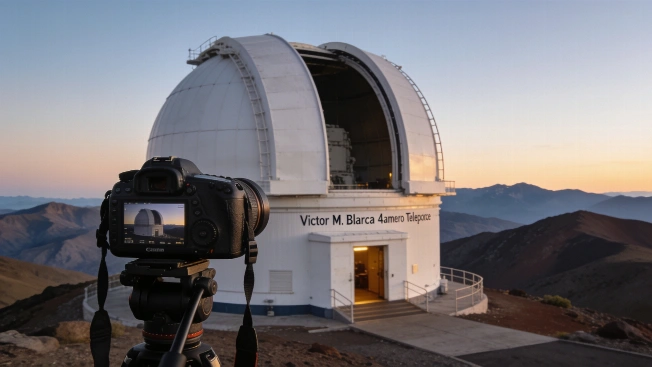
Dark Energy Camera Reveals Star Formation in Corona Australis Cloud
The Dark Energy Camera has imaged the Corona Australis Molecular Cloud, capturing intricate details of a nearby star-forming region and highlighting the interplay of gas, dust, and young stars in one of the closest stellar nurseries to Earth
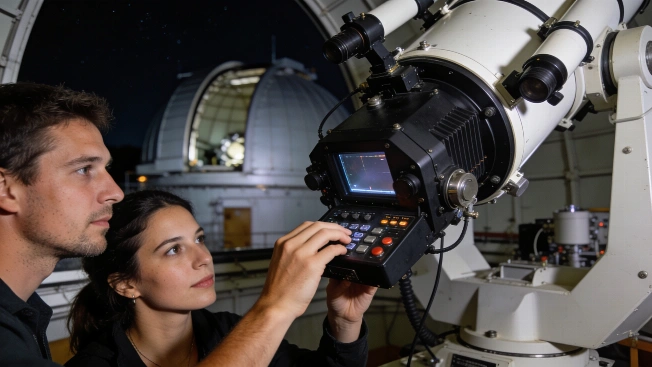
Atmosphere Detected on Rocky Exoplanet in Habitable Zone
Astronomers have directly detected helium in the atmosphere of LHS 1140 b, a rocky exoplanet orbiting within its star's habitable zone, using infrared spectroscopy. The finding raises new questions about atmospheric survival and planetary habitability.
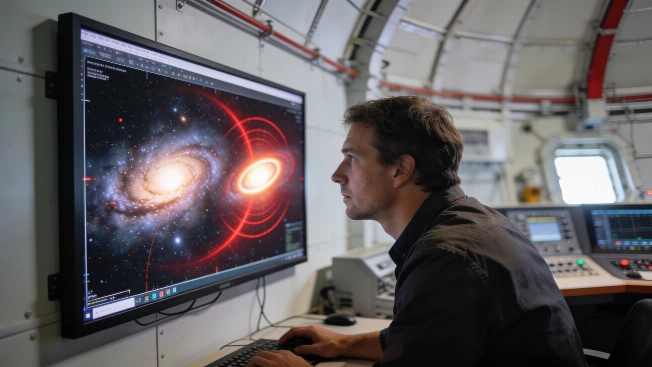
Webb Telescope Reveals Merging Young Galaxy Cluster 4.4 Billion Light-Years Away
NASA's James Webb Space Telescope has imaged galaxy cluster MACS J0553.4-3342 as it appeared 4.4 billion years ago, capturing two massive sub-clusters in the process of merging and showing the gravitational effects shaping distant galaxies

Gravitational Wave Data Reveals Black Hole Event Horizon Properties
Researchers have extracted direct physical parameters from a black hole’s event horizon using an unusually strong gravitational wave signal, providing experimental access to a region previously studied only through theory.
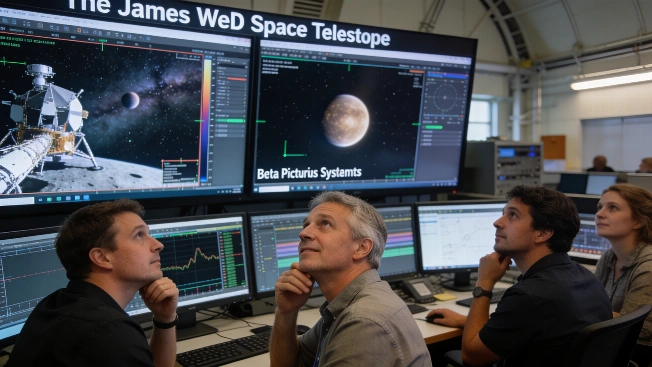
Webb Telescope Detects Hidden Giant Planet in Beta Pictoris System
The Beta Pictoris system contains three known giant exoplanets, while radio observations of β Pictoris b may offer clues to auroral activity and help investigate magnetic fields around distant planets.
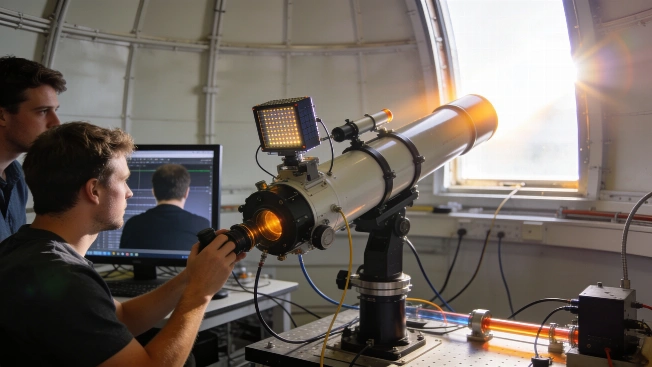
Metasurface Grating Demonstrates Compact Solar Magnetic Field Mapping
A polarization-sensitive metasurface grating has matched conventional instruments in mapping solar magnetic fields, offering a route to smaller, simpler, and potentially more robust hardware for future space-based solar telescopes
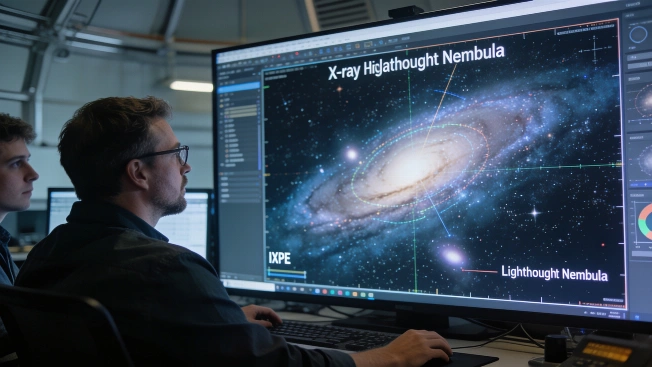
NASA's IXPE Maps Magnetic Field of Unusual Pulsar in Milky Way
Astronomers used NASA's Imaging X-ray Polarimetry Étudier to map the magnetic field around pulsar PSR J1101-6101, revealing how high-energy particles stream through the Milky Way and testing long-standing theoretical predictions.
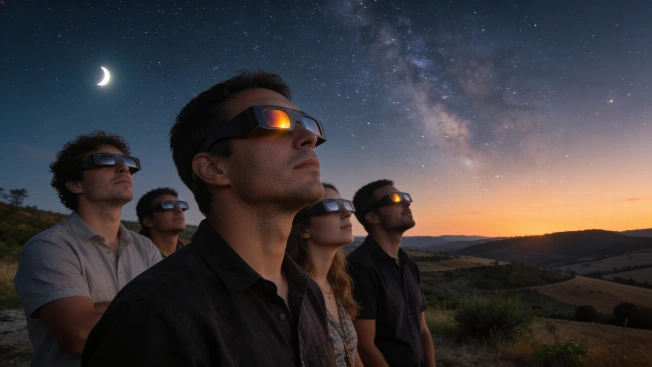
Total Solar Eclipse and Perseid Meteor Shower Align on 12 August 2026
On 12 August 2026, a total solar eclipse will cross eastern Greenland and Iceland before reaching Spain, coinciding with the Perseid meteor shower and a prominent evening appearance of Venus. Observers in North America and Europe will experience a rare overlap of astronomical events.
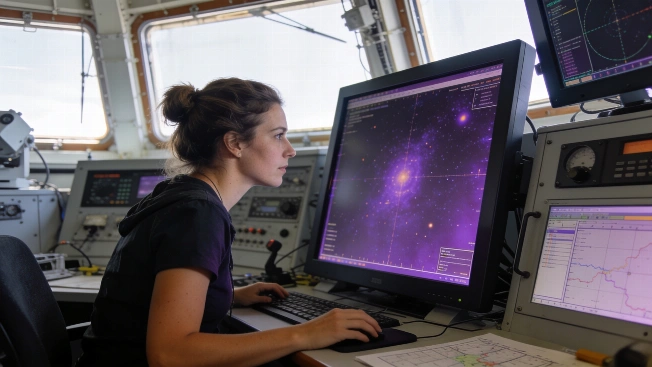
Hidden White Dwarfs Detected Near Earth in Red Dwarf Binaries
Astronomers have identified four white dwarfs concealed by red dwarf companions within 65 light-years of Earth. Ultraviolet observations from the Hubble Space Telescope revealed these elusive stellar remnants.
Part 5 of 5