The Perseid meteor shower offers a glimpse into the solar system's ancient debris, as fragments from comet 109P/Swift-Tuttle enter Earth's atmosphere and produce visible streaks of light each August
Each August, observers across the Northern Hemisphere look up to witness the Perseid meteor shower, a recurring astronomical event that transforms grains of cometary debris into fleeting streaks of light. These meteors, visible for only a fraction of a second, are the final act in a process that began thousands of years ago and billions of kilometers from Earth.
Origins in Comet Swift-Tuttle
The Perseid meteors originate from comet 109P/Swift-Tuttle, a 26-kilometer-wide body that follows an elongated orbit around the Sun. As the comet approaches the inner solar system, solar radiation heats its icy surface, causing volatile materials to sublimate and release embedded dust and rocky fragments. These ejected particles, often no larger than grains of sand, are left behind in a broad stream that traces the comet's orbital path.
Over centuries, this debris cloud has spread along Swift-Tuttle's orbit, forming a persistent trail that intersects Earth's path each year. The individual trajectories of these particles are shaped by the initial force of their expulsion, solar radiation pressure, and gravitational influences from planets. The result is a complex, evolving stream of material that extends well beyond the orbit of Pluto.
Atmospheric Entry and Meteor Showers
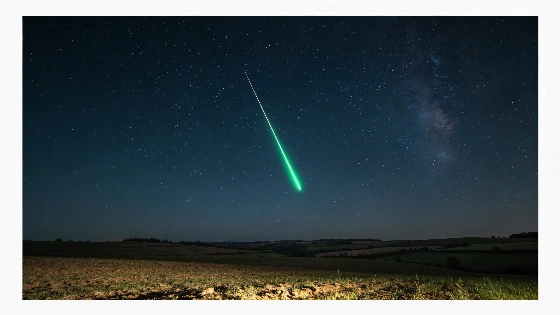
When Earth passes through the densest part of the Swift-Tuttle debris stream, typically between mid-July and late August, some of these particles encounter the planet's atmosphere at velocities near 59 kilometers per second (132,000 miles per hour). The rapid compression and heating of air in front of each particle causes it to vaporize, producing the visible flash known as a meteor.
The Perseid shower is renowned for its high activity rates and bright meteors, many of which display a characteristic green hue due to the ionization of atmospheric oxygen and the composition of the cometary material. At the shower's peak, which in 2026 will coincide with the new moon on August 12, observers under dark skies may witness more than 100 meteors per hour. This year's event is expected to be especially prominent, as the absence of moonlight will enhance visibility.
Observational Highlights and Viewing Conditions
The Perseid meteor shower's radiant-the point in the sky from which meteors appear to originate-rises highest in the early morning hours, making this the optimal time for observation. The 2026 shower will also overlap with a total solar eclipse visible from parts of Spain, Iceland, and Greenland, offering a rare opportunity for skywatchers in those regions to experience both phenomena. For a detailed look at how these events align, see this analysis of the upcoming eclipse and meteor shower overlap: how the 2026 eclipse coincides with the Perseids.
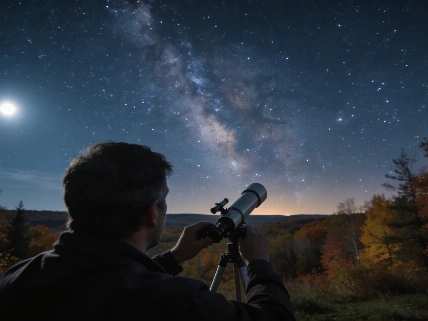
Capturing meteors on camera requires patience and the right equipment. Modern digital cameras with high sensitivity and wide-angle lenses are well suited for astrophotography, especially under dark, clear skies. The Perseids' predictable timing and high activity make them a favorite target for both amateur and professional observers.
Physical and Historical Context
The journey of a Perseid meteor from comet to atmosphere can span hundreds to thousands of years. During this time, the particle may complete multiple orbits around the Sun before its trajectory intersects Earth's. While the precise age and path of any individual meteoroid are difficult to reconstruct, the collective behavior of the stream is well established through decades of observation and orbital modeling.
Historically, the Perseid meteor shower has been recorded for nearly two millennia, with early references dating back to Chinese and European chronicles. Modern studies use a combination of visual counts, radar observations, and spectroscopic analysis to characterize the shower's intensity, composition, and variability from year to year.
Understanding the Perseids provides insight into the long-term evolution of cometary debris streams and the dynamic processes that shape the solar system's small bodies. The annual return of the shower is a reminder of the ongoing interaction between Earth and the remnants of ancient comets.
Meteor showers such as the Perseids are best understood through the physics of atmospheric entry. When a meteoroid enters Earth's atmosphere at high speed, it compresses and heats the air in front of it, causing both the particle and surrounding gases to ionize and emit light. The color and brightness of the resulting meteor depend on the particle's composition, velocity, and entry angle. Most meteors disintegrate at altitudes between 80 and 120 kilometers, leaving behind only a faint trail of ionized gas. The study of meteor showers combines observational astronomy, atmospheric physics, and orbital dynamics to reveal the origins and fate of these transient visitors from the outer solar system.