Astronomers have directly detected helium in the atmosphere of LHS 1140 b, a rocky exoplanet orbiting within its star's habitable zone, using infrared spectroscopy. The finding raises new questions about atmospheric survival and planetary habitability.
Astronomers have reported the first direct detection of an atmosphere surrounding a rocky exoplanet located within its star's habitable zone, marking a significant advance in the search for potentially life-supporting worlds. The planet, LHS 1140 b, orbits a red dwarf star approximately 48 light-years from Earth and is the first confirmed rocky planet in this region to show clear atmospheric signatures.
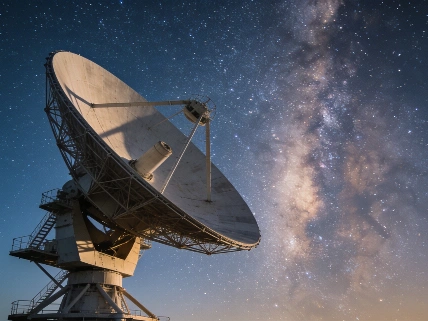
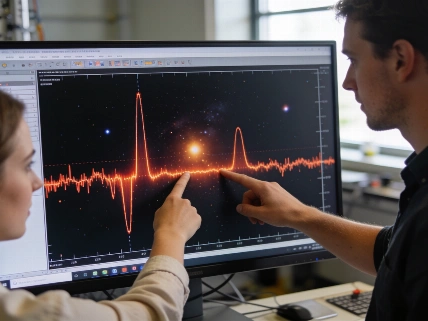
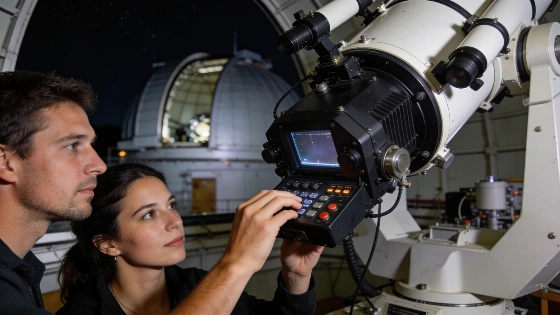
The research, published in Science, centers on the identification of helium in the planet's atmosphere using high-resolution infrared spectroscopy. The detection was achieved with the Warm Infrared Echelle (WINERED) Spectrograph at the Magellan Observatory in Chile, which observed the planet as it transited its host star. This method allowed the team to isolate the spectral fingerprint of helium, providing direct evidence of an atmosphere rather than relying solely on indirect modeling or inference.
LHS 1140 b was first identified in 2017 and has since been a focus for follow-up observations due to its size, composition, and orbital position. The planet is classified as rocky, with a likely iron core, and orbits within the so-called habitable zone-the region around a star where temperatures could allow liquid water to exist on a planet's surface. Its host star, a red dwarf, is smaller and cooler than the Sun, but the planet's close orbit maintains a temperature regime consistent with the potential for surface water.
Measurements indicate that LHS 1140 b is about 1.7 times the radius of Earth and has a mass roughly 6.5 times greater. Its orbital period is approximately 25 days. The planet's equilibrium temperature is estimated to be low enough to permit liquid water, assuming sufficient atmospheric pressure and greenhouse effect. The presence of helium suggests that at least part of the planet's primordial atmosphere has survived, despite the intense radiation environment typical of red dwarf systems.
Atmospheric Survival and Method
Detecting atmospheres around rocky exoplanets, especially those orbiting active red dwarfs, has proven challenging. Red dwarfs are known for frequent flares and high-energy emissions, which can strip away planetary atmospheres over time. The survival of helium in LHS 1140 b's atmosphere indicates that some rocky planets can retain substantial atmospheres for billions of years, even in harsh stellar environments.
The WINERED Spectrograph enabled the team to observe the planet's transit in the near-infrared, capturing the absorption features of helium as starlight passed through the planet's atmosphere. This approach, more commonly used for gas giants, was adapted for a rocky planet in this study. The detection is robust, with the helium signal standing out clearly against the background noise and stellar activity.
While helium is the only atmospheric component directly detected so far, the researchers note that other gases may be present but remain below the current detection threshold. The planet's atmosphere may have been partially eroded by stellar radiation, but the host star's age-estimated at around 6 billion years-means its most violent phase has likely passed. Helium is still escaping gradually, a process also observed in Earth's upper atmosphere.
Implications for Habitability
The discovery does not establish that LHS 1140 b is habitable or that it possesses liquid water, but it does demonstrate that rocky planets in the habitable zones of red dwarfs can retain atmospheres over geological timescales. This finding narrows the gap between identifying potentially habitable exoplanets and confirming their atmospheric properties, a key step in assessing their suitability for life as we know it.
Further observations will be required to determine the full atmospheric composition and to search for water vapor or other molecules relevant to habitability. The result also informs ongoing debates about the prospects for life around red dwarf stars, which are the most common stellar type in the galaxy. The ability of LHS 1140 b to retain an atmosphere suggests that similar planets may also be able to support stable surface conditions.
As astronomers refine their techniques for atmospheric detection, the catalog of exoplanets with confirmed atmospheres is expected to grow. This work builds on a growing body of research into planetary habitability, complementing studies of ancient Martian geology such as those revealed by Perseverance rover imagery at Jezero Crater's rim, which has provided new insights into planetary surface evolution and the preservation of ancient environments. (detailed view of Martian bedrock)
Limits and Next Steps
The current detection is limited to helium, and the presence of water or other greenhouse gases remains unconfirmed. The team's approach demonstrates that high-resolution infrared spectroscopy can be extended to smaller, rocky exoplanets, but the sensitivity required to detect more complex molecules is still developing. Future instruments, including next-generation space telescopes, may be able to probe deeper into the atmospheres of planets like LHS 1140 b.
While the evidence supports the existence of an atmosphere, it does not provide information about surface conditions, weather, or biological activity. The planet's surface composition and potential for water remain open questions. The result, however, sets a precedent for atmospheric studies of rocky exoplanets in the habitable zone and provides a target for future characterization efforts.
Understanding how astronomers detect exoplanet atmospheres requires familiarity with transmission spectroscopy. When a planet passes in front of its star, a small fraction of starlight filters through the planet's atmosphere before reaching Earth. Molecules and atoms in the atmosphere absorb specific wavelengths, leaving characteristic fingerprints in the observed spectrum. By comparing spectra taken during and outside of transit, researchers can identify these features and infer the presence of particular gases. The method's sensitivity depends on the planet's size, atmospheric thickness, and the instrument's resolution, making detections around small, rocky worlds especially challenging.