
Computational Chemistry
18 reportsEvidence used to assess which approximations affect accuracy comes from worked examples and molecular dynamics. The same sources help examine how simulations are validated, keeping definitions, predictions, and observations from being conflated.
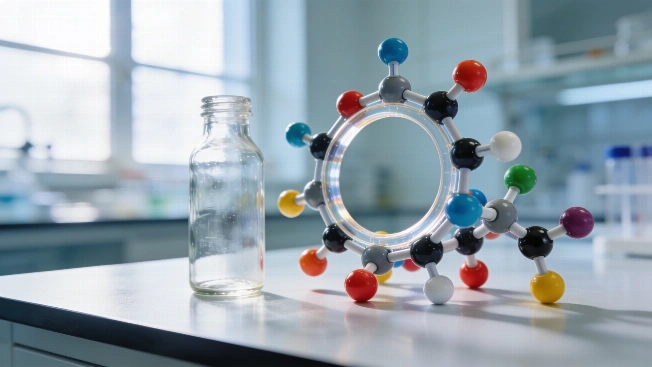
OpenAI benchmark exposes AI's drug discovery reasoning gap
OpenAI's MedChemBench draws on 117 published papers and patents to test chemical reasoning. GPT-6 Astra scored 95.4% on structure reconstruction but earned about half the available credit for compound selection and numerical predictions

Classiq Projects Earn Three Awards in Japan's NEDO Quantum Challenge
One project reported a molecular-energy calculation; another tested quantum-walk hashes. SoftBank reported a 2.31% shorter drone route on quantum hardware after three Classiq collaborations received NEDO awards in Japan

Quantinuum Links Quantum Workflows With Slurm at SC26
A 12-atom hydrogen-chain calculation paired Guppy circuits with Tierkreis-managed classical steps; quantum-sampled configuration proposals yielded lower calculated ground-state energies than classical-only selection at equal final configuration counts
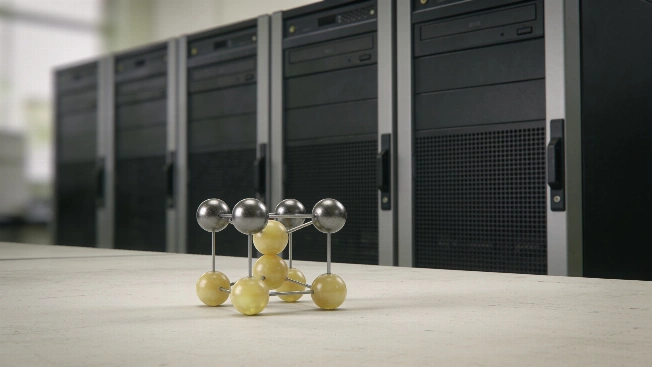
Qunova Reaches Chemical Accuracy in an 80-Qubit Iron-Sulfur Simulation
Qunova's HI-VQE combined quantum sampling on IBM Quantum System Two with classical subspace diagonalization on Fugaku to estimate the [4Fe-4S] cluster's ground-state energy at chemical accuracy
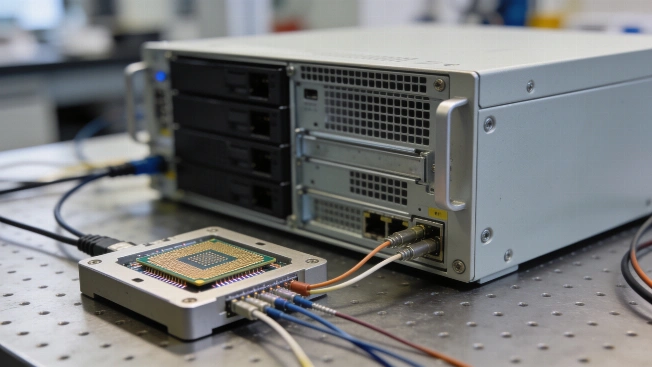
PsiQuantum and AMD Plan Classical Infrastructure for Photonic Quantum Systems
The collaboration brings AMD computing into PsiQuantum's photonic program and adapts the PRISM decoder for Versal chips. The equity investment is planned and a Chicago co-location is still being evaluated
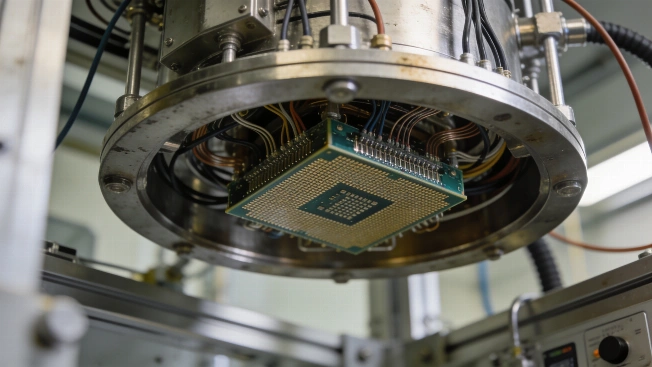
IBM Sampling Helps Model Correlated Iron Oxides
A Los Alamos and QC Ware preprint uses IBM hardware to sample configurations for FeO and Fe2O2; classical diagonalization then recovers FeO's 2,167 cm-1 quintet excitation within 184 determinants
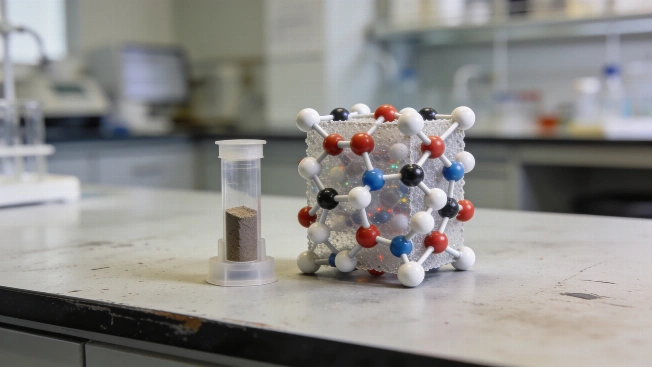
BIRD Backs a Planned Quantum Tool for Catalyst Modeling
A joint project from Qarakal Quantum and Quantum Elements is set to develop quantum-chemistry software for catalytic surfaces. The conditional award funds a proposed MVP rather than a demonstrated simulation
QC3 Makes Hardware Partnerships a Gate for Chemistry Research
A $37 million federal quantum-chemistry program requires applicants to partner with hardware providers. Neutral-atom developer QuEra Computing was selected for co-design work on projects with LBNL and LLNL, alongside Phasecraft.
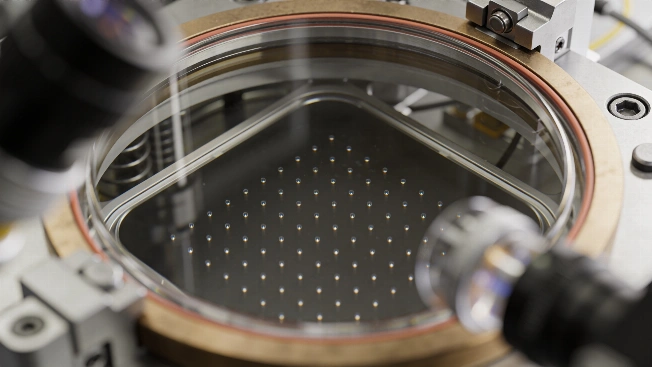
Neutral-Atom Features Improve Molecular Toxicity Scores
Kipu Quantum reports higher balanced accuracy and F1 scores when classical classifiers use features extracted from a 200-atom neutral-atom array. The benchmark tests toxicity classification, not a quantum computer's general advantage.
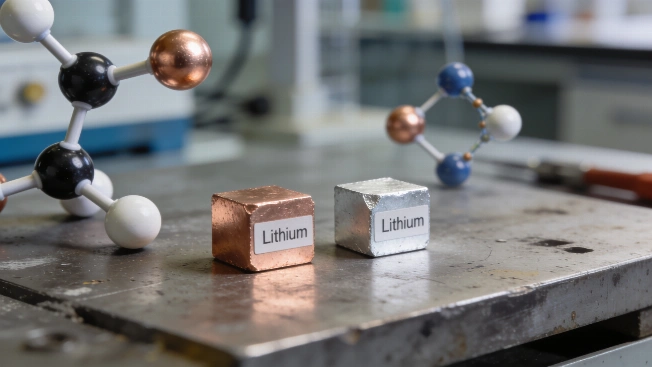
Hybrid Quantum Model Leads on Copper-Lithium Force Accuracy
A peer-reviewed study reports that a quantum-classical version of Allegro predicted forces more accurately than its classical counterpart on a copper-lithium dataset, while transferred settings also held up on two organic benchmarks
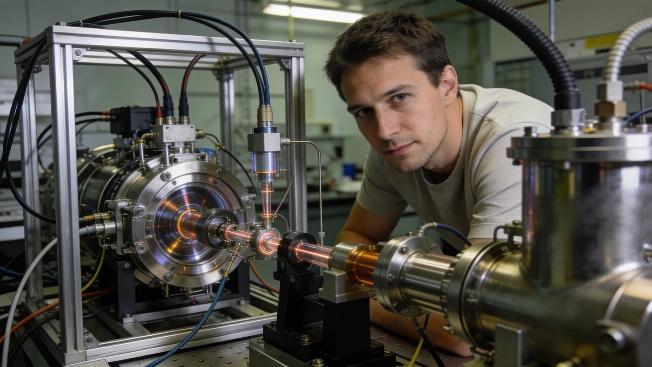
Quantum Utility Starts With Chemistry Not Qubit Counts
Matthias Troyer's assessment of quantum computing points to chemistry as the clearest near-term application. Error correction, data movement, hardware architecture and end-to-end cost will determine whether larger systems become scientifically useful.

Phasecraft Puts U.S. Quantum Software Hub in Arlington
Phasecraft is setting up its U.S. headquarters in Arlington to expand quantum-algorithm work with federal agencies in defense and energy, alongside materials-science programs; technical validation remains central.
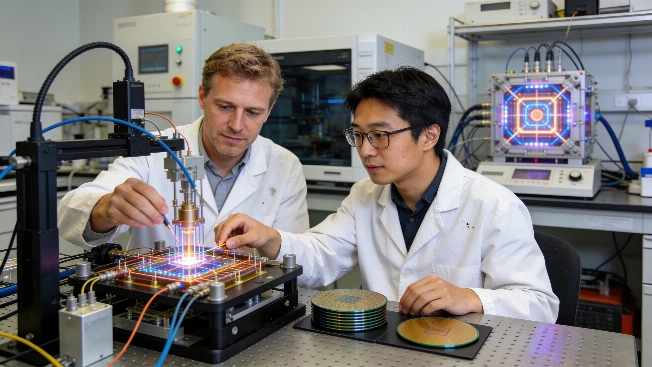
Quantum Simulation Targets EUV Lithography Blur in Canada-Japan Project
Xanadu and Mitsubishi Chemical are advancing quantum simulation for semiconductor fabrication, aiming to address radiation-induced blur in extreme ultraviolet lithography with support from Canadian and Japanese research funding.
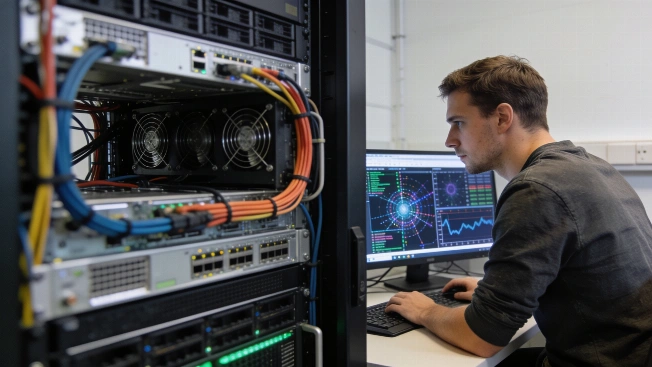
200 Logical Qubit Quantum Emulation Benchmarked on Classical Hardware
Researchers have emulated quantum algorithms involving more than 200 logical qubits with the iQCC method on standard server hardware. The study benchmarks performance and accuracy for OLED materials design without relying on supercomputers.
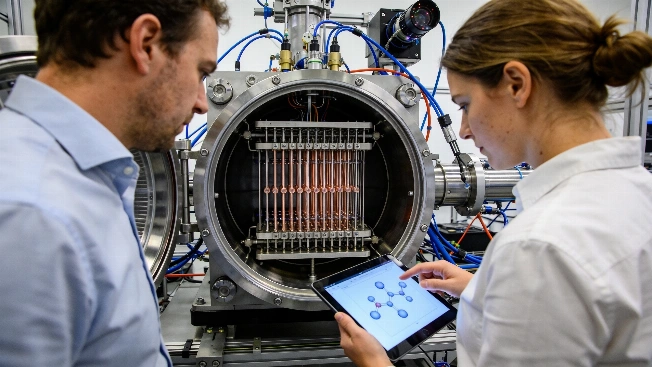
AI-Generated Quantum Circuits Tested on 98-Qubit Trapped-Ion Hardware
A collaboration involving Quantinuum and NVIDIA, with Pfizer, has demonstrated an AI-driven structure for generating quantum circuits and executing them on a 98-qubit trapped-ion processor to model pharmaceutical molecules.
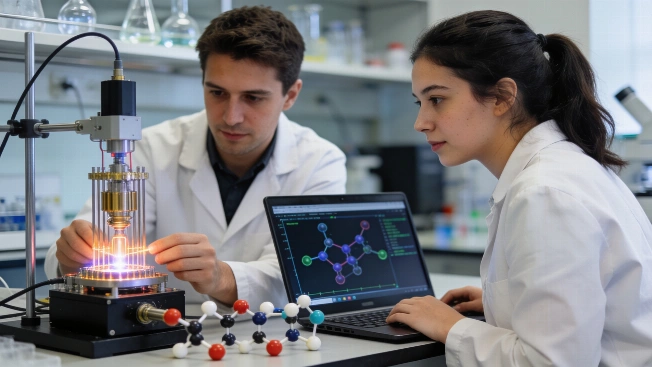
Quantum Algorithms Target Photodynamic Cancer Drug Design Limits
Xanadu Quantum Technologies and the University of Alberta are developing quantum algorithms to simulate light-activated molecules for photodynamic cancer therapy, aiming to overcome classical computational bottlenecks in drug discovery.
Honda Invests in Quemix to Advance Quantum Algorithms for Materials
Honda has taken an equity stake in Quemix, a Tokyo-based quantum software startup, to accelerate the use of quantum algorithms for next-generation battery materials and automotive applications.
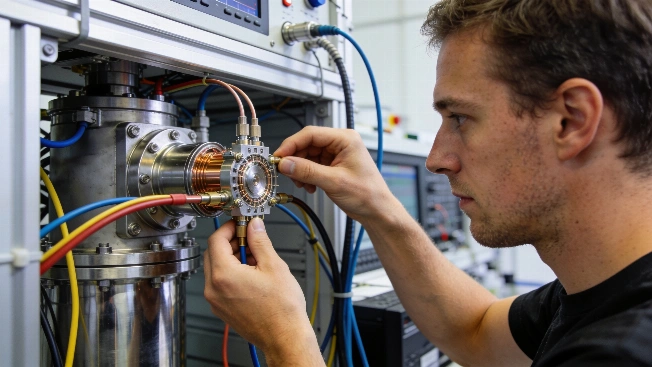
QC Ware Tests Hybrid Quantum-Classical Chemistry on IBM Heron Processor
QC Ware has demonstrated a hybrid quantum-classical process for molecular energy calculations, integrating its Promethium platform with IBM's 156-qubit Heron superconducting quantum processor to analyze a complex metalloenzyme system