A peer-reviewed study reports that a quantum-classical version of Allegro predicted forces more accurately than its classical counterpart on a copper-lithium dataset, while transferred settings also held up on two organic benchmarks
On a dataset of 11,635 copper-lithium structures, a hybrid quantum-classical model produced the strongest force predictions among the Allegro variants tested, with accuracy about 13% higher than its classical multilayer-perceptron counterpart. The result comes from a peer-reviewed study in Computational Materials Science, conducted jointly by Terra Quantum and Schaeffler Technologies AG & Co. KG. It concerns a materials-modeling architecture, not a demonstrated quantum-computing advantage over conventional computers.
What the model changes
Allegro is a machine-learning interatomic potential: a model that estimates atomic energies and forces, quantities used to simulate how materials behave. Its architecture is an E(3)-equivariant graph neural network, designed so predictions respond consistently when the modeled atomic structure is rotated or translated. The study examined changes to that model rather than reporting a new material measurement.
The researchers compared two variants. One expanded the model using a classical multilayer perceptron (MLP); the other added Quantum Depth-Infused (QDI) variational quantum circuit layers to create a hybrid quantum-classical model. The reported comparison concerns these model architectures and does not demonstrate a hardware-based quantum-computing advantage.
Dataset and benchmarks
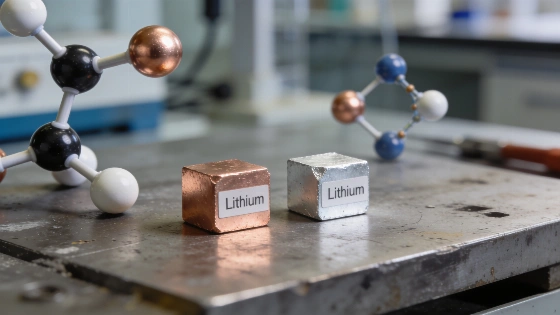
The team trained and tested the variants on a self-generated proprietary copper-lithium dataset relevant to battery anode research. Its 11,635 structures were calculated using Density Functional Theory (DFT), a quantum-mechanical method commonly used to estimate material properties. The set includes interfaces, slabs and melt-quench structures.
On this dataset, the hybrid model achieved the highest reported force-prediction accuracy, beating the classical MLP version by approximately 13%. The reported force-error figures were about 43.3 meV/Å for the classical variant and 37.8 meV/Å for the hybrid model.
Hyperparameters-settings that shape a model's training and behavior-were tuned against accuracy and inference time using SAMO-COBRA, a multi-objective optimization implementation. That setup recognizes a practical trade-off: improving predictions and making them faster are distinct goals. The study evaluated both objectives in selecting model configurations.
The hybrid model was also evaluated on the public rMD17 aspirin and benzene benchmarks. It retained competitive accuracy when QDI hyperparameters from the copper-lithium system were transferred directly, without dataset-specific retuning. For aspirin, the reported values were approximately 10.2, 9.0 and 9.9 meV across the compared results. These tests extend the reported evaluation beyond the original Cu-Li dataset.
What the result establishes
The comparison reports that, within the tested Allegro architectures and datasets, adding QDI layers was associated with better force predictions on the proprietary copper-lithium set, while transferred settings remained competitive on two organic benchmarks. Unlike a hardware demonstration such as the diamond-spin search, this study tests a model architecture. Its reported result does not establish that a quantum processor performed a useful materials calculation faster or more accurately than a classical computer.
The study compares the hybrid model with its classical MLP counterpart and reports tests on the proprietary Cu-Li dataset and two organic benchmarks. The reported findings concern model predictions on those datasets; they do not report a new experimental measurement or a battery design outcome.
An interatomic potential approximates the relationship between atomic arrangements and the forces acting on atoms. DFT calculations supplied the reference data in this study, while the learned model was evaluated on its predictions. The copper-lithium structures relate to battery-anode research, and the aspirin and benzene tests extend the evaluation to organic systems.