Researchers in China have demonstrated a chemical process that converts polyolefin plastic waste into aviation-grade fuel using a cobalt-nickel catalyst, but the method remains at the laboratory stage and faces significant engineering hurdles
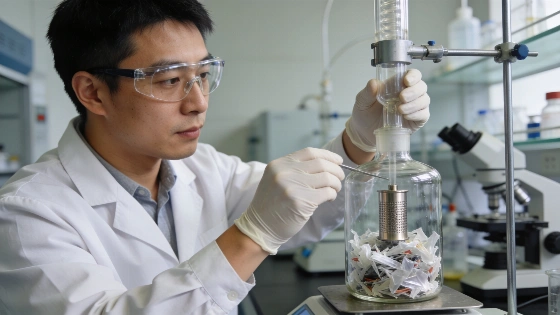
Researchers at Fudan University and the Shanghai Advanced Research Institute have reported a laboratory demonstration of a chemical process that converts polyolefin plastic waste into liquid hydrocarbons suitable for use as aviation fuel. The process, described in a recent study, employs a cobalt-nickel catalyst to break down the long molecular chains of polyolefins-plastics commonly found in grocery bags and packaging-into medium-length alkanes that match the carbon range required for jet fuel. The reaction operates under relatively mild temperature and pressure conditions compared to previous methods, and the catalyst is based on abundant, low-cost metals rather than expensive noble metals.
Polyolefins account for a substantial share of the more than 460 million tonnes of plastic produced globally each year. Their chemical stability and resistance to degradation have made them a persistent environmental challenge. The new process targets these plastics by using hydrogenolysis, a reaction that cleaves carbon-carbon bonds in the polymer backbone. According to the research team, the cobalt-nickel catalyst selectively activates hydrogen and enables controlled fragmentation of the polymer chains, minimizing the formation of unwanted gases and maximizing the yield of liquid hydrocarbons in the C8-C16 range, which is compatible with aviation fuel standards.
Laboratory Results and Measured Performance
In controlled laboratory tests, the process achieved a liquid yield of 82.3 percent from polyolefin feedstock, with 79 percent selectivity toward C8-C16 alkanes. These figures were reported under mild reaction conditions, but the results have not yet been independently reproduced outside the research group. The use of cobalt and nickel as catalyst components offers a cost advantage over previous systems that relied on platinum or ruthenium, which are significantly more expensive and less abundant. The researchers also conducted a life-cycle assessment suggesting that, if powered by renewable energy, the process could reduce greenhouse gas emissions by up to 80 percent compared to conventional fossil-based jet fuel production. However, these environmental benefits depend on the energy source and the scalability of the process.
Despite promising laboratory data, the technology remains at the research stage. The process has not been demonstrated at industrial scale, and the system has only been tested with relatively clean, well-characterized plastic feedstock. Real-world plastic waste is typically contaminated with food residues, dyes, and other impurities that can poison or deactivate sensitive metal catalysts. The researchers acknowledge that robust pre-treatment and purification systems will be necessary before the technology can be deployed outside the laboratory.
Engineering and Deployment Challenges
Scaling up from laboratory glassware to industrial reactors introduces a range of engineering uncertainties. Chemical reactions that perform reliably in small batches may behave unpredictably at larger volumes, where heat transfer, mixing, and catalyst deactivation become more difficult to control. The sensitivity of the cobalt-nickel catalyst to impurities in real-world waste streams is a significant barrier to practical deployment. Without effective pre-treatment, catalyst poisoning could halt the process or require frequent replacement, undermining the economic and environmental advantages of the method.
At present, plastic-to-jet fuel conversion remains in the pilot and testing phase globally. According to a report from the South China Morning Post, the closest operational facility is Clean Planet Technologies' pilot plant in Kent, UK, which is dedicated to converting waste plastics into sustainable aviation fuel. No system has yet demonstrated reliable, large-scale conversion of mixed, contaminated plastic waste into aviation-grade fuel under commercial conditions. Regulatory approval, safety certification, and supply-chain integration would also be required before any such fuel could be used in passenger aircraft.
Limits of Current Evidence
The reported process represents a technical advance in catalyst design and selectivity for plastic depolymerization, but it does not establish a commercially viable solution to plastic waste or aviation fuel supply. The laboratory results are based on controlled conditions with purified feedstock and do not account for the variability and contamination typical of municipal plastic waste. The environmental benefits depend on the use of renewable energy and the successful scale-up of the process, both of which remain unproven. No independent verification of the reported yields or selectivity has been published, and the system's long-term reliability, maintenance requirements, and economic competitiveness are unknown.
While the research demonstrates the technical feasibility of converting polyolefin plastics into jet fuel precursors using a low-cost catalyst, significant engineering, economic, and regulatory challenges must be addressed before the technology can contribute meaningfully to waste management or sustainable aviation fuel production. The evidence to date supports further investigation but does not justify claims of imminent large-scale deployment.
Hydrogenolysis, the chemical process at the core of this research, involves breaking carbon-carbon bonds in polymers using hydrogen and a metal catalyst. The selectivity and efficiency of this reaction depend on the catalyst's ability to activate hydrogen and control where the polymer chain is cleaved. In practice, catalyst poisoning by impurities, uneven heat distribution, and incomplete reactions can reduce yield and reliability. Laboratory demonstrations often use pure or pre-treated materials, which do not reflect the complexity of real-world waste streams. Scaling up such processes requires careful engineering to maintain catalyst activity, manage byproducts, and ensure safety under industrial conditions.