
Maya Civilization
14 reportsThe documented context of Maya Civilization includes political or religious institutions; chronology and regional variation; and settlement and urban organization. For settlement and urban organization, the primary record comes from excavated contexts, with inscriptions or archives providing a separate test; the account does not overlook that surviving evidence is uneven and later narratives can oversimplify social diversity.
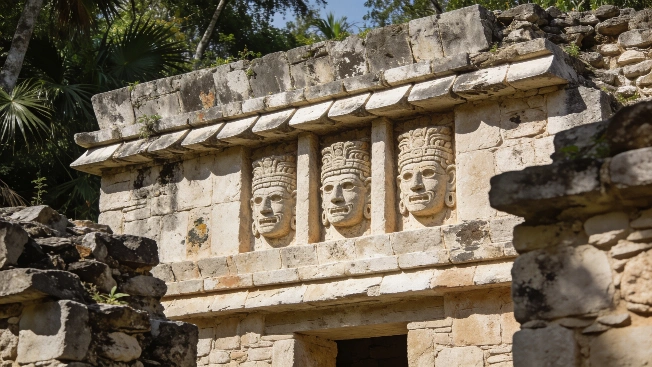
Xpujil Maya Residence Reveals How Elite Power Was Built in Stone
Carved façades at a Maya residence near Xpujil feature three images of K'awiil and a royal mat glyph, evidence that the building housed elites during the final centuries of the Classic period
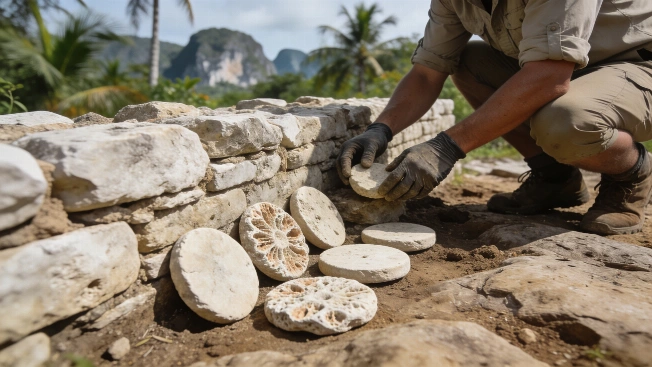
Maya Beekeeping Site Found Along the Maya Train Route
A limestone structure near Tulum may preserve evidence of pre-Hispanic stingless-bee keeping. Forty stone discs and pottery fragments could clarify how Maya households produced and stored honey, although the proposed meliponary interpretation remains provisional pending residue and contextual analyses.
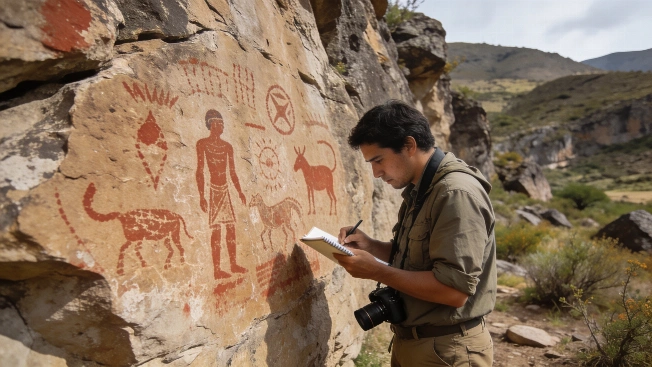
Ancient Hidalgo rock art reveals encounters with the underworld
Archaeologists have identified 55 rock art scenes at 25 sites in Hidalgo depicting figures meeting the lord of the underworld. The findings offer new evidence for how ancient communities understood death and the supernatural.
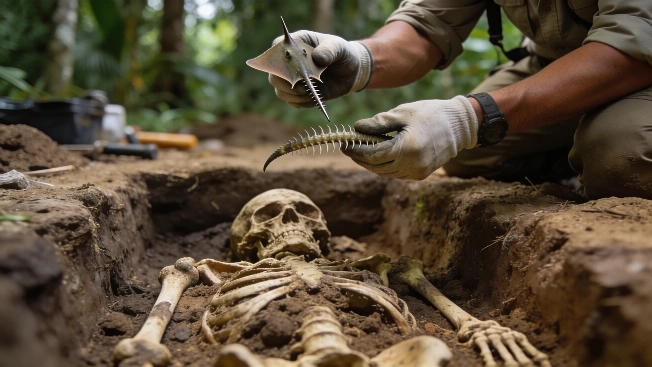
Ancient Maya burials yield stingray barbs linked to bloodletting rituals
Archaeologists working near Tenosique, Tabasco, have recovered stingray barbs and a catfish spine from ancient Maya burials. Researchers are investigating whether these aquatic animal remains were used in ritual bloodletting or self-sacrifice practices
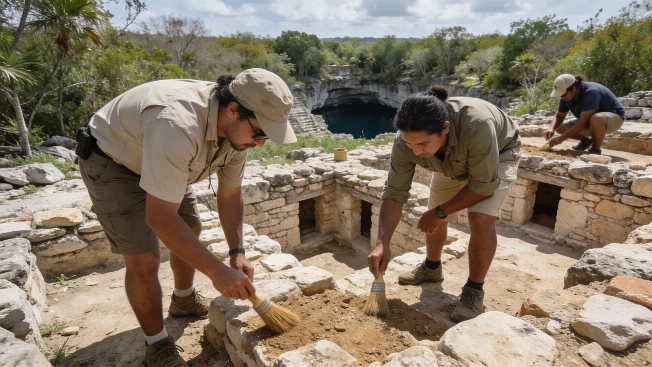
2,000-Year-Old Maya Settlement Uncovered in Yucatán Freight Rail Project
Archaeologists have identified and preserved a previously unknown Maya settlement in Yucatán, revealing 21 structures and evidence of water management. The site, excavated ahead of rail construction, offers new insight into non-elite Maya daily life.
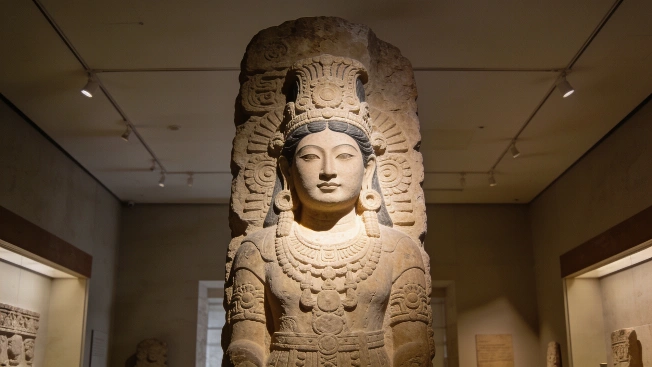
Limestone Stela Reveals Maya Queen's Power in 7th-Century Guatemala
Archaeologists have reconstructed a monumental limestone stela from El Perú-Waka' in Guatemala, depicting Lady K'abel, a Maya ruler, and revealing new evidence about her political and military authority at the end of the seventh century CE
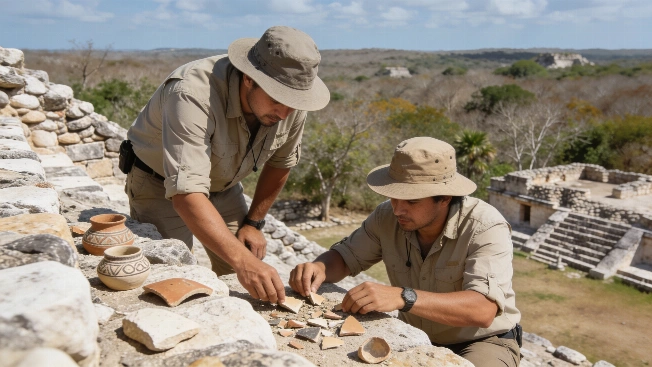
New Excavations at Xcalumkín Reveal Maya Puuc Architecture Origins
Recent archaeological research at Xcalumkín in Campeche, Mexico, has provided new evidence on the development of Puuc architectural traditions, settlement patterns, and possible dual governance among the ancient Maya between the 7th and 10th centuries CE
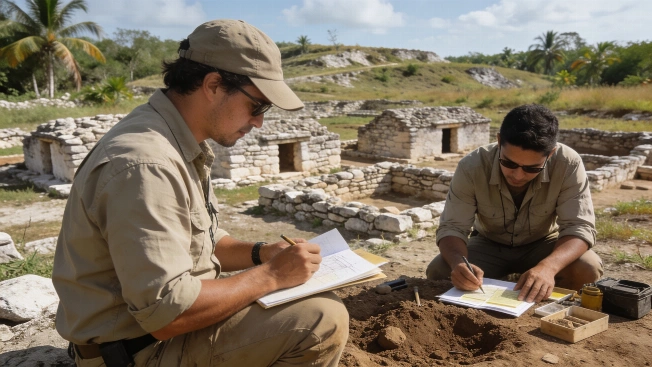
Maya Household Gardens Reveal Ancient Strategies for Food and Water
Archaeologists analyzing soils and settlement patterns in the Northern Maya Lowlands have identified evidence that ancient Maya households organized their domestic plots to support agriculture and manage rainwater, offering new insight into daily life beyond monumental centers
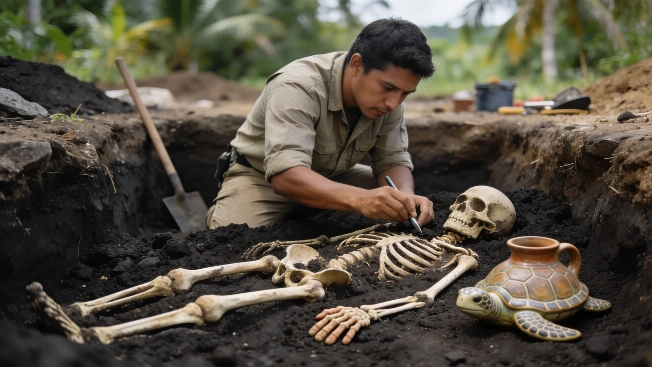
2,800-Year-Old Prone Burial With Sea Turtle Vessel Found in El Salvador
Archaeologists excavating in Antiguo Cuscatlán, El Salvador, have uncovered a 2,800-year-old burial featuring a face-down skeleton and a ceramic vessel shaped like a sea turtle, offering new evidence for mortuary practices in pre-Maya Mesoamerica
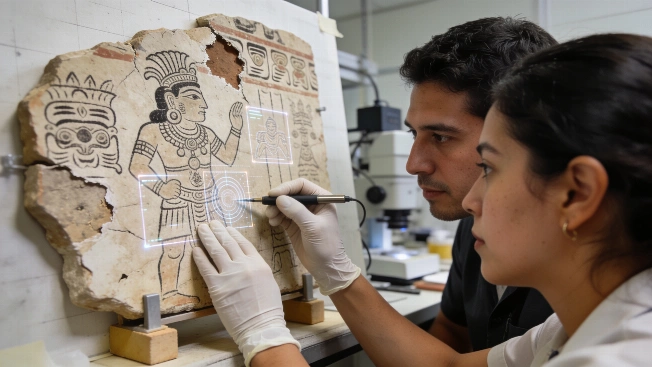
Earliest Maya Calendar Writing Identified at Calakmul Mural
Archaeologists have reconstructed a deteriorated mural from Calakmul, Mexico, revealing the earliest known calendrical inscription at the site. The find offers new evidence for early Maya writing traditions and ritual practice in the Late Preclassic period.
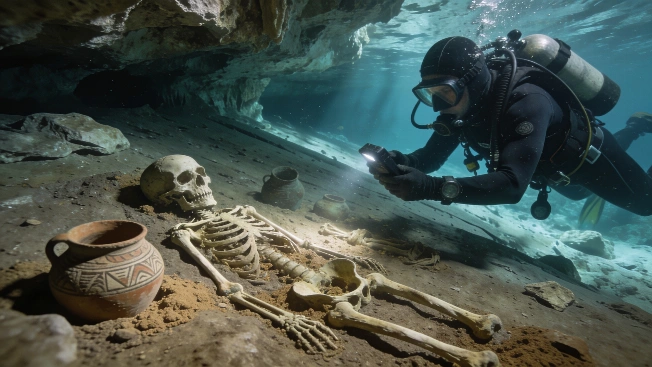
Ancient Human Remains and Maya Ceramics Found in Cenote Yaakun
Archaeologists have begun a research and conservation project at Cenote Yaakun near Playa del Carmen after the discovery of a possible young adult woman's skeleton and a cluster of Maya ceramics in a deep underwater context
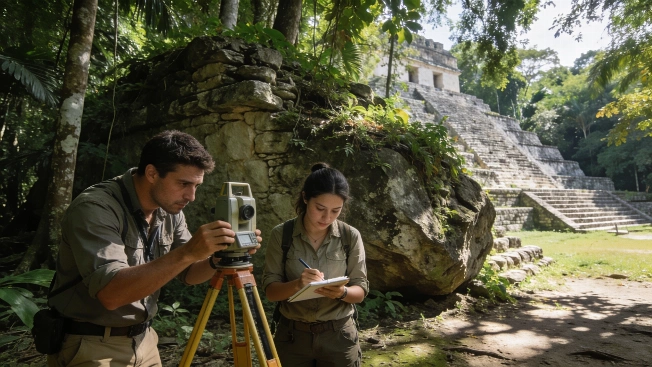
Survey Reveals Monumental Maya City at El Yesal in Campeche
Archaeologists have mapped and documented El Yesal, a major Maya settlement in Mexico's Balam kú Biosphere Reserve, using field survey and excavation to clarify its origins, architecture, and occupation history
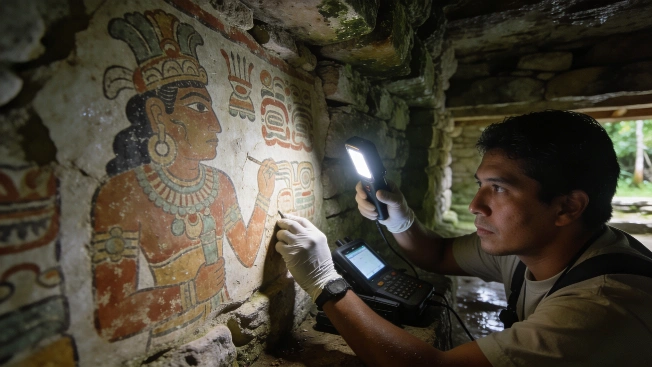
Early Maya Mural at Calakmul Depicts Mythical Hero Juun Ajaw
A mural from Structure II at Calakmul, Mexico, has been identified as one of the earliest known depictions of the Maya figure Juun Ajaw. Researchers used digital reconstruction to analyze the mural's iconography and its architectural context
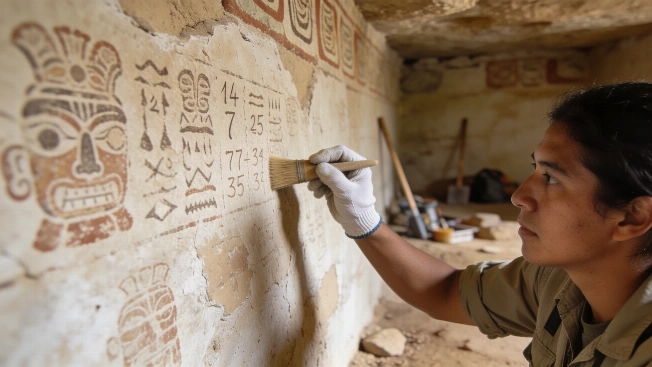
Eighth-Century Maya Astronomer's Name Found at San Bartolo-Xultun
Researchers have identified the name of a Maya mathematician and astronomer in wall inscriptions at the San Bartolo-Xultun site in Guatemala, revealing new details about scientific activity in the region during the eighth century CE