
Archaeometry
12 reportsUnderstanding Archaeometry requires attention to spatial or chronological resolution, together with validation with excavation evidence and sources of error. The evidence surrounding sources of error is read through integration with excavation records and calibration standards; confidence remains limited because the result is bounded by the possibility that disturbance, contamination, and incomplete context can narrow what the method establishes.
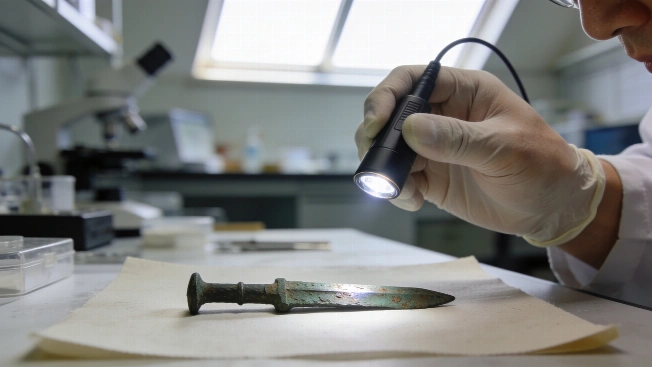
Bronze Hand Cannon Rewrites Korea's Early Firearms Record
A bronze hand cannon found during a trail safety survey in South Korea has passed X-ray and metallurgical tests. Identified as the Hwangja Hwatong after three years of analysis, it is regarded as Korea's earliest surviving firearm, although its 28-character inscription leaves two possible manufacturing dates.
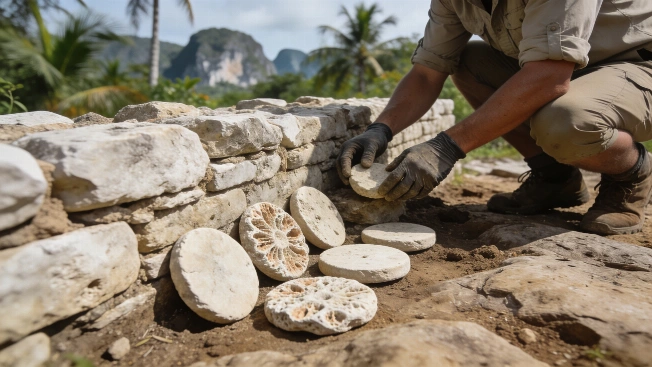
Maya Beekeeping Site Found Along the Maya Train Route
A limestone structure near Tulum may preserve evidence of pre-Hispanic stingless-bee keeping. Forty stone discs and pottery fragments could clarify how Maya households produced and stored honey, although the proposed meliponary interpretation remains provisional pending residue and contextual analyses.
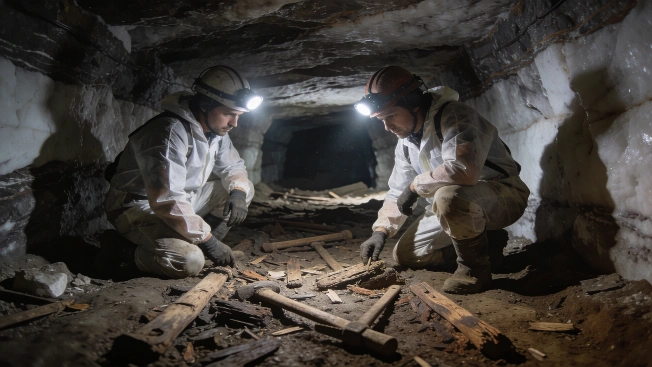
Iron Age Salt Mine Chambers Uncovered Deep Inside Hallstatt Mountain
Archaeologists have mapped a 300 meter network of Iron Age mining chambers beneath Hallstatt in Austria using core drilling, exposing thick layers of preserved debris and organic remains that offer new evidence for prehistoric salt extraction and community resilience
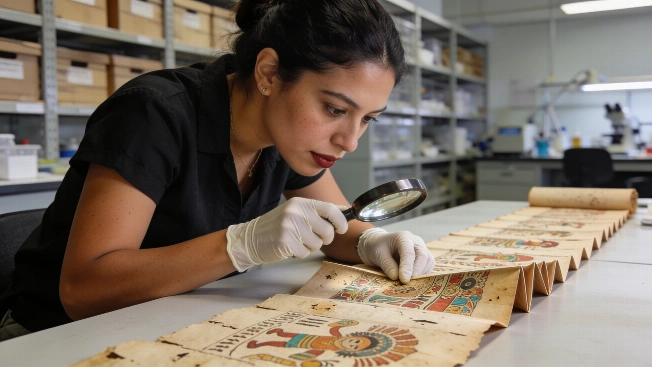
Radiocarbon Dating Confirms Pre-Conquest Date for Aubin Tonalámatl Codex
A new radiocarbon analysis of the Aubin Tonalámatl Codex places its creation firmly in the late 15th century, resolving long-standing doubts about whether this Indigenous Mexican manuscript predates Spanish colonization
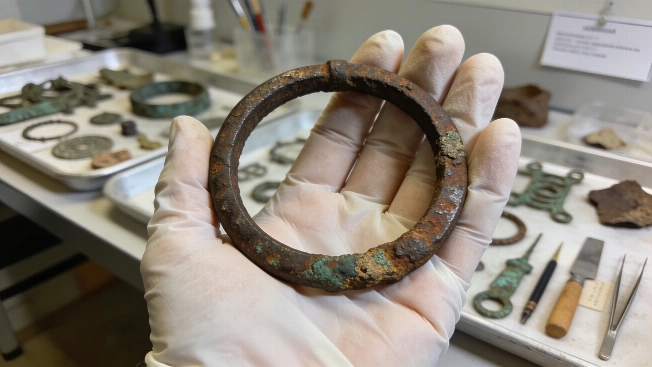
Ancient Greek Rings Reveal Use of Meteorite Iron in Elite Burials
Analysis of Bronze and Early Iron Age rings from Greece shows that some were crafted from meteoritic iron, suggesting the rare metal was valued by Minoan and Mycenaean elites long before iron smelting became common
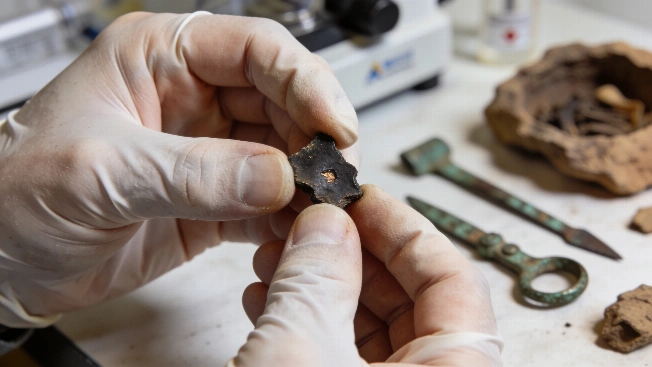
Pre-Inca Metalwork in Peru Linked to Bolivian Ore by Isotope Analysis
Archaeologists have traced metallurgical waste from a Wari-period burial at Castillo de Huarmey in Peru to ore sources in present-day Bolivia, revealing long-distance movement of metal and technological knowledge across the Andes
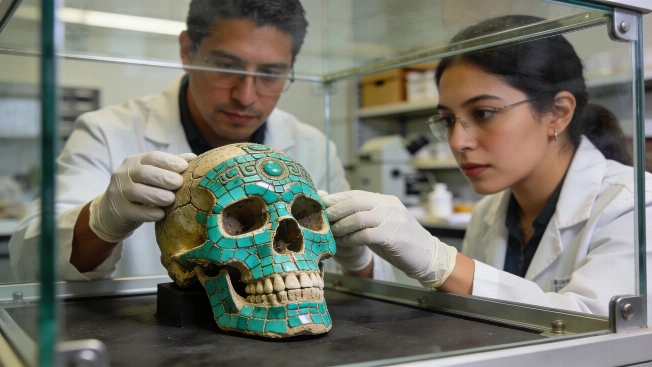
Mixtec Turquoise-Mosaic Skull Returns to Mexico After Six Decades
A rare pre-Hispanic human skull with a turquoise mosaic, linked to the Mixtec tradition, has been repatriated to Mexico after decades in a Dutch museum. Scientific analysis confirms its pre-Hispanic origin, but its precise archaeological context remains uncertain
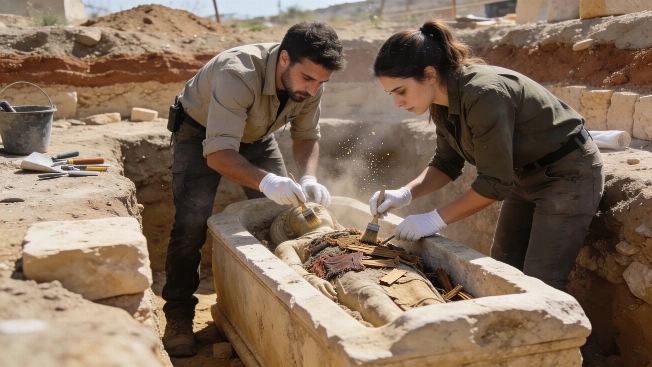
Archaic Necropolis in Southern Italy Yields Rare Organic Artifacts
Archaeologists have uncovered a 6th-century BCE necropolis beneath Gragnano, Italy, preserving organic materials and imported grave goods that reveal new details about elite burial practices and Mediterranean trade in pre-Roman Campania
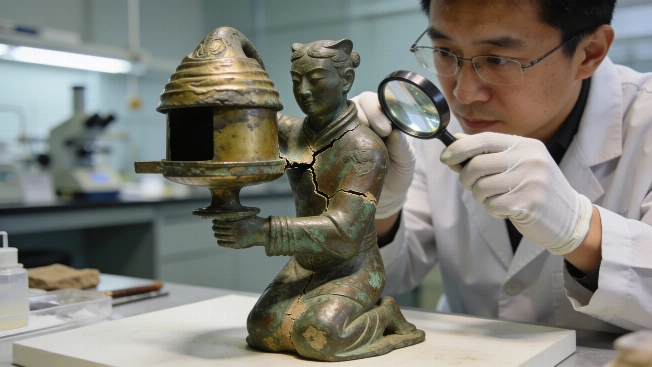
Sanxingdui Bronze Figure Assembled From Separate Ancient Artifacts
A new analysis of a bronze kneeling figure from Sanxingdui, China, reveals it was constructed from components made in different regions and periods, providing evidence for complex trade and metalworking in the ancient Shu kingdom
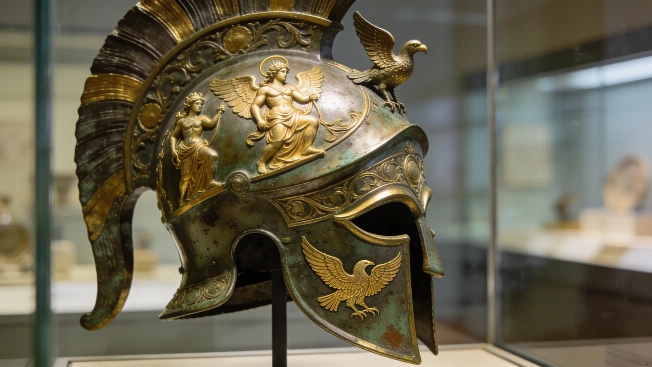
Bronze Elamite Helmet Reveals Ancient Deities and Battlefield Symbolism
A rare bronze helmet from southwestern Iran, dated to 1500-1100 BCE, features gold-plated divine figures and a raptor motif. Researchers analyze its construction, iconography, and uncertain archaeological context to interpret its significance.
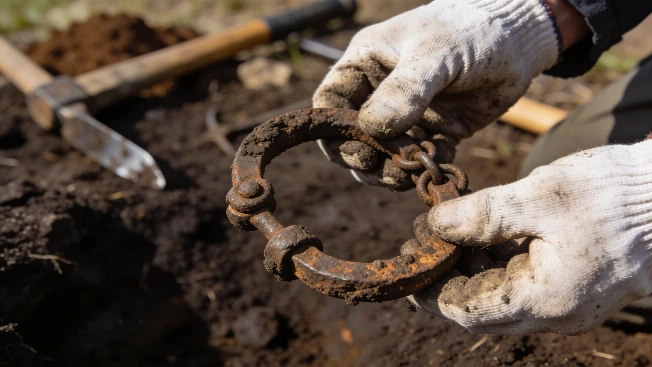
Iron Shackles at Allonnes Reveal Evidence of Celtic Slavery
Archaeologists have identified five pairs of iron restraints at a third-century BCE settlement in France's Loire Valley, providing rare direct evidence for the use of shackles and the possible presence of enslaved people in pre-Roman Gaul
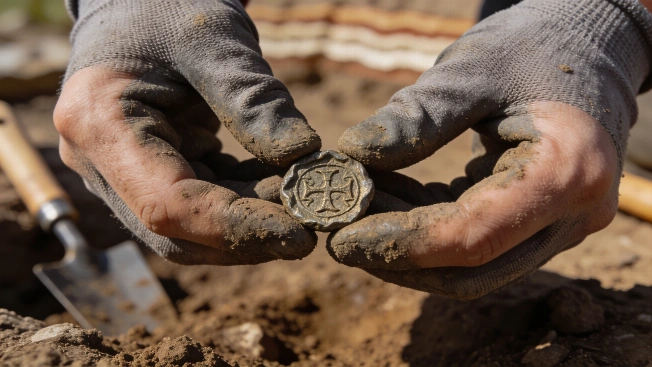
Medieval Lead Seals in Vladimir Linked to Princess Maria Vsevolzha
Archaeologists in Vladimir have uncovered rare lead seals from a medieval neighborhood, offering new evidence for the administrative role of Princess Maria Vsevolzha in pre-Mongol Rus'. The finds shed light on elite women's authority in the 12th-13th centuries