
Tikal
2 reportsTikal is an archaeological site where structures, deposits, artifacts, and environmental evidence preserve past activity. The historical case is built from site location, excavated structures, and environmental context, while gaps in preservation limit claims about identity, date, or purpose.
The public record for Tikal is read through stratigraphic context, together with dating evidence and architecture or material culture. For architecture or material culture, the primary record comes from laboratory dating, with provenance and spatial context providing a separate test; disturbance, incomplete excavation, and later restoration can limit reconstruction.
The public record for Tikal is read through stratigraphic context, together with dating evidence and architecture or material culture. For architecture or material culture, the primary record comes from laboratory dating, with provenance and spatial context providing a separate test; disturbance, incomplete excavation, and later restoration can limit reconstruction.
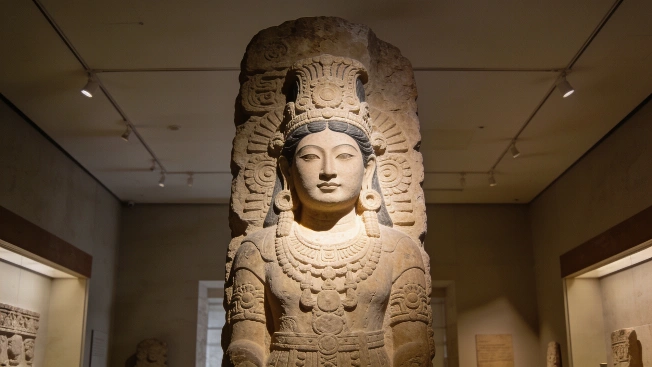
Limestone Stela Reveals Maya Queen's Power in 7th-Century Guatemala
Archaeologists have reconstructed a monumental limestone stela from El Perú-Waka' in Guatemala, depicting Lady K'abel, a Maya ruler, and revealing new evidence about her political and military authority at the end of the seventh century CE
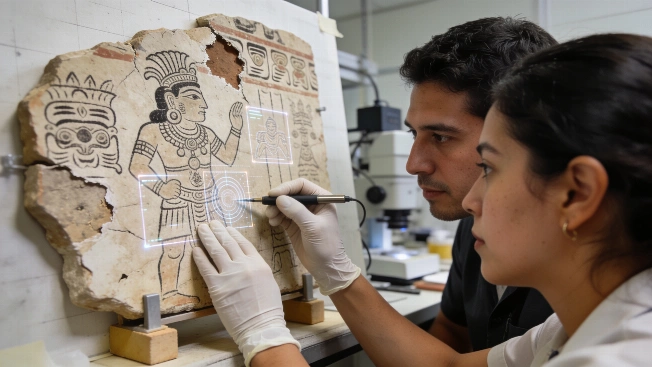
Earliest Maya Calendar Writing Identified at Calakmul Mural
Archaeologists have reconstructed a deteriorated mural from Calakmul, Mexico, revealing the earliest known calendrical inscription at the site. The find offers new evidence for early Maya writing traditions and ritual practice in the Late Preclassic period.