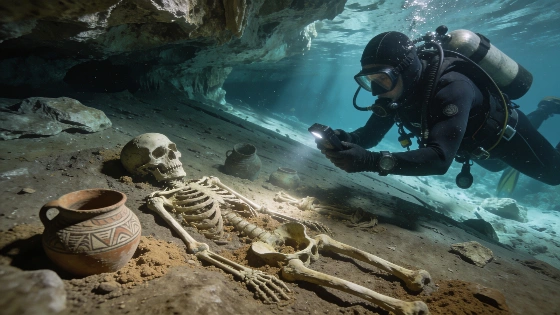
Archaeologists have begun a research and conservation project at Cenote Yaakun near Playa del Carmen after the discovery of a possible young adult woman's skeleton and a cluster of Maya ceramics in a deep underwater context
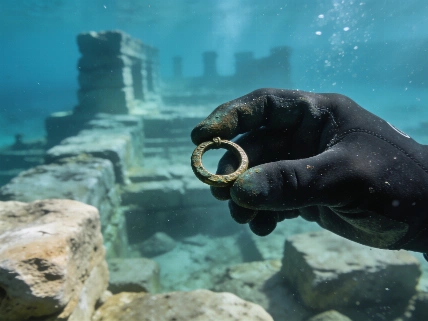
Archaeological fieldwork at Cenote Yaakun, a flooded sinkhole near Playa del Carmen on Mexico's Yucatán Peninsula, has revealed a rare underwater context containing both human skeletal remains and a concentration of Maya ceramics. The project, led by the National Institute of Anthropology and History (INAH) through its Sub-directorate of Underwater Archaeology, was initiated following reports from local custodians and technical divers who identified cultural material at significant depths in late 2025.
Underwater Context and Discovery
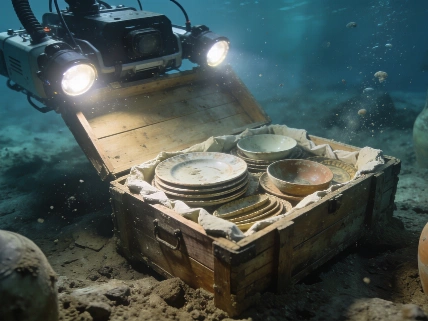
The skeletal remains, provisionally named Yatzil-a Maya term meaning "beloved person"-were found between 42 and 46 meters below the water's surface, in a sloping chamber beyond a dense layer of hydrogen sulfide. Approximately 30 meters away, three globular ceramic vessels, one intact and two fragmented, were documented at depths reaching 53 meters. The site's exceptional preservation is attributed to the cenote's stable temperature, limited light, and considerable depth, which have minimized disturbance and biological activity.
Initial fieldwork involved five days of technical diving, during which underwater archaeologist Gustavo García García and the team conducted photogrammetric surveys to map the two main archaeological areas. The project's first season prioritized non-invasive documentation, leaving the human remains undisturbed and recovering only a single ceramic fragment for laboratory analysis. The formal Cenote Yaakun Research Project has since been authorized by the INAH Archaeology Council, with a focus on both scientific investigation and long-term conservation.
Skeletal Analysis and Dating
Physical anthropologist Salvador Isab Estrada identified preserved elements including portions of the arms, legs, pelvis, and lower jaw, with three molars remaining intact. Patterns of dental wear and the loss of a premolar suggest the individual was a young adult woman, estimated to be between 18 and 25 years old at death. However, the incomplete preservation and underwater context mean that both the biological sex and cultural identity remain provisional until further analysis, including potential ancient DNA sampling in future field seasons.
Preliminary typological assessment of the ceramics indicates affiliation with the East Coast Maya tradition, likely dating to the Late Postclassic period (circa 1200-1521 CE). Direct dating of the human remains has not yet been performed, and the chronological relationship between the skeleton and the ceramics remains uncertain. The project's next phases may include sampling for radiocarbon dating and ancient DNA, pending conservation priorities and ethical review.
Conservation and Community Involvement
To protect the fragile underwater deposits, exclusion zones have been established around the archaeological areas, and researchers are working closely with landowners and diving operators to discourage disturbance or removal of material. The site's custodians have played a key role in safeguarding the remains and contributed to the naming of the individual. The project emphasizes the importance of community collaboration in preserving submerged heritage, echoing broader trends in archaeological stewardship across the region.
During the first field season, the research team deliberately avoided disturbing the human remains, focusing instead on detailed mapping and minimal sampling. This approach reflects a growing recognition of the ethical and scientific value of preserving underwater archaeological contexts in situ, allowing for future analysis as methods advance. The exceptional preservation at Cenote Yaakun offers a rare opportunity to study both human and material remains in a minimally altered state.
Comparative Context
The discovery at Cenote Yaakun adds to a growing body of evidence for the use of cenotes and other natural features in Maya mortuary and ritual practices. While the precise circumstances of the deposition remain unclear, the association of human remains and ceramics in a deep underwater context is consistent with other findings in the region. For example, research into Iron Age mortuary practices in Europe, such as the recently reported child burial with a sword in France, highlights the diversity of burial customs and the importance of context in interpreting ancient remains.
As the Cenote Yaakun project continues, researchers aim to clarify the relationship between the human skeleton and the associated ceramics, refine the dating of both, and assess the potential for ancient DNA and isotopic analysis. The site's preservation conditions and collaborative management may serve as a model for future underwater archaeological research in the region.
Osteological age estimation is a key method in bioarchaeology for determining the age at death of skeletal remains. In adults, age is typically estimated using features such as dental wear, pubic symphysis morphology, and epiphyseal fusion, though precision decreases with age. In the case of the Cenote Yaakun skeleton, dental wear and the presence of three intact molars were used to suggest a young adult age range. However, underwater preservation and postmortem movement can complicate assessment, and age estimates should be considered approximate unless supported by multiple lines of evidence.