
Astronomers have identified helium escaping from LHS 1140 b, a super-Earth orbiting in its star's habitable zone, using infrared spectroscopy. The finding offers the strongest evidence yet that a rocky exoplanet can retain an atmosphere for billions of years
Astronomers have reported the detection of an atmosphere around LHS 1140 b, a rocky exoplanet orbiting within the habitable zone of a nearby red dwarf star. The result, published in Science on July 16, 2026, is based on infrared spectroscopic observations that reveal helium gas escaping from the planet. This detection provides the most compelling evidence so far that a super-Earth in a temperate orbit can maintain an atmosphere over geological timescales, despite the challenging environment around its host star.
Observing a distant super-Earth
LHS 1140 b is located approximately 48 light-years from Earth and orbits a small, cool red dwarf star. With a mass about 5.6 times that of Earth, the planet is classified as a super-Earth-larger than our planet but much smaller than Neptune. Its orbit places it within the star's habitable zone, where temperatures could allow liquid water to exist on the surface under the right atmospheric conditions. Previous estimates, which did not account for atmospheric effects, suggested a surface temperature near -47°C (-53°F), making it cold but not outside the range considered potentially habitable.
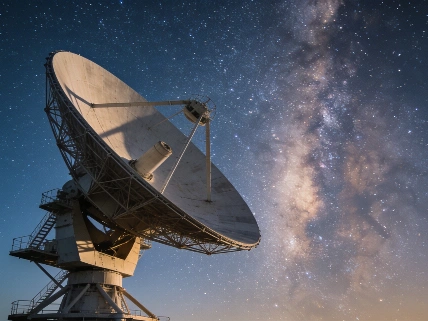
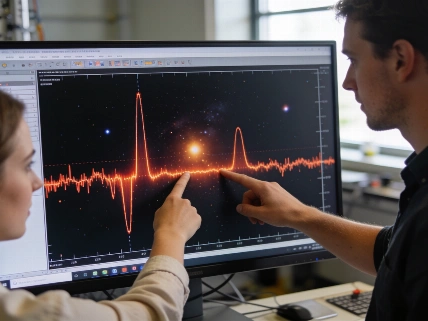
To search for an atmosphere, researchers used the WINERED spectrograph on the Magellan Clay Telescope in Chile. They observed LHS 1140 b as it transited its star, allowing a fraction of starlight to pass through the planet's upper atmosphere. By analyzing the resulting spectrum, the team looked for absorption features at the infrared wavelength characteristic of helium. The presence of this signal indicates that helium is escaping from the planet's atmosphere into space-a process known as atmospheric escape.
Comparing planetary neighbors
The study's methodology relied on a model predicting that helium escaping from a rocky planet's atmosphere could be detected as a subtle dip in starlight at a specific infrared wavelength. In September 2024, the team observed both LHS 1140 b and a smaller, hotter planet in the same system, LHS 1140 c, as they transited their star less than an hour apart. A clear helium signal was detected from LHS 1140 b, while no such feature was found for LHS 1140 c.
This contrast is significant. LHS 1140 c orbits much closer to the star, receives about five times more stellar radiation, and is less massive than LHS 1140 b. These conditions should make atmospheric escape easier to detect if any atmosphere remained. The absence of a helium signal from LHS 1140 c suggests its atmosphere was likely stripped away long ago, while LHS 1140 b has managed to retain at least a thin upper layer of gas.
Limits and implications for habitability
The detection of helium alone does not establish that LHS 1140 b is habitable or inhabited. The observed signal comes from the planet's upper atmosphere and does not reveal the full atmospheric composition. Key molecules such as oxygen, carbon dioxide, or water vapor-which are more directly relevant to surface habitability-have not yet been detected. The result does, however, demonstrate that at least some rocky planets around red dwarfs can preserve atmospheres for billions of years, despite the intense radiation environments that often strip such planets bare.
The host star, LHS 1140, is estimated to be at least 3.1 billion years old. The persistence of an atmosphere on LHS 1140 b over this timescale suggests that atmospheric retention is possible even in systems where high-energy stellar activity is common. This finding narrows the search for potentially habitable exoplanets by showing that rocky worlds in the habitable zones of red dwarfs are not necessarily airless.
Future directions and observational challenges
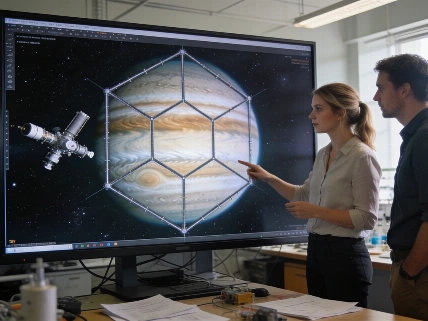
While the helium detection is a significant step, further observations will be needed to characterize the rest of LHS 1140 b's atmosphere. Upcoming studies may use more sensitive instruments or space-based telescopes to search for additional gases and to probe deeper atmospheric layers. Determining whether the planet has surface conditions suitable for liquid water-or even oceans-will require constraints on greenhouse gases and atmospheric pressure, which remain unknown.
The study also highlights the technical challenges of detecting thin atmospheres around rocky exoplanets. Helium is easier to detect than heavier molecules because it escapes more readily and produces a clearer spectral signature. Detecting other atmospheric components will require higher signal-to-noise ratios and may depend on future observatories with greater sensitivity in the infrared.
Transmission spectroscopy is the primary technique used to detect exoplanet atmospheres during transits. As a planet passes in front of its star, some starlight filters through the planet's atmosphere, where molecules absorb light at characteristic wavelengths. By comparing the spectrum of the star during and outside the transit, astronomers can identify these absorption features. The strength and shape of the signal depend on the planet's atmospheric composition, temperature, and pressure, as well as the sensitivity and resolution of the observing instrument. For rocky exoplanets, the challenge is compounded by their small size and thin atmospheres, making detections like that of LHS 1140 b especially valuable for advancing the field.