NASA's Nancy Grace Roman Space Telescope, set for launch in 2026, will use infrared instruments to investigate dark energy, dark matter, and exoplanets from a stable orbit 1.5 million kilometers from Earth
NASA is preparing to launch the Nancy Grace Roman Space Telescope, a next-generation observatory designed to address some of the most persistent questions in astrophysics. Scheduled for liftoff in August 2026, Roman will survey wide regions of the sky in infrared light, aiming to clarify the nature of dark energy, map dark matter, and expand the known population of exoplanets.
Mission Design and Launch Plans
The Roman Space Telescope is slated to launch aboard a SpaceX Falcon Heavy rocket from Kennedy Space Center's Launch Complex 39A in Florida. Once deployed, the observatory will travel to the second Sun-Earth Lagrange point (L2), a gravitationally stable region located approximately 1.5 million kilometers from Earth. This position allows Roman to maintain a steady, unobstructed view of the cosmos, minimizing interference from Earth and the Moon.
Roman's primary mirror measures 2.4 meters across, matching the aperture of the Hubble Space Telescope but optimized for wide-field infrared observations. The observatory will carry two main scientific instruments: the Wide Field Instrument, a 300-megapixel infrared camera, and the Coronagraph Instrument, which is engineered to block starlight and directly image faint exoplanets near their host stars.
Scientific Objectives and Instrumentation
The mission's core scientific goals focus on three areas: dark energy, exoplanets, and dark matter. Roman's Wide Field Instrument will conduct large-scale surveys, capturing light that has traveled billions of years, enabling astronomers to study the universe's expansion history and the distribution of galaxies. By observing distant supernovae and galaxy clusters, Roman will help constrain models of dark energy, the unknown component thought to drive the accelerating expansion of the universe.
The Coronagraph Instrument will test advanced starlight suppression technologies, allowing astronomers to directly image exoplanets that are up to a billion times fainter than their parent stars. This capability is expected to reveal new classes of exoplanets and provide data on planetary atmospheres, especially for worlds orbiting within the habitable zones of their stars. Roman's sensitivity and field of view will also support gravitational microlensing surveys, which can detect exoplanets at greater distances from their stars than most current methods.
Dark Matter, Cosmic Structure, and Mission Status
Roman's wide-field surveys will map the distribution of dark matter by measuring the subtle distortions of background galaxies caused by gravitational lensing. These measurements will help test competing models of dark matter, which remains undetected except through its gravitational effects. If dark matter consists of heavy, slow-moving particles, Roman should observe early clumping and galaxy formation; if it is lighter and faster, structure formation would be delayed and more diffuse.
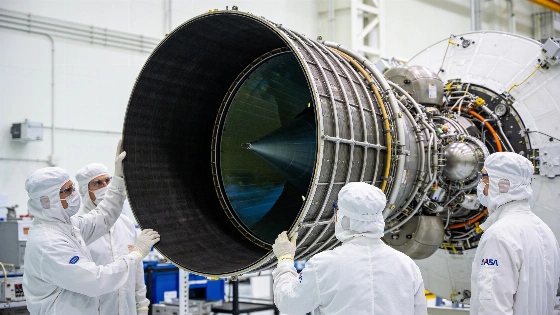
The mission is currently in its final assembly and testing phase, with integration milestones completed in late 2025. More than a thousand engineers and technicians have contributed to the observatory's construction, assembling millions of components. Roman's launch and commissioning will be closely watched, as its success is expected to complement the discoveries of the James Webb Space Telescope and other major observatories. For context on how new space telescopes have advanced our understanding of cosmic structure, see this report on Webb's imaging of a young star cluster in the Carina Nebula.
Legacy and Team Behind the Mission
The telescope is named for Nancy Grace Roman, NASA's first chief astronomer and a key advocate for the Hubble Space Telescope. Roman's leadership helped establish space-based astronomy as a central pillar of NASA's science program. The mission's development has drawn on expertise from instrument technicians, mechanical engineers, and astrophysicists, as well as specialists in data management, communications, and outreach. The Roman team continues to prepare educational materials and interactive resources to engage students and the public in the mission's science.
Roman's launch is anticipated to mark a new phase in wide-field infrared astronomy, with the potential to clarify the composition and evolution of the universe. The mission's data will be made available to the global scientific community, supporting a broad range of investigations in cosmology, galaxy evolution, and planetary science.
Understanding how Roman will observe the universe requires familiarity with infrared astronomy and the concept of Lagrange points. Infrared telescopes detect wavelengths longer than visible light, allowing them to peer through cosmic dust and observe distant, redshifted objects. The L2 point provides a thermally stable environment and a clear line of sight, essential for sensitive measurements. Roman's combination of wide-field imaging and advanced starlight suppression is designed to maximize the scientific return from this unique vantage point.