A nonprofit group aims to send a low-cost probe to Alpha Centauri by 2029, marking the first directed interstellar mission. The journey would last 80,000 years, raising new questions about the feasibility and purpose of such long-term exploration.
Plans for the first dedicated mission to another star system have moved from speculation to concrete proposal, as the Fermi Explorer Mission nonprofit sets its sights on Alpha Centauri. The group intends to launch a small, cost-capped probe toward the Sun's nearest stellar neighbor by 2029, a timeline that-if met-would mark a technical milestone in interstellar exploration, even as the probe's arrival remains tens of millennia away.
Mission Architecture and Objectives
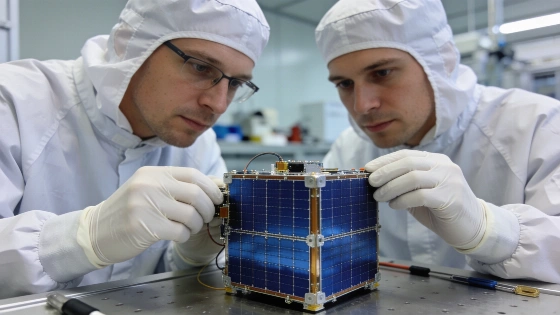
The Fermi Explorer Mission is structured around a pragmatic approach: launch a spacecraft weighing between 100 and 200 kilograms, carrying at least 1 kilogram of scientific payload, and keep total mission costs below $15 million. The probe's trajectory will be the first intentionally directed toward a specific star system beyond the Sun, distinguishing it from the outward-bound but undirected paths of NASA's Voyager 1 and Voyager 2 spacecraft. The target, Alpha Centauri, lies approximately 4.4 light-years from Earth-a distance that, at the probe's projected velocity, translates to a journey of roughly 80,000 years.
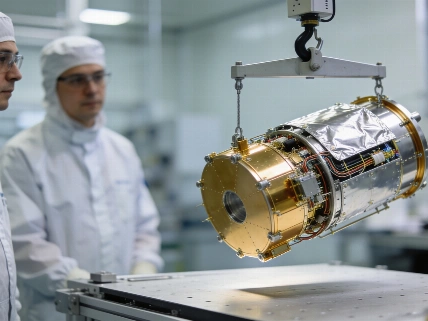
Unlike previous interstellar concepts that relied on unproven propulsion technologies, the Fermi Explorer team plans to use electric propulsion, a system already demonstrated in deep-space missions. This choice reflects a deliberate avoidance of speculative engineering, such as the laser-driven sailcraft proposed by the now-stalled Breakthrough Starshot initiative. The mission's stated aim is not to deliver data from Alpha Centauri within a human lifetime, but to demonstrate that interstellar travel is technically and financially achievable with current technology.
Leadership, Funding, and Technical Partners
The project is led by Philip Johnston, also CEO of Starcloud, alongside co-founders Ezra Feilden and Adi Oldean. Day-to-day operations are managed by Garrett Jamison, a former U.S. Air Force officer. The advisory board includes figures such as Rob Meyerson, former president of Blue Origin, and Matt Gialich, CEO of AstroForge. The team reports that at least one major satellite manufacturer has submitted a proposal that fits within the mission's financial constraints.
As a 501(c)(3) nonprofit, the Fermi Explorer Mission is actively seeking public donations to close its funding gap. The group's public communications emphasize the symbolic value of the mission: to make interstellar travel a tangible reality and to prompt renewed engagement with the so-called Fermi Paradox-the question of why, given the apparent abundance of habitable planets, humanity has yet to detect evidence of extraterrestrial intelligence.
Scientific Context and Limitations
The Fermi Explorer probe will not transmit data from Alpha Centauri; its communications will be limited by distance and power constraints, and the mission is not designed to survive the full journey. Instead, the act of launching a directed interstellar probe is intended as a proof of concept. The mission's payload, while modest, could include instruments for measuring the interstellar environment or carrying symbolic artifacts, but final payload selection remains under review.
By targeting Alpha Centauri, the mission draws attention to the practical and philosophical challenges of interstellar exploration. The probe's travel time-tens of thousands of years-renders any scientific return speculative at best. Yet the project's backers argue that even a one-way, multi-millennial mission can shift the conversation about what is possible with current resources. This approach stands in contrast to more ambitious, higher-budget missions such as NASA's Nancy Grace Roman Space Telescope, which is scheduled to launch in the coming years and will deliver its first science images within a human timescale, as reported earlier.
Implications for Interstellar Exploration
The Fermi Explorer Mission's core argument is that the act of launching a probe-however slow-provides a data point in the ongoing debate over the Fermi Paradox. The team frames three possible explanations for the apparent silence of the cosmos: intelligence is rare, intelligent species do not survive long, or advanced civilizations choose not to reveal themselves. While the mission cannot resolve these questions, it demonstrates that at least one species is willing to attempt interstellar travel with available means.
From a technical perspective, the mission's reliance on proven electric propulsion and commercially available satellite platforms reduces risk but also limits performance. The probe will not approach relativistic speeds, and its scientific payload will be constrained by mass and power. The mission's value, therefore, lies less in its direct scientific return and more in its role as a catalyst for future projects and a test of public willingness to support long-term, high-uncertainty exploration.
By setting a clear cost ceiling and avoiding speculative technology, the Fermi Explorer Mission exposes the trade-offs inherent in interstellar planning: speed versus feasibility, ambition versus affordability, and immediate return versus generational investment. The project's willingness to accept an 80,000-year timeline is a stark reminder of the physical limits imposed by current propulsion methods and the vastness of interstellar space. In this context, the mission is best understood as a statement of intent rather than a solution to the challenges of reaching other stars.
Electric propulsion, the technology at the heart of the Fermi Explorer Mission, uses electric or magnetic fields to accelerate ions and generate thrust. Unlike chemical rockets, which provide high thrust for short durations, electric propulsion systems deliver low but continuous acceleration, making them well suited for long-duration missions where efficiency outweighs speed. These systems have been used successfully on missions such as NASA's Dawn spacecraft, which explored the asteroid belt. However, the low thrust means that reaching even the nearest stars remains a multi-millennial endeavor at current performance levels. The Fermi Explorer Mission's reliance on this technology highlights both the progress and the persistent limitations of present-day space propulsion.