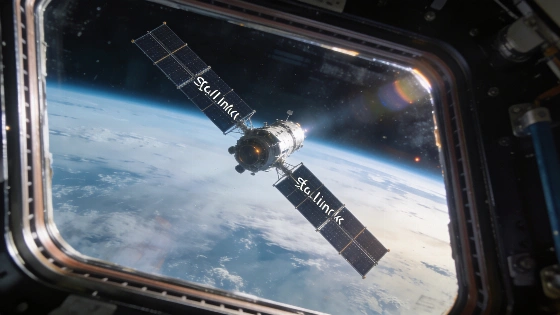
SpaceX's Starlink satellites have performed hundreds of thousands of collision avoidance maneuvers in the past year, highlighting the growing challenge of managing orbital traffic and the risks posed by increasing satellite numbers
SpaceX's Starlink constellation, now numbering thousands of satellites in low Earth orbit, has become a central case study in the growing problem of orbital congestion. According to recent operational data, Starlink satellites collectively executed more than 355,000 collision avoidance maneuvers over the past year. This means that, on average, each satellite was required to adjust its trajectory to avoid a potential collision nearly every week. The scale of these maneuvers underscores the increasing complexity of maintaining safe operations as the number of active satellites continues to rise.
Automated Avoidance
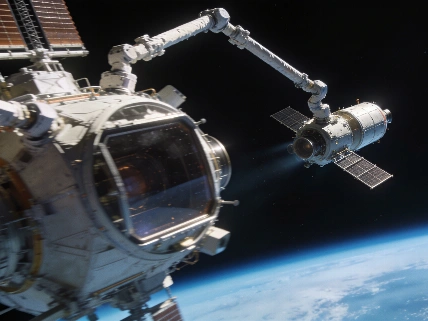
Collision avoidance in orbit relies on a combination of ground-based tracking, automated onboard systems, and predictive modeling. Starlink satellites are equipped with autonomous navigation software that can receive conjunction alerts—warnings of potential close approaches with other objects—and initiate small thruster burns to alter their paths. These maneuvers are typically triggered when tracking data suggests a risk of coming within a few hundred meters of another satellite or piece of debris. The process is designed to minimize the probability of impact, but it also introduces operational challenges, including fuel consumption and the need for constant monitoring.
The frequency of these avoidance actions reflects not only the density of the Starlink network but also the broader proliferation of satellites and debris in low Earth orbit. As more commercial, governmental, and scientific missions deploy satellites, the risk of accidental collisions increases. Each maneuver reduces the immediate risk, but the cumulative effect of so many satellites adjusting their orbits can itself complicate the tracking and prediction of future conjunctions. The situation is further complicated by the presence of untracked debris and the limitations of current ground-based radar and optical tracking systems, which cannot reliably detect objects below a certain size threshold.
Scale of Maneuvers
In numerical terms, the Starlink constellation's 355,000 avoidance maneuvers over twelve months represent an average of nearly 7 maneuvers per satellite per year, assuming a fleet size of approximately 5,000 active satellites. Each maneuver is typically a brief thruster firing, altering the satellite's velocity by a few centimeters per second. While these adjustments are small, they are essential for maintaining safe separation in an increasingly crowded orbital environment. The operational data highlights the scale of the challenge facing satellite operators and space agencies as they attempt to prevent collisions that could generate further debris and threaten both commercial and scientific missions.
Experts in space situational awareness have warned that the current rate of avoidance maneuvers is likely to increase as more satellites are launched. The risk is not limited to Starlink; other large constellations and legacy satellites must also contend with the same environment. The possibility of a cascading collision event—sometimes referred to as the Kessler Syndrome—remains a concern, particularly if a major collision were to occur in a densely populated orbital band. While automated systems and improved tracking can reduce risk, they cannot eliminate it entirely, especially as the number of objects in orbit continues to grow faster than tracking and mitigation capabilities.
Tracking Limitations
Collision avoidance in low Earth orbit depends on accurate tracking and timely response. Most satellites rely on a combination of ground-based radar and optical telescopes to monitor their positions and velocities. When a potential conjunction is identified, operators assess the probability of collision and decide whether to initiate a maneuver. Automated systems, such as those used by Starlink, can respond more quickly than human operators, but they are still limited by the quality of tracking data and the unpredictability of untracked debris. As the orbital environment becomes more congested, the effectiveness of these systems will depend on continued improvements in tracking technology, international coordination, and the adoption of best practices for satellite operations.